
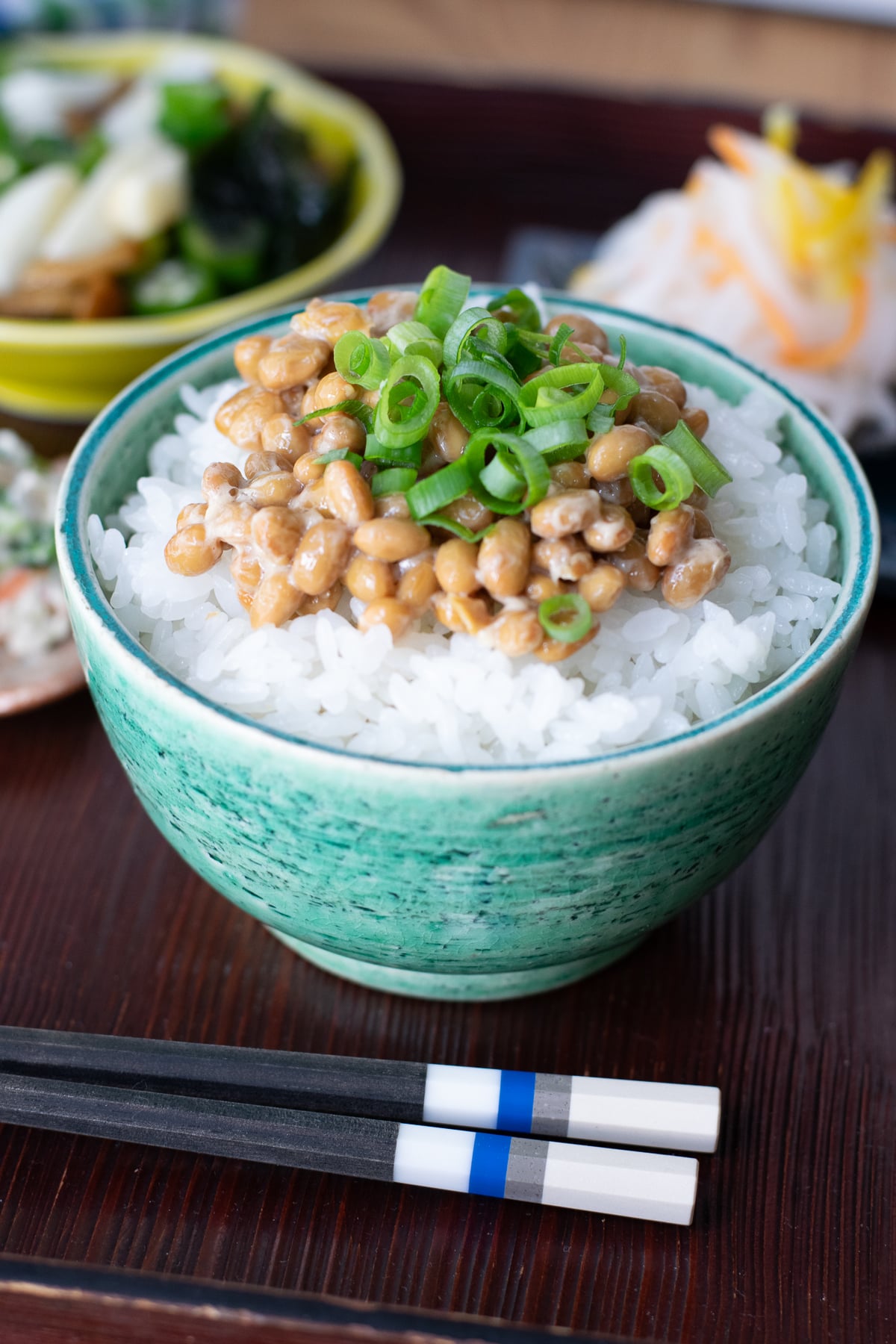
Natto is one of Japan's most divisive foods. Sticky strings. Off-putting stink. Gooey texture. Straight-up bizarre-food-TV material. You either love it, or you hate it with a passion.
I get it. It took me a while to get past the "I took a bite and almost gagged" stage.
But after living in Japan for more than 20 years, shopping at neighborhood supermarkets, and trying dozens of brands, I'm a convert. A true one. I miss eating natto when I'm not in Japan.
In this guide, you'll learn everything you need to buy, prepare, and enjoy natto with confidence, even if you're trying it for the first time.
Jump to:
- What Is Natto?
- What Does Natto Taste Like?
- Why Is Natto So Sticky?
- Is Natto Healthy?
- How Do Japanese People Eat Natto?
- How to Eat Natto for the First Time
- Best Natto Toppings for Beginners
- How to Prepare Packaged Natto
- How to Store Natto
- Where to Buy Natto
- Types of Natto
- Common Mistakes Beginners Make
- Start with These Natto Recipes
- Frequently Asked Questions
What Is Natto?
Natto is fermented soybeans. That's it. Whole soybeans, fermented with a bacteria called Bacillus subtilis, until they turn into something sticky, pungent, and completely unlike anything else in your kitchen.
Same plant as edamame, just at a very different stage. Edamame are soybeans picked young and green. Natto starts with the mature, dried bean; soaked, cooked soft, then fermented into something else entirely.
Open a pack and you'll find small, glossy beans packed tightly into a compact tub. It's usually just a few bites' worth, not a full meal on its own.
In Japan, it's breakfast. Often served over hot rice, mixed with a soy-based sauce called tare, sometimes a dab of spicy karashi mustard, then topped however you like.
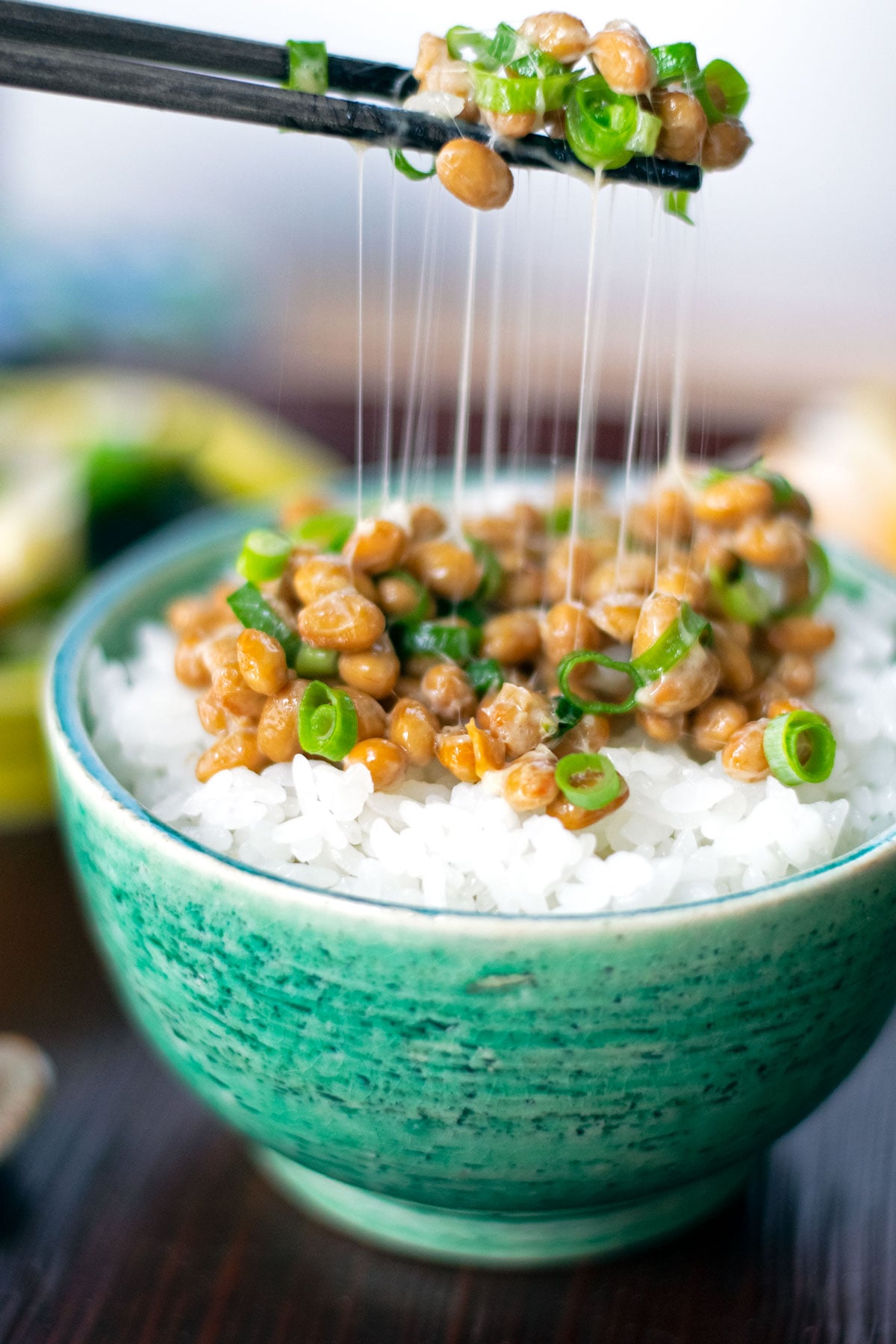
Stir it and the strings show up, long, sticky strands that cling to your chopsticks. That's not a mistake. That's fermentation doing its job.
Super weird at first? Sure. But for millions of people in Japan, it's just Tuesday morning.
What Does Natto Taste Like?
Depends who you ask.
Nutty. Earthy. Heavy on umami. Not like tofu. Not like fresh soybeans. And honestly, the smell's worse than the bite, plug your nose on your first try and it's really not that strong.
The texture throws people off more than the taste does, all those sticky strings clinging to your chopsticks. Give it a minute. Mix it with hot rice and a topping or two, and it gets a lot easier to enjoy.
Why Is Natto So Sticky?
Fermentation. That's the whole answer.
Bacillus subtilis breaks down the proteins in the soybeans, and one of the byproducts is polyglutamic acid, the stuff behind the stickiness. Stir more, get more strings. Keep going and you'll release more umami too, up to a point, natto pros have found the sweet spot lands somewhere around 200-400 stirs before it stops improving. It's not a flaw. It's a sign the fermentation actually worked.
Tip: If the strings put you off, stir less. A few quick turns instead of vigorous mixing keeps things more manageable for your first try, though you'll trade off a bit of that developed flavor.
For what it's worth, I don't stir mine like most people in Japan do. I'm well past being put off by the goo at this point, I just don't need more of it. A quick stir works fine for me, and honestly, that's kind of the whole point of this guide: there's no one correct way to eat natto. Find what actually works for you.
Is Natto Healthy?
Yes. Genuinely one of the most nutrient-dense traditional foods in Japan.
A single serving gives you:
- Plant-based protein, keeps you full, supports muscle
- Fiber, good for digestion
- Vitamin K2, natto's real claim to fame; helps your body use calcium and supports bone health
- Probiotics, the beneficial bacteria fermentation leaves behind
- Iron, magnesium, potassium, calcium, a solid vitamin and mineral spread for something this small
It also contains nattokinase, an enzyme produced during fermentation that researchers are still studying for potential health benefits.
Caution: If you're on blood thinners like warfarin, talk to your doctor before making natto a regular thing, that K2 content matters here.
Japan's health ministry also recommends sticking to about one pack a day, since natto (like other soy foods) contains isoflavones best enjoyed in moderation.
No single food is a cure-all, but natto earns its "superfood" label more than most. And I've heard from a number of older readers who started eating it regularly once they got serious about bone health.
How Do Japanese People Eat Natto?
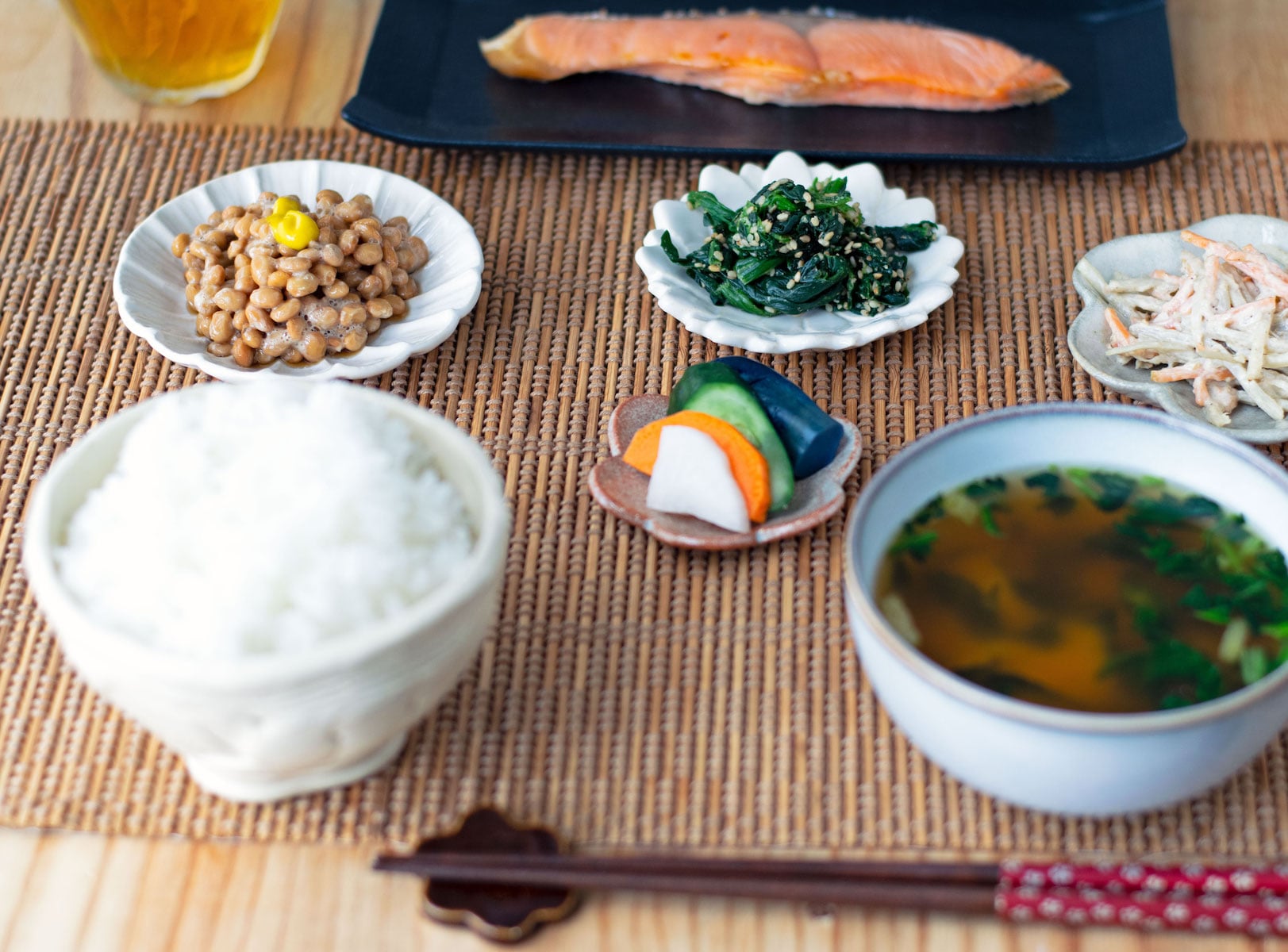
The simplest way: over rice, natto stays cold or room temp, the rice is what's hot. Tare sauce gets used by almost everyone (about 85%), karashi mustard is closer to a coin flip, roughly half to 60% of people use it, entirely down to personal taste.
From there, people make it their own. Some stick with classic toppings like finely chopped negi green onion. Others build it into a full breakfast, natto, miso soup, grilled fish, tamagoyaki, pickles, the whole traditional Japanese breakfast.
Kids grow up on it too, it's a regular fixture in daycare meals and, in some regions, school lunch. This isn't rare or special-occasion food, even if toast and yogurt have become just as common these days, especially for younger generations. Stay at almost any hotel in Japan with breakfast included, and you'll find it on the buffet, or just pick a pack up at any convenience store, no special trip required.
And it's not just breakfast. Plenty of people eat natto as an izakaya side or a quick dinner add-on.
Not everywhere, though. Kansai is famously less into natto, official surveys show close to 1 in 5 people there never eat it at all, a real regional divide, not just a stereotype.
And then there's the creative stuff: natto on toast, natto pasta, natto-stuffed atsuage fried tofu, natto maki rolls, and natto tempura.
Curious what's easiest for a first-timer? Keep reading, the toppings section below is the fastest way in.
How to Eat Natto for the First Time
Don't eat it plain. Some Japanese people do, but save that for later, the raw flavor and smell hit hardest with nothing to soften them.
How to make natto taste better as a beginner:
- Serve it over hot rice. Mixing it into rice dilutes the flavor and spreads out the stickiness, so each bite is less intense.
- Use the seasoning packets. Most packs come with tare and karashi already included. Tare adds savory seasoning, and karashi actually helps mask the strong smell.
- Stir less, not more. Fewer strings makes your first bite a lot less intimidating.
- Start small. A spoonful mixed into rice, not the whole pack.
Start smaller than you think you need to
If a whole package feels like too much, try one bean. Just one. Next time, try a few more. You're not trying to finish the container. You're just letting your taste buds meet something new, on their own schedule.
It's an acquired taste, give it more than one shot
Same as blue cheese, kimchi, or beer. I've never met anyone who loved natto the first time they tried it. Most converts don't happen on try one, they happen on try four or five, once your palate stops bracing for the worst.
And if you try it a handful of times and it's still not for you? That's fine too. Natto isn't for everyone, even in Japan. I won't judge you. Much.
Ready to try it for real? Check the beginner toppings below, or follow my Easy Natto Recipe for Beginners, built to ease you in.
Best Natto Toppings for Beginners
Once you've got the basics down, start playing. Natto's built for customizing. Here are popular toppings in Japan that I'd recommend to beginners.
Soy Sauce
The tare packet works, but plain soy sauce or tamari does the job just as well if you're out.
Negi (Green Onions)
Thinly sliced, mild, fresh. One of the most popular toppings in Japan, and it's easy to see why. It also adds some nice color to contrast with the brown beans.
Kimchi
One of my favorites. Spicy, tangy, crunchy, it cuts right through natto's earthiness. Both are fermented, so somehow they just work together.
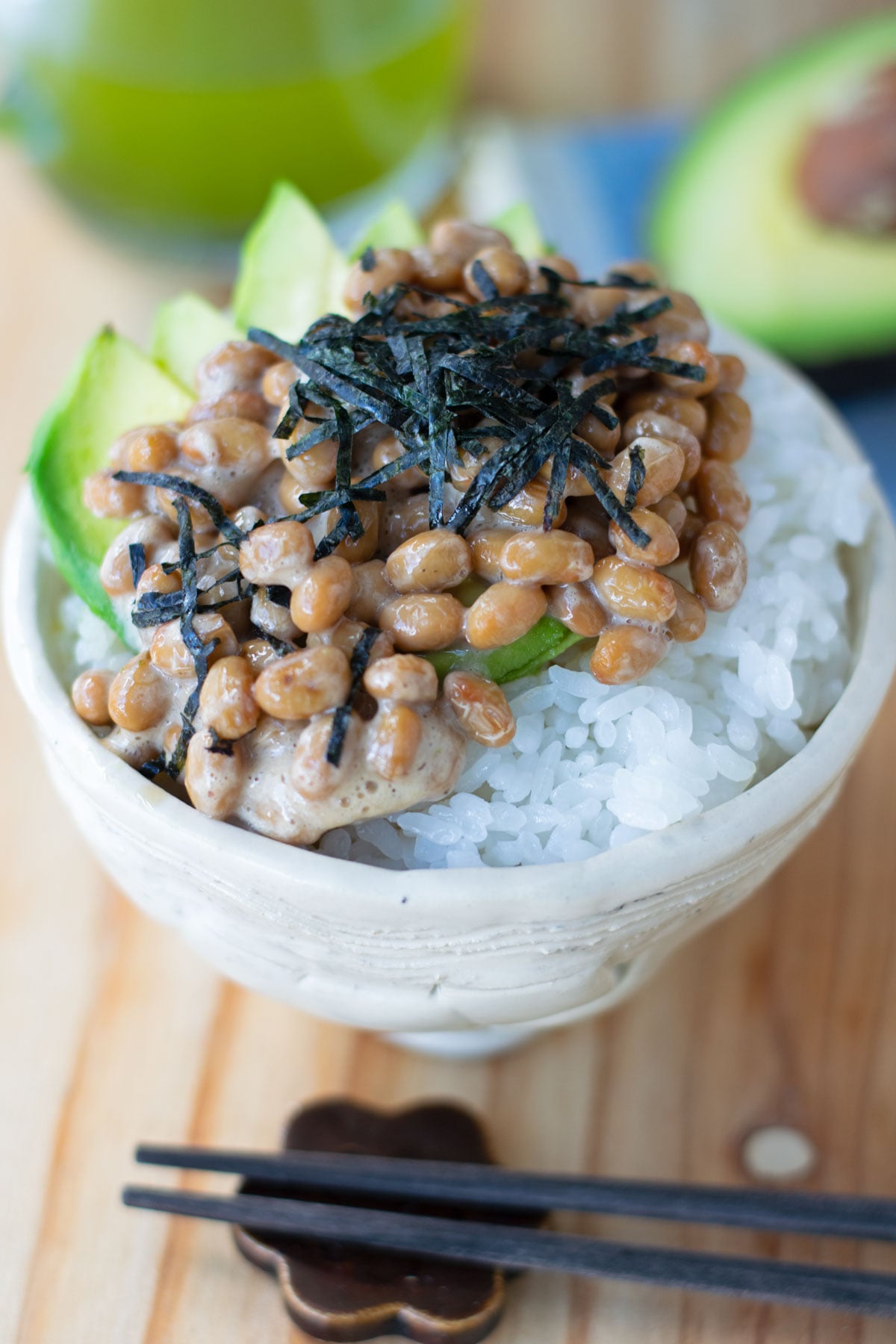
Avocado
Creamy enough to mellow the bold flavor. Add a drizzle of soy sauce or olive oil over hot rice and you're set.
Cheese
Sounds strange, works surprisingly well. Cheese is a fermented food too, so the pairing makes more sense than it sounds. A little sliced or grated cheese mellows natto's flavor, similar to avocado, but with broader appeal if avocado's not your thing.
Soft-Boiled Egg
Raw egg is the classic move in Japan, but I'd start with soft-boiled if you're outside Japan. Same rich, creamy payoff, without the raw egg question mark.
Nori (Dried Seaweed)
Shredded nori adds crunch without adding more flavor complexity, exactly what a nervous first-timer wants. If you want to go deeper on nori itself, check out my guide to nori seaweed.
Katsuobushi (Bonito Flakes)
Smoky, savory, adds a light texture against all that stickiness. Small thing, big difference.
How to Prepare Packaged Natto
Most packs come with tare and karashi included. This is the everyday way people eat natto at home, spooned over rice or straight from the container. The process is basically the same either way.
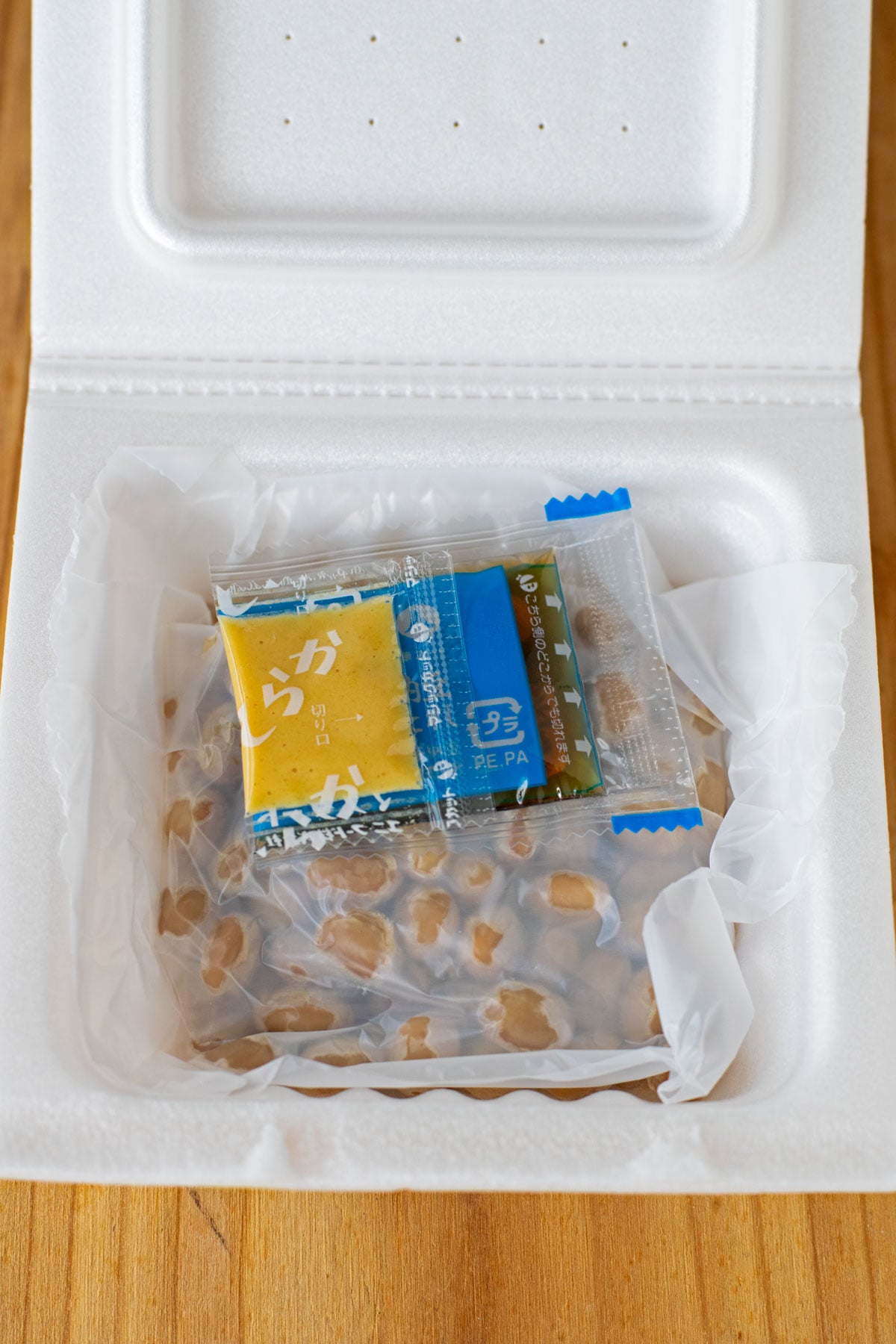
Step 1: Open it up
Pull out the tare and karashi packets, then peel back the lid. Most brands include both, some just tare. Peel off the thin plastic film underneath, then give the film a quick twirl in the air to snap off the gooey strings still clinging to it before you toss it.
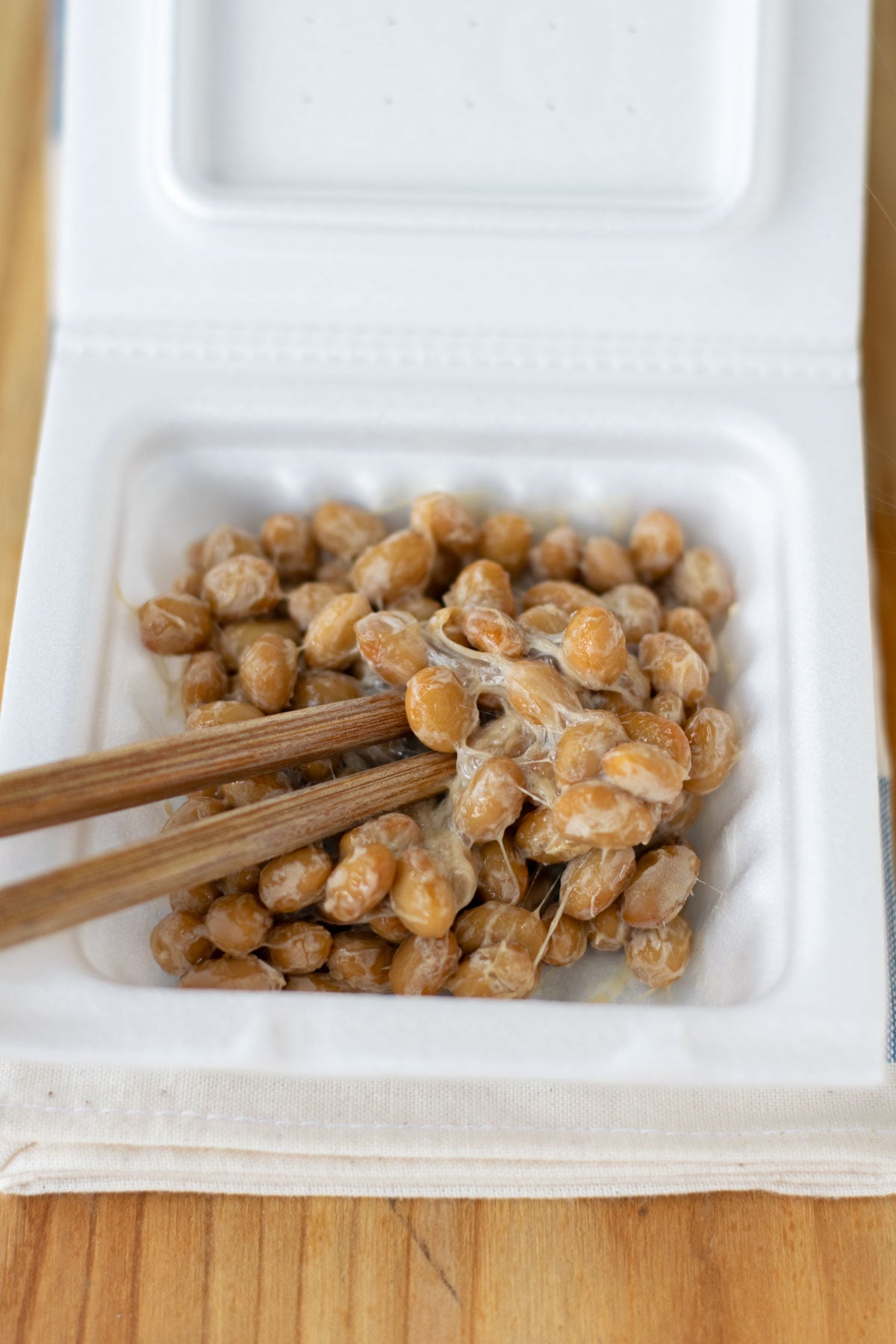
Step 2: Stir
Chopsticks in, stir until it's sticky and stringy. Somewhere between 30 and 50 stirs is typical, but there's no magic number.
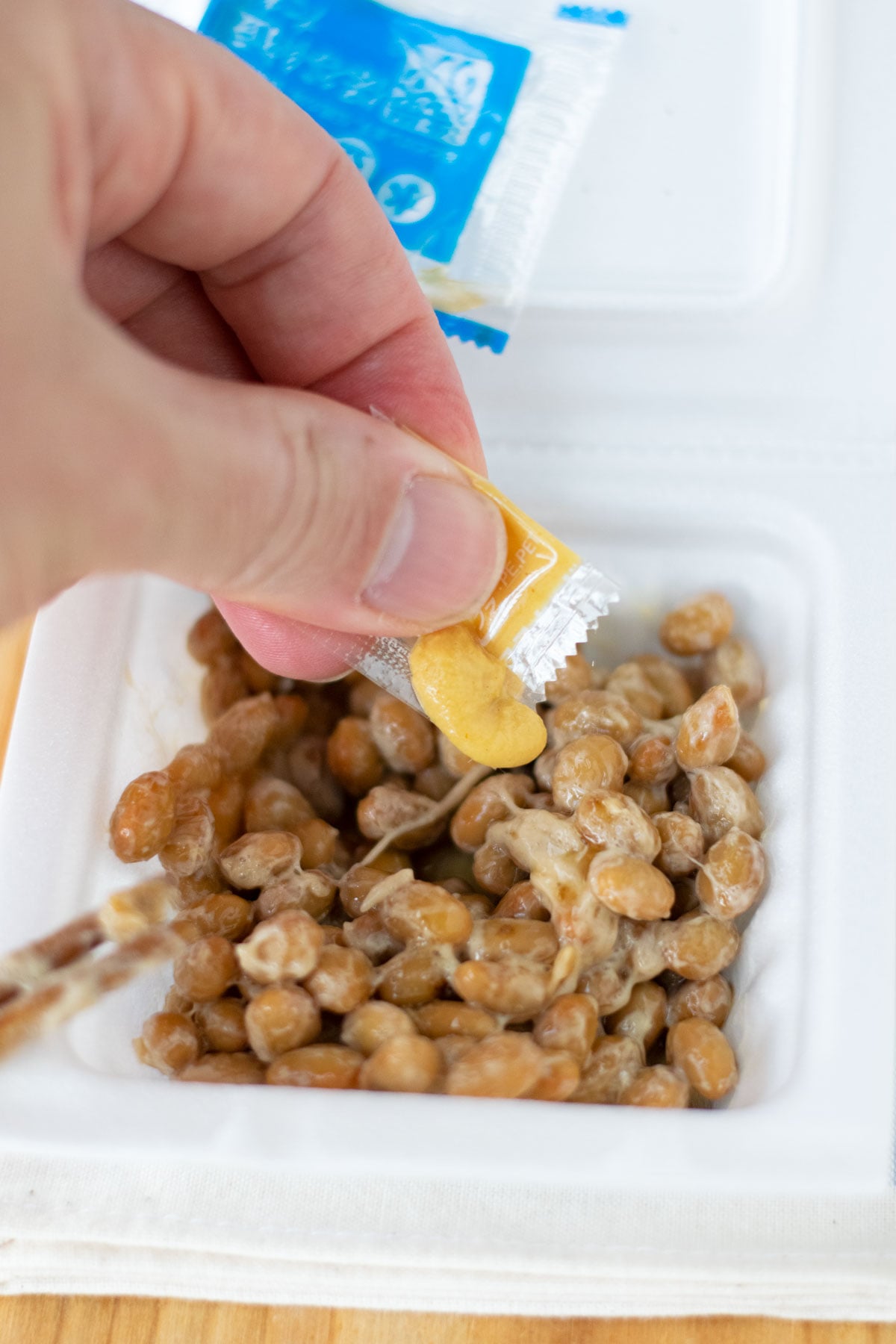
Step 3: Add the Seasonings
Mix in the tare and karashi, then stir again. Stirring the natto plain first, before adding the sauce, actually works better. It traps more air, giving you a fluffier texture and stronger flavor.
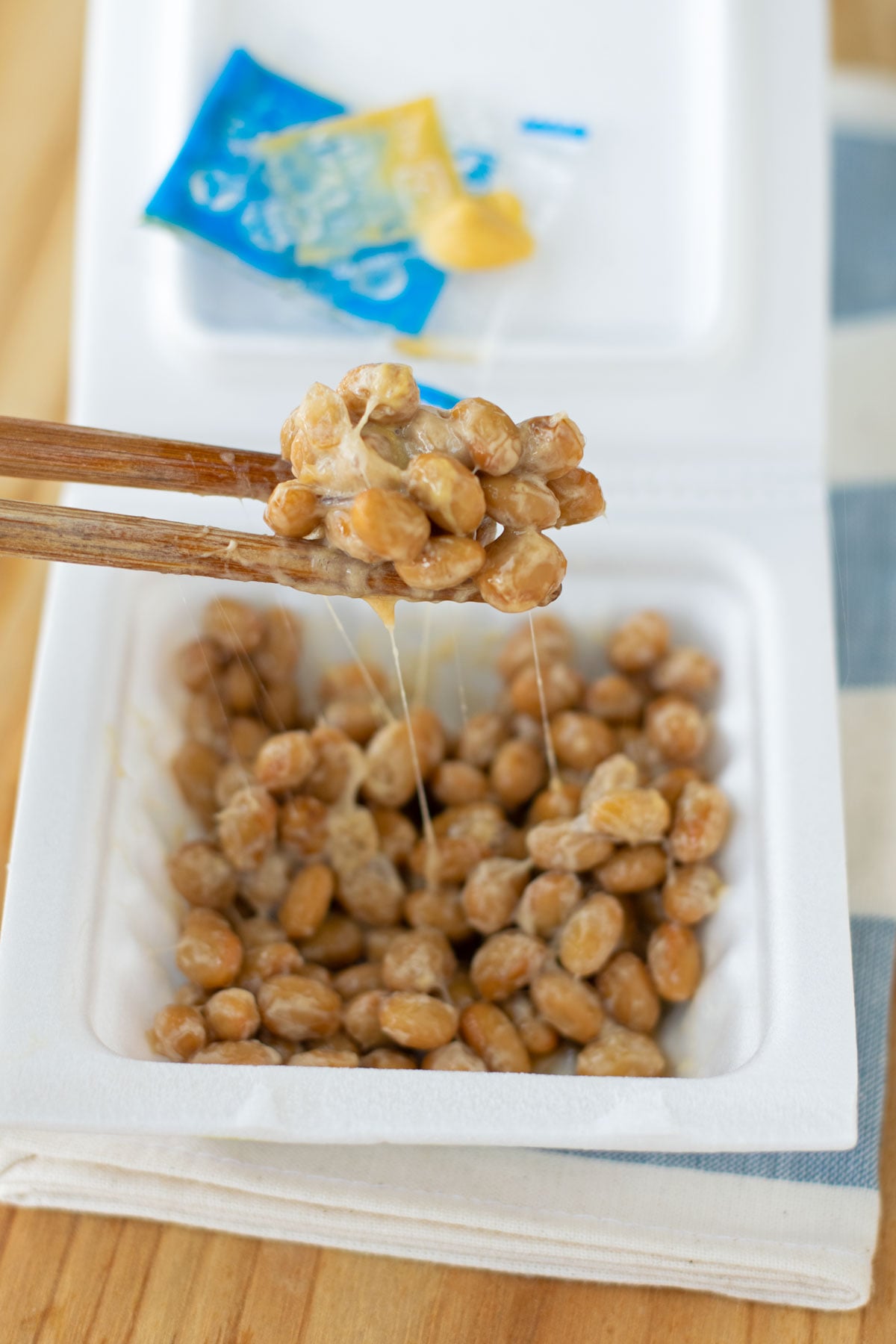
Step 4: Serve
Over warm rice, or straight from the pack. First time trying it? Green onions, soft-boiled egg, or kimchi all make good add-ons.
How to Store Natto
Keep it in the fridge, eat it by the best-by date. Once you open it, don't let it sit. Freshest flavor and texture come from eating it soon after opening.
Can You Freeze Natto?
Yes, and it freezes well, which is why most natto sold outside Japan comes frozen in the first place. Freezing doesn't kill the natto bacteria either. It just goes dormant, unlike heat, which does.
Freeze it in the unopened package, or an airtight freezer bag if you want extra protection. One thing worth knowing: the liquid tare packet can swell as it freezes. So if that worries you, pull it out and freeze it separately.
Frozen natto keeps well for about a month, some sources say up to two or three. To thaw, move it to the fridge overnight. Skip the microwave as it can damage the container, seasoning packets, and even kill off the bacteria. Texture softens slightly once thawed, but most people won't notice. Though if you want the best texture, save thawed natto for cooked dishes rather than eating it straight.
Where to Buy Natto
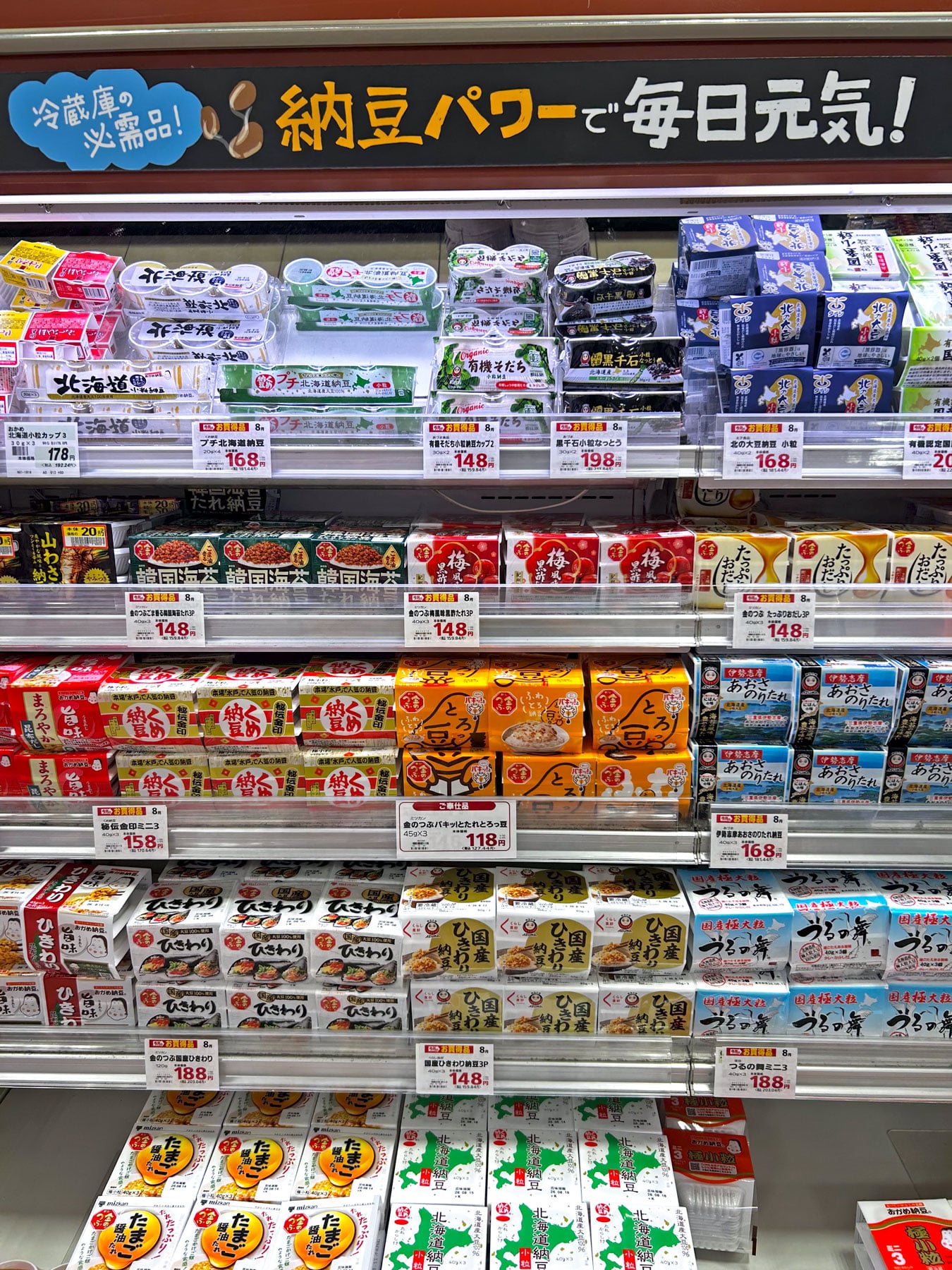
If you're in Japan, you basically can't avoid it. Every supermarket, convenience store, and neighborhood grocery carries it, refrigerated section, right near the tofu.
Once you start looking, you'll notice real variety. Some brands list where the soybeans came from, often Hokkaido for the Japanese-grown ones, or the US for imported. Bean sizes vary too, each with its own texture. Don't overthink your first pack. Any brand at any supermarket is a fine place to start.
Want to go deeper? Kinokuniya, Seijo Ishii, Tokyu Store, and Queen's Isetan carry organic and regional varieties alongside the everyday stuff.
Outside Japan, it's easier to find than it used to be, genuinely, even a decade ago this section would've looked a lot shorter. Start with a Japanese grocery store or a larger Asian supermarket. It's usually in the freezer section, sometimes the fridge.
- United States: Mitsuwa, Nijiya, Marukai, plus a lot of H Mart locations.
- Australia: Japanese and Asian grocery stores, or online retailers shipping frozen foods.
- Singapore: Isetan and Meidi-Ya usually carry a few brands.
- Europe: Japan Centre (UK), NikanKitchen, and Nanuko.
No store nearby? Order online. Plenty of specialty retailers ship frozen natto straight to your door, no passport required.
Types of Natto
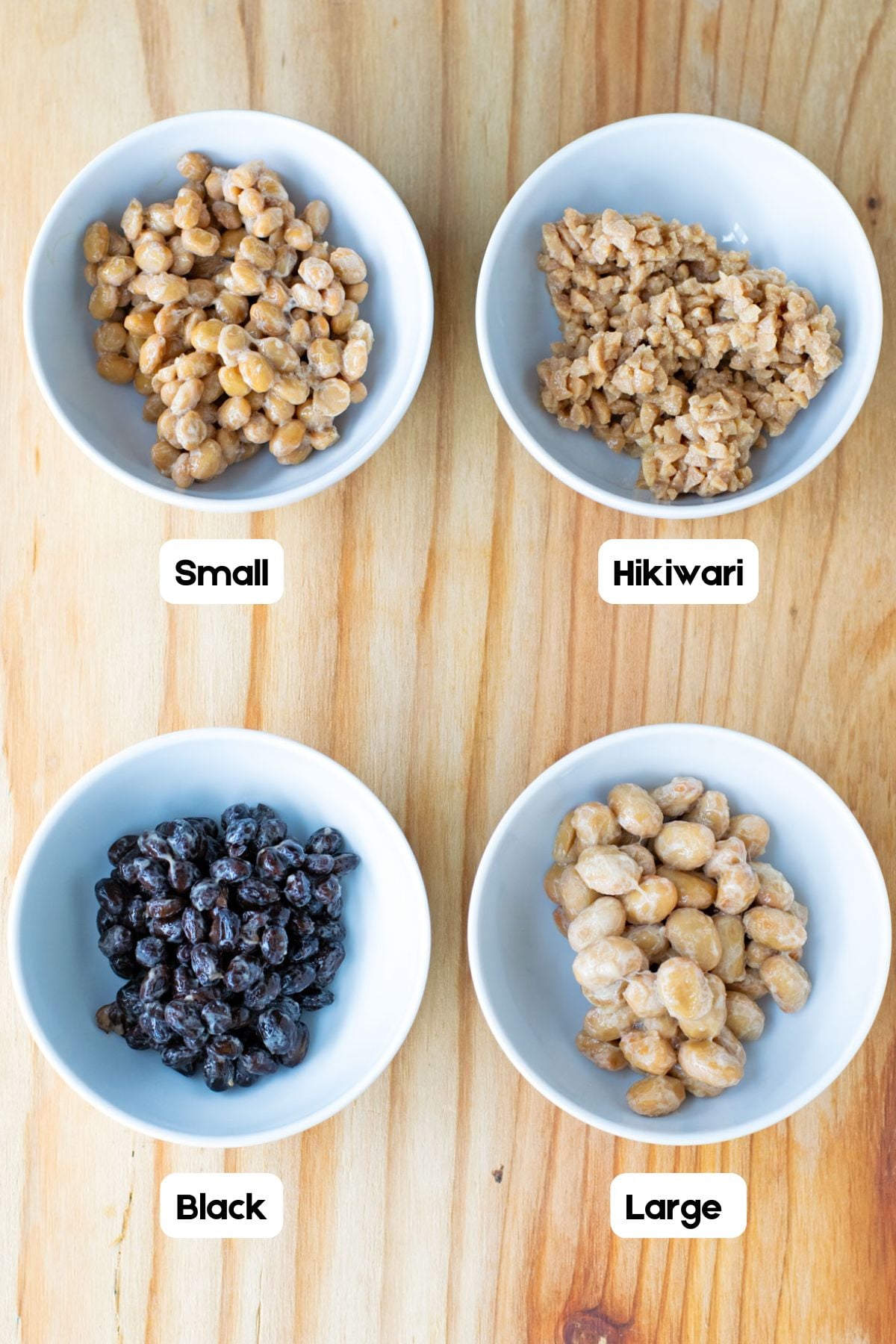
Most natto brands differ in three ways: bean size, whether the beans are whole or split, and the type of soybean.
Whole-Bean Natto
The most common type by far, small and extra-small beans make up about 80% of what's sold in Japan.
- Small beans (kotsubu): The default. More surface area means more bacteria can work the beans, which is part of why they're smooth, sticky, and mix so easily into rice.
- Medium beans (chūtsubu): A middle ground, slightly firmer bite.
- Large beans (ōtsubu): Bigger, firmer, more pronounced soybean flavor.
Hikiwari (Split) Natto
Made from large soybeans, split and skinned before fermentation. Finer texture, blends easily into dishes, popular for sushi rolls and rice bowls.
When I first started eating natto, hikiwari was my way in. The texture felt less slimy and easier to handle than whole beans. If the stringiness is what's holding you back, it's worth trying before you give up.
Specialty Natto
A few varieties worth knowing about:
- Black soybean natto: Slightly sweeter, firmer texture.
- Organic natto: Organically grown soybeans.
- Regional varieties: Some parts of Japan have their own local styles, including natto wrapped in straw or thin wood boxes instead of plastic, which changes the fermentation slightly and gives it a different flavor.
Don't stress if your store only has one or two options. The differences are subtle. Any pack is a fine place to start. Once you've got a feel for it, experiment with bean sizes and brands until you find your favorite.
Common Mistakes Beginners Make
Natto trips people up in a few predictable ways. Easy fixes, once you know them.
Expecting to Love It Immediately
It's an acquired taste. If it doesn't click on bite one, that's normal, not a sign it's not for you. Most converts get there on try three, four, five.
Starting with Too Much
You don't need to finish the pack. A spoonful in warm rice, or even a few beans, is plenty to start. Work your way up once you're actually into it.
Eating It Plain
Use the tare and karashi. Add toppings, green onion, kimchi, avocado, whatever sounds good. Skipping the extras on your first try just makes it harder than it needs to be. Or follow my Easy Natto Recipe for Beginners, built to ease you in.
Expecting It to Taste Like Regular Soybeans
It's not edamame, and it's not tofu. Fermentation turns it into something else entirely, savory, earthy, sticky. Treat it as its own thing, not a variation on a bean you already know, and it's a lot easier to appreciate.
Only Trying It Cold
If the raw texture is what's getting you, know that natto changes a lot with heat. Stir it into fried rice, an omelet, or curry and the smell and stringiness both soften. You'll lose some of the live bacteria that way, but if it's the difference between never trying natto again and actually getting into it, that's a fair trade for now.
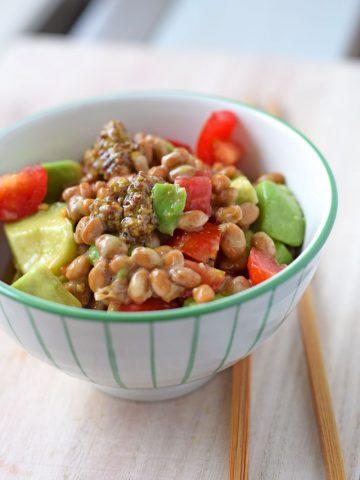
Start with These Natto Recipes
Ready to try it yourself? Start here.

Frequently Asked Questions
Yes. Same story as blue cheese or kimchi, most people don't fall in love on the first bite. Give it a few tries before deciding it's not for you.
Yes, plenty of people in Japan do, myself included, most weekdays. If you're on blood thinners like warfarin, talk to your doctor first, that K2 content matters.
The beans themselves, yes. The seasoning packet sometimes isn't, tare often contains dashi made from bonito flakes. Skip the packet or use soy sauce instead if that matters to you.
The natto itself is almost always eaten cold or room temp, even when it's spooned over hot rice. But it shows up plenty in cooked dishes too, mixed into tamagoyaki, pasta, or fried rice, where it gets heated along with everything else.
Yes, often starting around 7-8 months old as a weaning food in Japan, usually finely chopped and briefly heated at first to soften the texture and make it easier to swallow, not straight from the pack the way adults eat it. Skip it if there's a soy allergy, and check with a pediatrician before introducing it, like any new food.
Leave a Reply