
Forget candied yams and marshmallow-topped casseroles, these mashed Japanese sweet potatoes get all their sweetness the natural way. My slow-roast method, inspired by the yakiimo trucks you'll find rolling through neighborhoods across Japan, caramelizes the sweet potato right in the oven, no added sugar needed.
Just wash, pop them in (cold oven, no preheating!), and walk away. It's an easy, five-ingredient side that's simple enough for a weeknight and special enough for your holiday table.
Jump to Recipe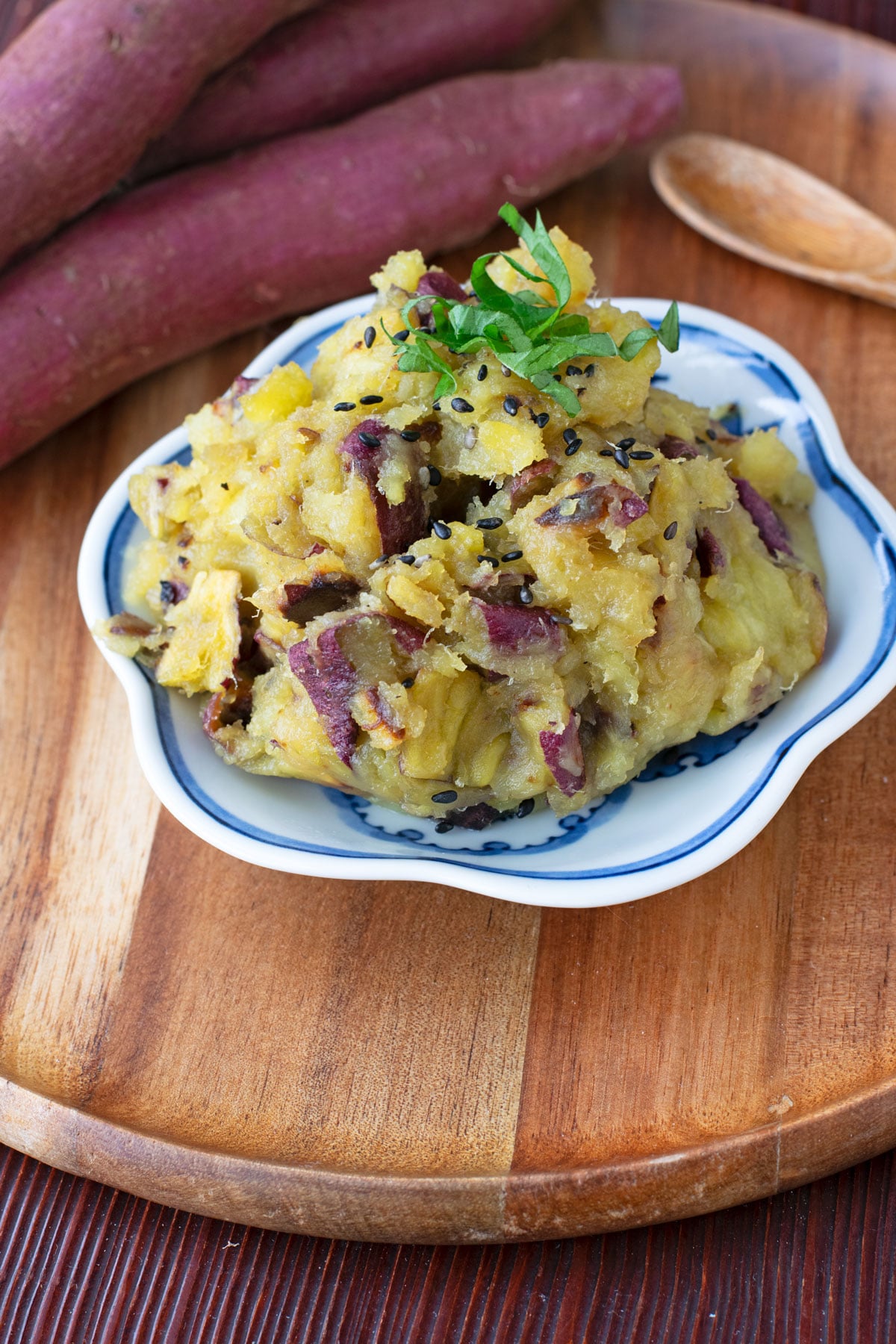
Growing up in the US, mashed potatoes were just something that went on the side of the turkey. You needed to drench it in gravy for it to actually taste good. Then I moved to Japan, and satsumaimo showed me a new level of potato. No gravy needed. It was so good all on its own.
It took some experimenting to get here, well, more like an ongoing obsession. I've baked Japanese sweet potatoes whole, wrapped in foil, no foil, air fried them, made them into fries, chips, cubes, wedges, even turned them into dessert. Each version taught me something different about how to get the most natural sweetness out of them.
This recipe is where it all came together: a slow-roast method that caramelizes the potato from the inside out, mashed silky with butter and cream. No added sugar required.
You're in for something special. That mashed potato ceiling? Consider it shattered.
Looking for a striking, colorful holiday variation? Check out my Mashed Purple Sweet Potatoes made with vibrant murasaki imo!
Got a question or need help finding satsumaimo? Leave a comment below or DM me on Instagram. I personally respond to every message.
❤️ from Japan,
Matt
Jump to:
- Why You'll Love These Mashed Japanese Sweet Potatoes
- Why Slow-Roasting Makes It So Sweet
- Ingredients
- Where to Buy Japanese Sweet Potatoes
- How to Make Mashed Japanese Sweet Potatoes Step-by-Step
- What to Serve with Mashed Japanese Sweet Potatoes "Izakaya-Style"
- How to Store and Reheat Mashed Satsumaimo
- Frequently Asked Questions
- More Japanese Sweet Potato Recipes
- Creamy Mashed Japanese Sweet Potatoes (Satsumaimo)
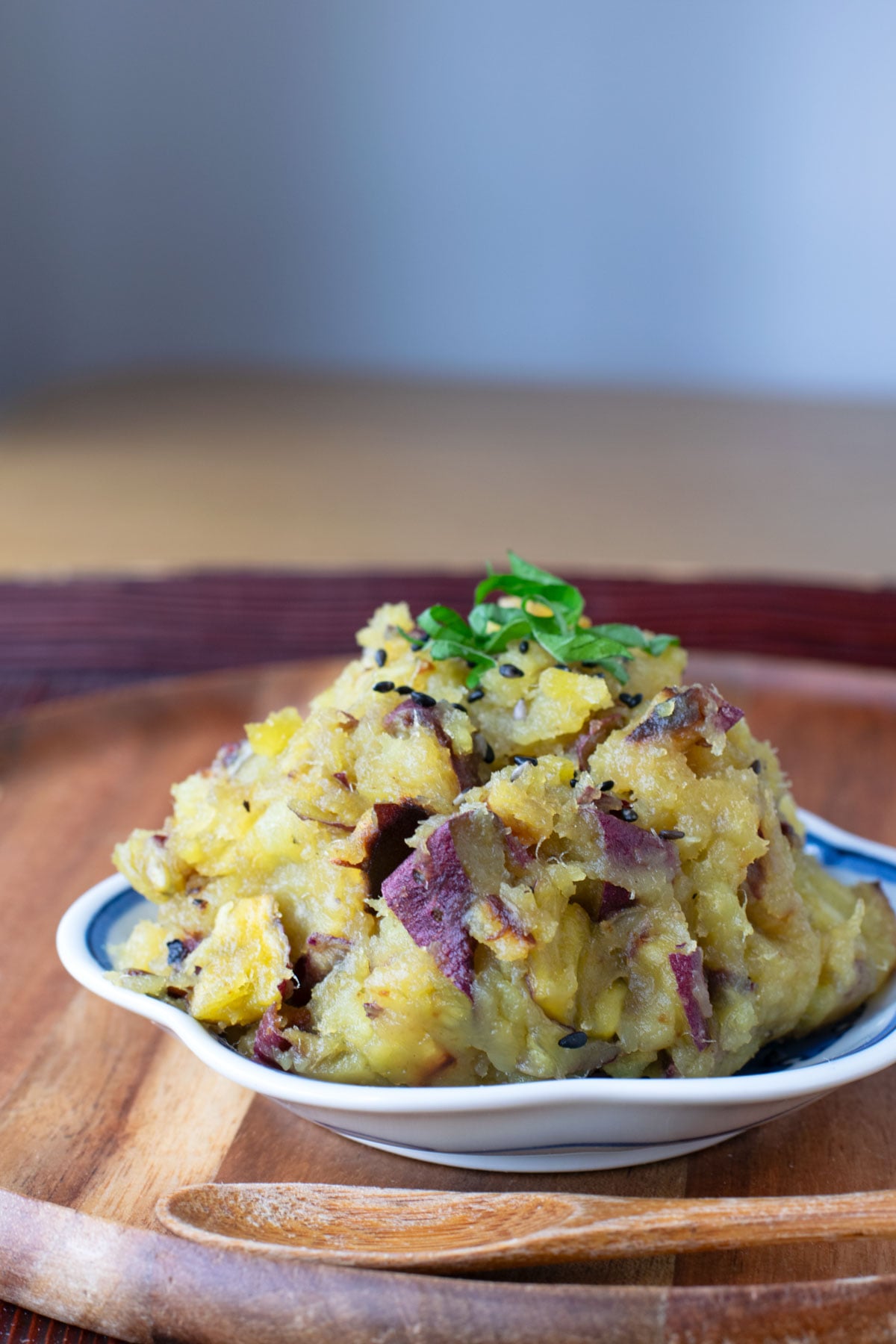
Why You'll Love These Mashed Japanese Sweet Potatoes
Naturally Sweet, Straight from the Oven
Slow-roasting caramelizes the potato's own sugars. No added sugar needed.
Ultra-Creamy Texture
Denser and richer than orange sweet potatoes, mashes up silky with just butter and cream.
Easy to Customize
Swap in coconut cream for dairy-free, or dress it up with black sesame seeds and shiso for a fresh, Japanese-inspired finish.
Just a Few Ingredients
Sweet potato, butter, cream, salt, and pepper. Nothing exotic, nothing expensive.
Weeknight Easy, Holiday Worthy
Just five minutes of hands-on time, but rich enough to earn a spot on your holiday table.
Why Slow-Roasting Makes It So Sweet
Starting in a cold oven and baking low and slow gives the potato's natural enzymes time to convert starches into sugar before the heat gets high enough to stop them. That's the secret to naturally sweet, caramelized flavor with zero added sugar.
Ingredients
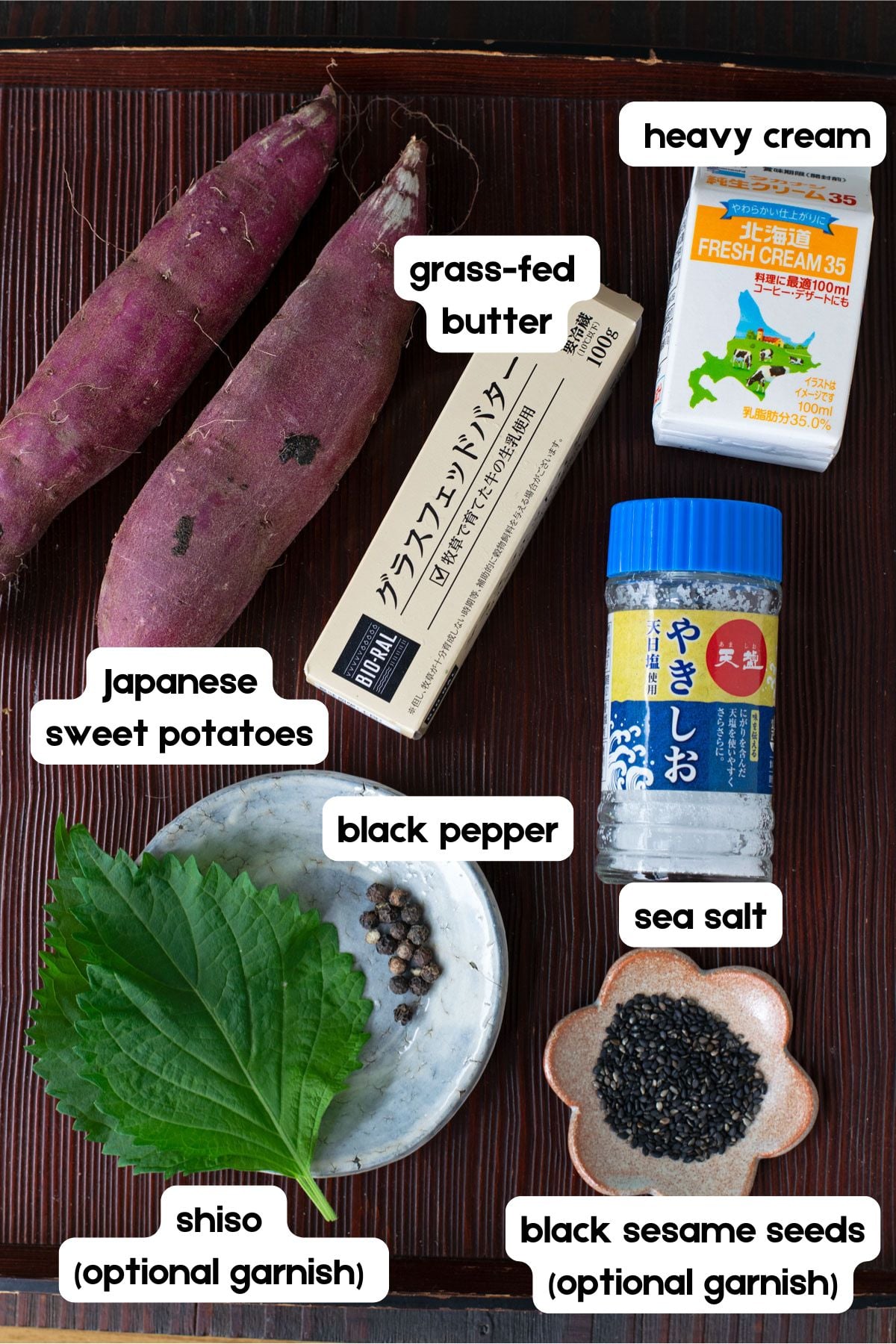
This creamy mashed Japanese sweet potato comes together with just a handful of simple ingredients. Here's what you'll need:
Japanese Sweet Potatoes (Satsumaimo)
The base of the dish. Baking low and slow brings out its natural sweetness, so there's no need to add much sugar. Purple or regular satsumaimo both work here, though the color and slight flavor will differ.
Grass-Fed Butter
Adds richness and helps everything mash together smoothly. Swap in a plant-based butter for a dairy-free version, it works just as well.
Heavy Cream
Brings a silky richness to the mash and lets the natural sweetness of the potato come through. Half-and-half is a fine substitute if that's what you have, just expect a lighter, less rich texture.
Sea Salt
Balances the sweetness of the potato and rounds out the other flavors.
Black Pepper
A small addition that adds a bit of warmth and depth against the natural sweetness.
Black Sesame Seeds
A simple garnish that adds a bit of crunch and a nutty, toasty finish, without competing with the mash's natural sweetness.
Shiso
Adds a fresh, herbal note and a pop of green color. A great way to introduce readers to a distinctly Japanese ingredient if they haven't tried it before.
Ingredient Notes
Japanese Sweet Potatoes (Satsumaimo)
Look for firm, unblemished potatoes without soft spots. Size doesn't matter much here since they're baked whole and mashed afterward, though smaller potatoes will bake a bit faster. Store at room temperature, not the fridge.
Essential Equipment
You only need a few basic tools to make this:
- Sharp knife and cutting board, for prepping the potatoes before and after baking.
- Fork, for poking holes in the potatoes before baking.
- Aluminum foil, to line the baking sheet for easy cleanup.
- Oven, for a slow, cold-start bake at 320°F (160°C). Starting from a cold oven (no preheating) helps the potato's natural sugars caramelize as it cooks.
- Wooden spatula, for mashing the potatoes directly in the pan.
- Frying pan, for melting the butter and mashing the potatoes with the heavy cream and seasoning.
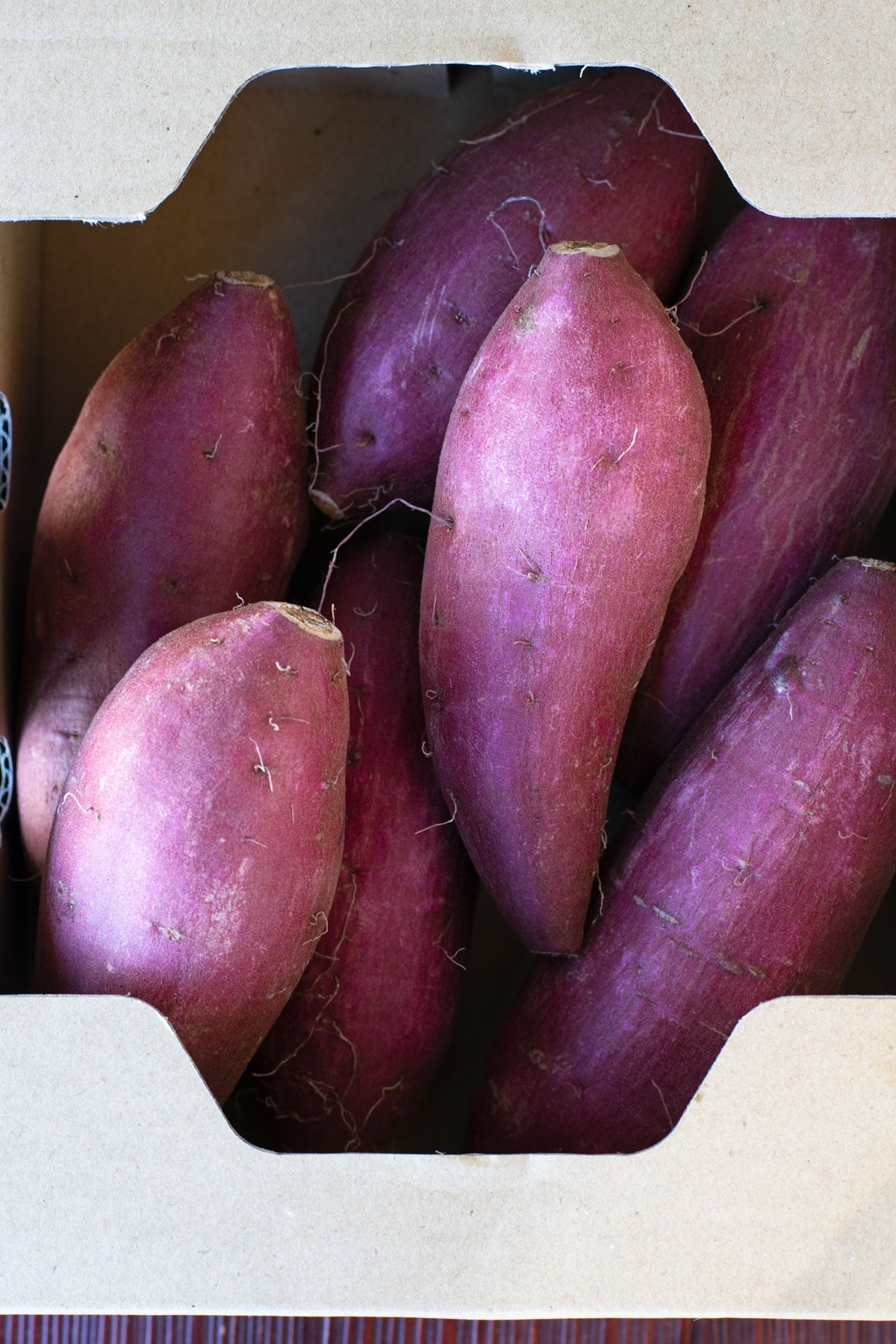
Where to Buy Japanese Sweet Potatoes
Look for Japanese sweet potatoes at Asian grocery stores (Nijiya, H Mart) or well-stocked supermarkets like Whole Foods and co-ops. In the US, I've also spotted them at regular mainstream supermarkets, sometimes mislabeled as "Oriental yams" (an outdated term, so don't let it throw you off). Look for reddish-purple skin and pale golden flesh, that's your sign you've got the real thing.
Satsumaimo is harvested in fall, but its sweetness actually improves over a few months of storage, so peak season often stretches from October right into the winter holidays.
How to Make Mashed Japanese Sweet Potatoes Step-by-Step
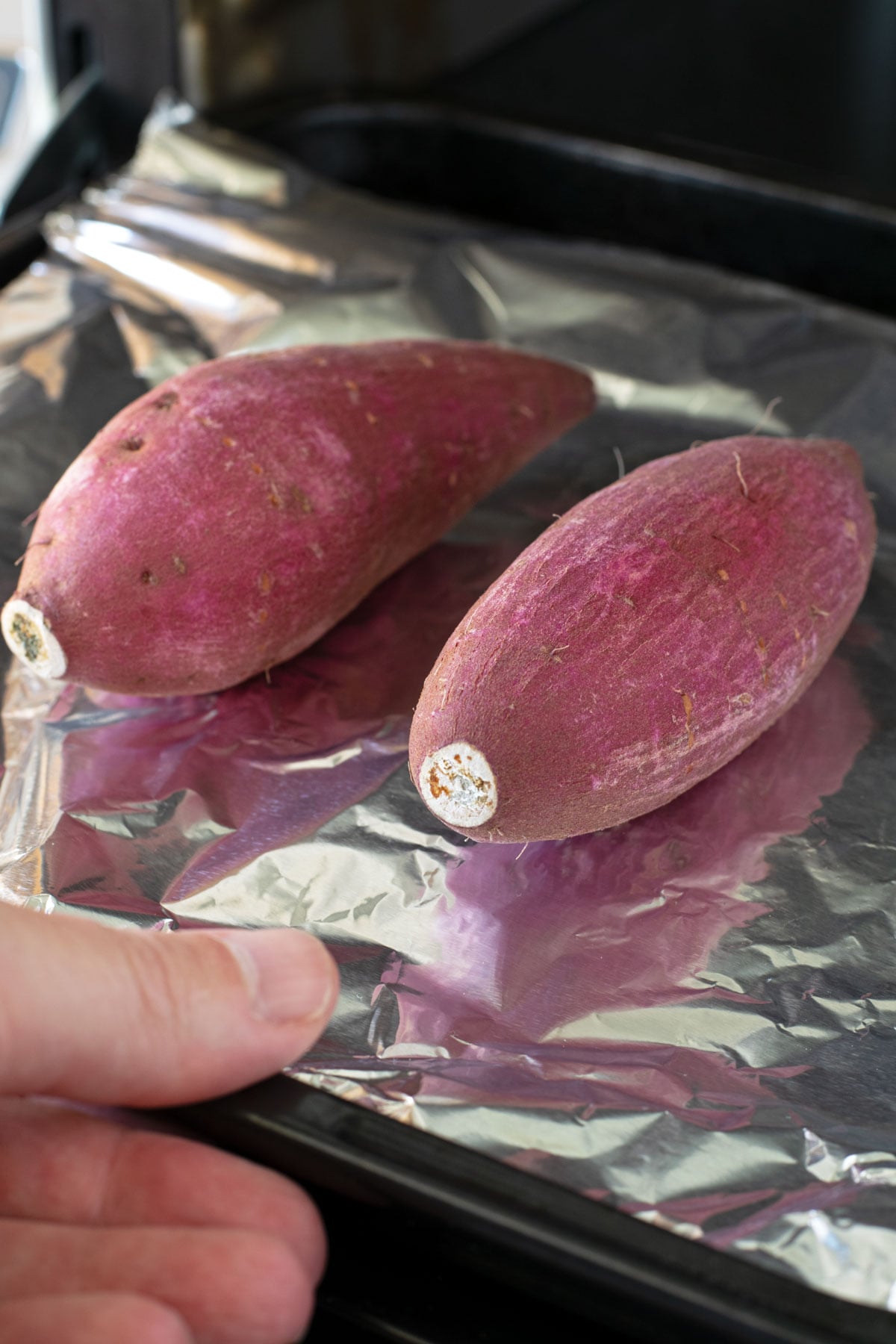
1. Prep and Bake
Wash the sweet potatoes and poke a few holes with a fork. Place them on a foil-lined baking sheet and into a cold oven, no preheating. Set to 320°F (160°C) and let them roast low and slow for about 60 minutes.
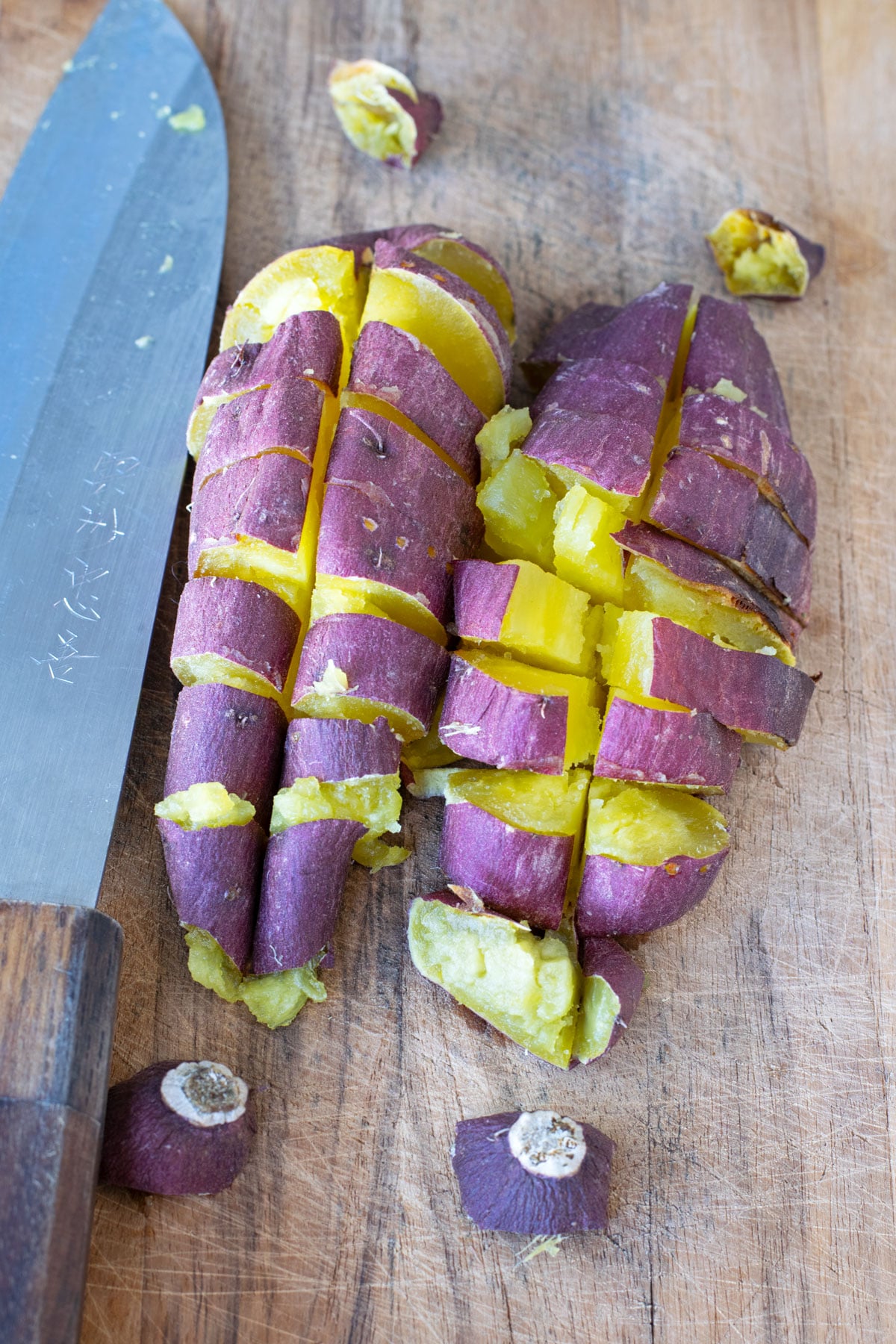
2. Cut into Pieces
Once cool enough to handle, trim the ends. Cut into 1-2 cm wide pieces first, then slice each piece lengthwise. The slow roast should have the flesh tender enough to fall apart easily.
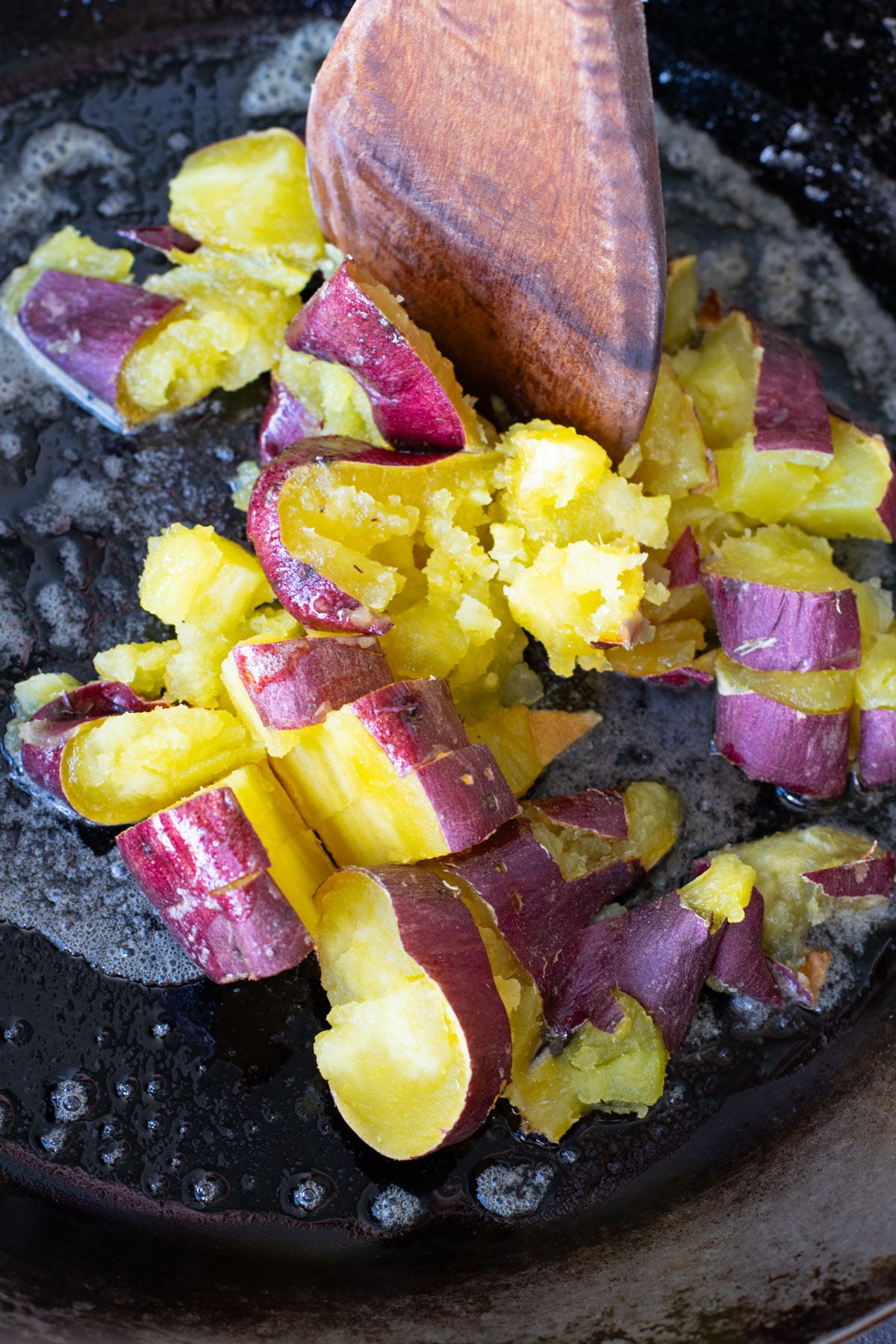
3. Mash in Fry Pan
Melt the butter in a frying pan over low heat, then add the sweet potato pieces. Mash directly in the pan with a wooden spatula, fork, or spoon until mostly smooth.
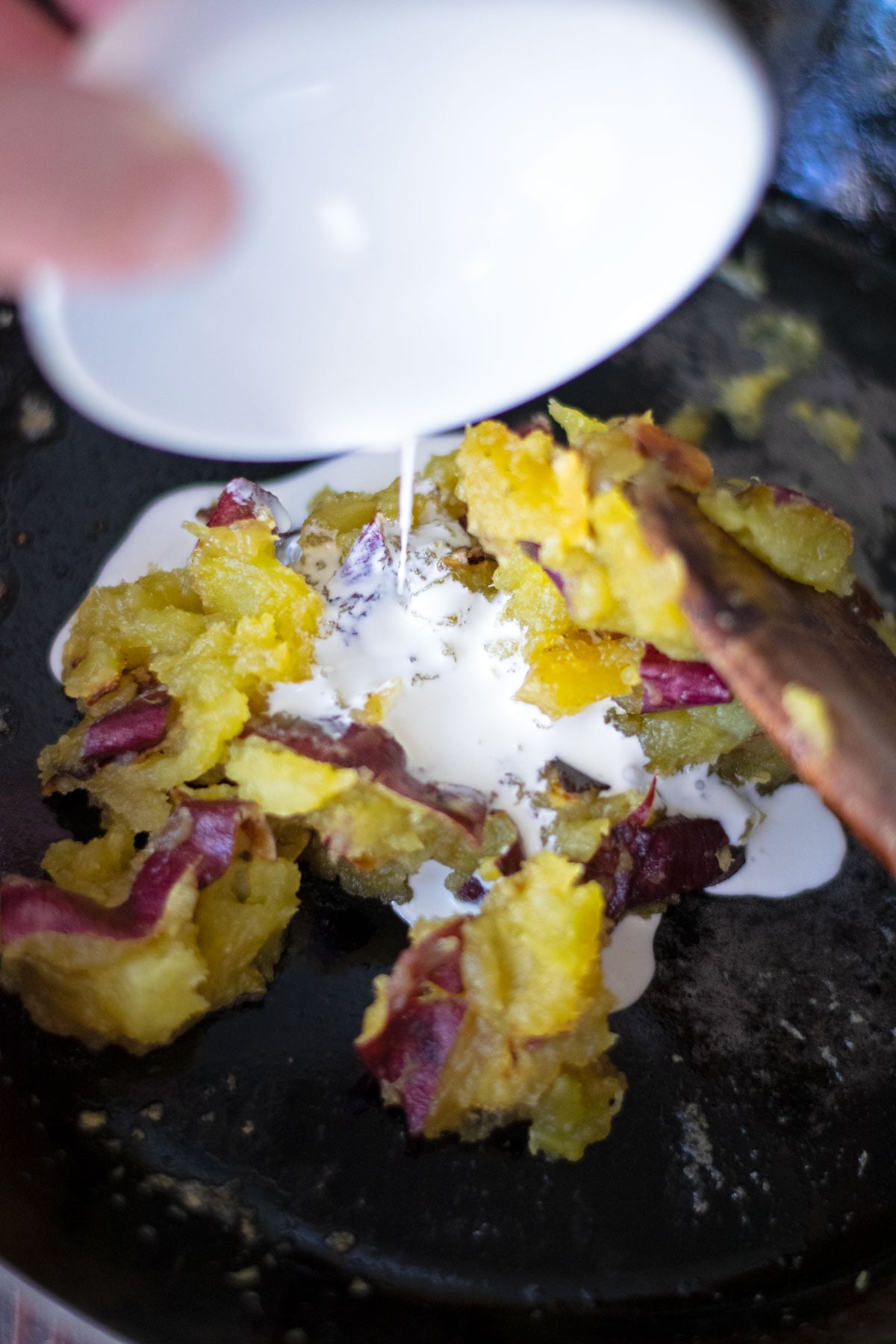
4. Fold in Cream and Season
Stir in the heavy cream until the color turns uniform and silky. Season with salt and pepper to taste, then serve warm.
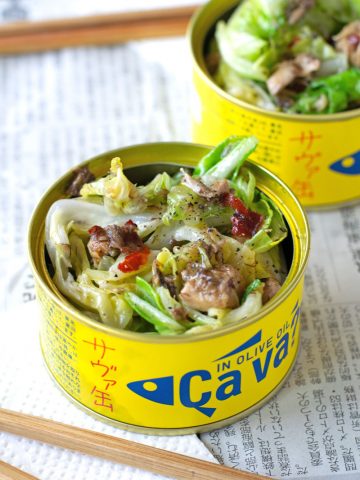
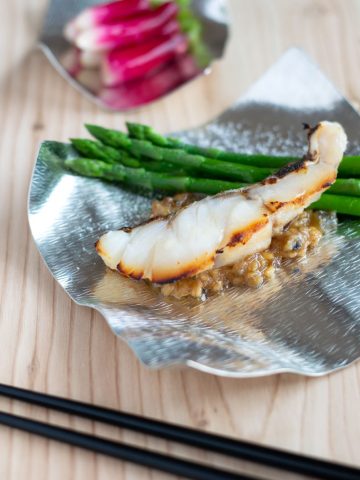
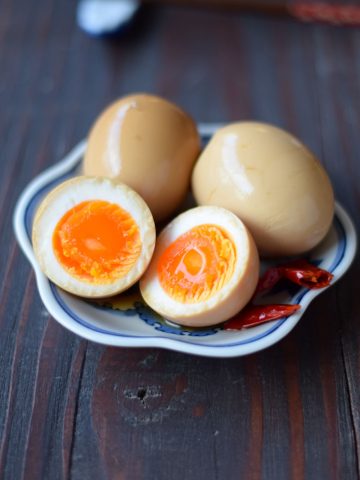
What to Serve with Mashed Japanese Sweet Potatoes "Izakaya-Style"

How to Store and Reheat Mashed Satsumaimo
To store: Let the mash cool completely, then transfer to an airtight container and refrigerate. For best texture and flavor, enjoy within a few days.
To reheat:
- Stovetop: Warm in a pan over low heat, stirring often. Add a splash of cream or milk if it's thickened up in the fridge.
- Microwave: Heat in short bursts, stirring between each, until warmed through.
Frequently Asked Questions
The main difference is sweetness and texture. Regular satsumaimo are naturally sweeter and moister, which makes them perfect to mash. Purple Japanese sweet potatoes (murasaki imo) tend to be milder in sweetness and starchier or drier in texture. A drizzle of honey helps bring out the sweetness.
Yes. Swap the grass-fed butter for a plant-based butter (I haven't tested this myself, so results may vary) and use coconut cream instead of heavy cream. Just know it will give the mash a subtle coconut flavor, so keep that in mind if it's not something you love.
It's a bit of both, but leans slightly sweet thanks to the natural sugars in satsumaimo. Slow-roasting caramelizes those sugars on its own, so there's no need to add honey here. I save that for my Mashed Purple Sweet Potatoes instead, made with coconut cream. If you'd rather it lean more savory, that purple version is naturally milder and starchier, or just season this one to taste with salt and pepper.
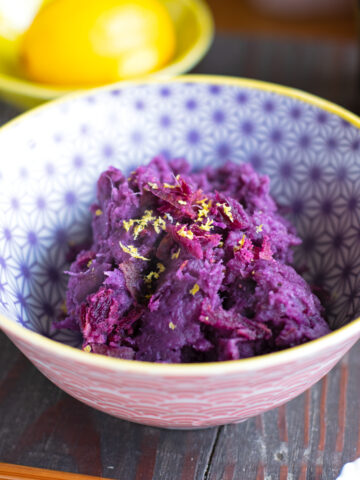
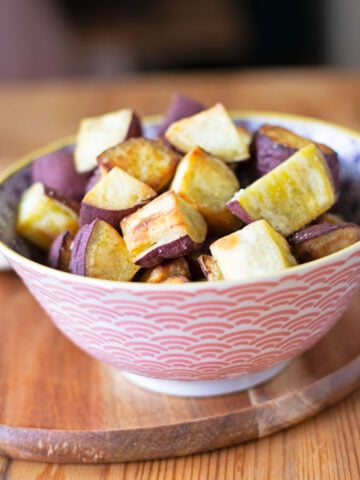

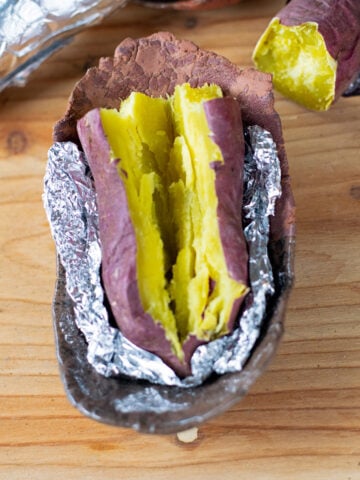
Did you try out these mashed Japanese sweet potatoes? I'd love to see how yours turned out!
Tag @eyesandhour on Instagram. Drop a ⭐️⭐️⭐️⭐️⭐️ rating & comment below.
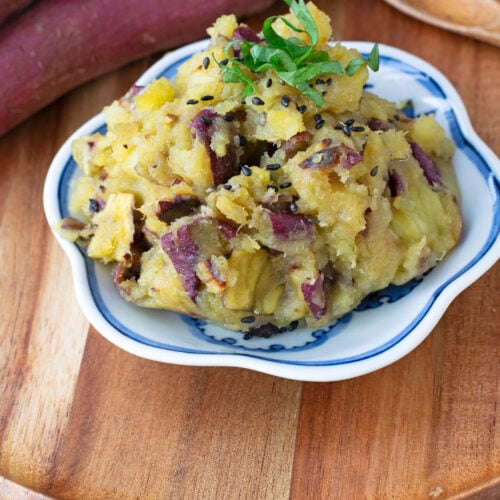
Creamy Mashed Japanese Sweet Potatoes (Satsumaimo)

Ingredients
- ½ pound Japanese sweet potato (satsumaimo) 227 g, approximately 2 small sweet potatoes
- 1 tablespoon grass-fed butter or plant-based butter for dairy-free
- 2 teaspoon heavy cream use half-and-half or coconut cream for a lighter texture
- 2-3 pinches sea salt
- ground pepper to taste
- 1-2 pinches black sesame seeds optional, to garnish
- 2 leaves thinly sliced shiso optional, to garnish
Instructions
Prep
- Wash sweet potatoes under the faucet with cold water. Brush off any soil using your fingers or a gentle brush. Trim away any root hairs while washing.
- Dry off with a towel or paper towels.
- Poke a few holes in each sweet potato with a fork.
- Place directly on a foil-lined baking sheet (no need to wrap, foil is just for easy cleanup).
Baking
- Place sweet potatoes in a cold oven (do not preheat). Set to 320°F (160°C).
- Bake for 60 minutes, or until a knife or skewer slides in easily with no resistance.
- Remove from oven and let cool.
- Once cool to the touch, cut off and discard the ends of each sweet potato. Trim away any dark spots on the skin. Cut into 1-2 cm wide pieces, then slice each piece in half lengthwise (skins included). Or, scoop out the flesh with a spoon if you prefer a skinless mash.
Mixing and Mashing
- Preheat fry pan on low heat.
- Add butter to pan.
- Once butter melts completely, add sweet potatoes to the pan.
- Using a wooden spatula, mash the sweet potatoes to your desired consistency and mix in the melted butter.
- Spoon heavy cream on top of the mashed sweet potatoes. Stir in with a spatula until the color is uniform.
- Season with salt and pepper. Mix in with a spatula.
- Serve warm in a bowl.
- (Optional) Sprinkle some black sesame seeds and garnish with thinly sliced shiso leaves.
Notes
- Density Warning: Larger satsumaimo may require extra baking time beyond 60 minutes.
- Skins On vs. Off: Skins are edible and full of fiber, but can be removed for an ultra-smooth mash.
Leave a Reply