
If you’ve ever seen a frilly green leaf tucked under sashimi or a deep purple herb in Japanese pickles or as rice sprinkles, you’ve met shiso.
The leaf may not look like anything special, but its taste definitely is. Shiso adds a depth of flavor and a splash of color to many East Asian dishes, and in recent years, it’s been gaining popularity abroad.
The plant, a relative of mint, is an aromatic addition to meals and a garnish superstar that easily finds its place in both home cooking and fine dining. So, let’s explore what shiso is, how to use it in your own cooking, and how you can grow your own aromatic leaves if they aren’t readily available in supermarkets in your area.
The Many Names of Shiso
As shiso spread all over the world, it came to be called by many more or less descriptive names.
You may have heard of beefsteak plant or Chinese basil. The beefsteak name comes from the plant’s reddish-purple color, and the name of basil refers to its refreshing aroma.
Also known as Shiso Perilla, or Japanese Perilla, the scientific name of shiso is Perilla frutescens. It’s not the only species of Perilla, but it’s definitely the most popular edible kind.
The Japanese name 紫蘇 (shiso) takes root from the Chinese zǐsū, and it literally translates to “purple perilla”. When you see the red-purple type of shiso plant, the naming is obvious, but there’s also an entirely green type of the plant which carries the same name. In some cases, you may hear leaves of green shiso called Ōba (大葉, literally “big leaf”), especially in supermarkets and soba restaurants.
Types of Shiso and their Tastes
While it’s a relative to mint, shiso stands out simply because it’s really difficult to compare to another herb.
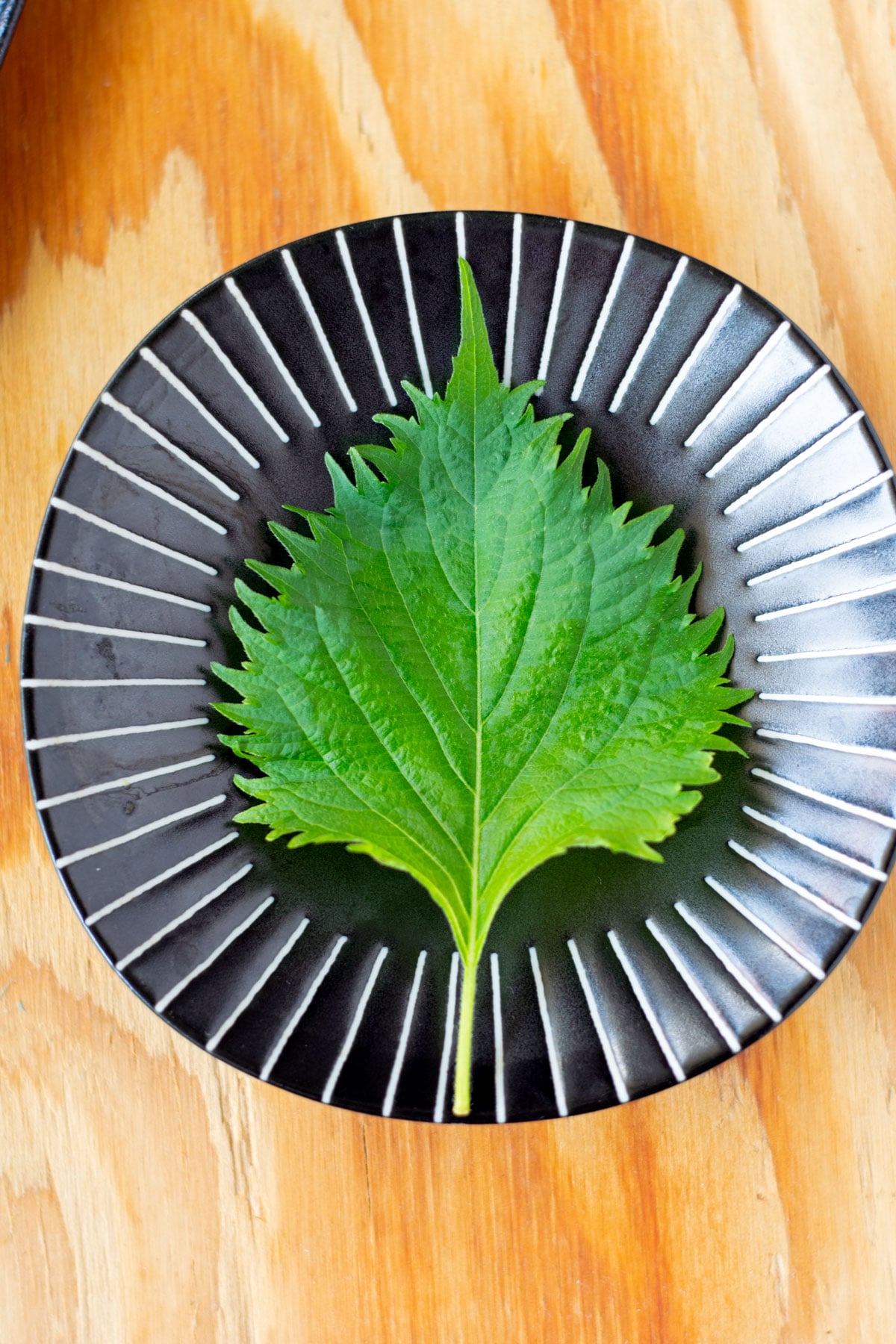
It’s a green or purple serrated leaf often found on Japanese plates as either garnish or aromatic flavoring. It comes in a few varieties that taste similar, but are more or less minty and tart, and bring a different splash of color to your plate.
The many shiso varieties all share a few features – they’re fairly large, broad leaves with serrated edges and smooth on the upper side and with little “hairs” on the back side. In fact, shiso looks very similar to Coleus plants with their vibrant color patterns, but tastes infinitely better (Coleus belongs in your living room, not in your stomach).
The Taste of Shiso
In general, the taste of shiso can be described as minty, a little spicy (but still mellow), and essentially herbal.
Beyond the leafy flavor, shiso carries deeper tones that people compare to licorice, basil, anise, or even cinnamon – and your palate and food combinations may influence how you perceive the flavor. Depending on the type, shiso may also taste slightly sour (especially red shiso furikake which is used in plum pickling). But overall, shiso has a soft but complex flavor profile that adds a nice kick to many dishes.
Types of Shiso
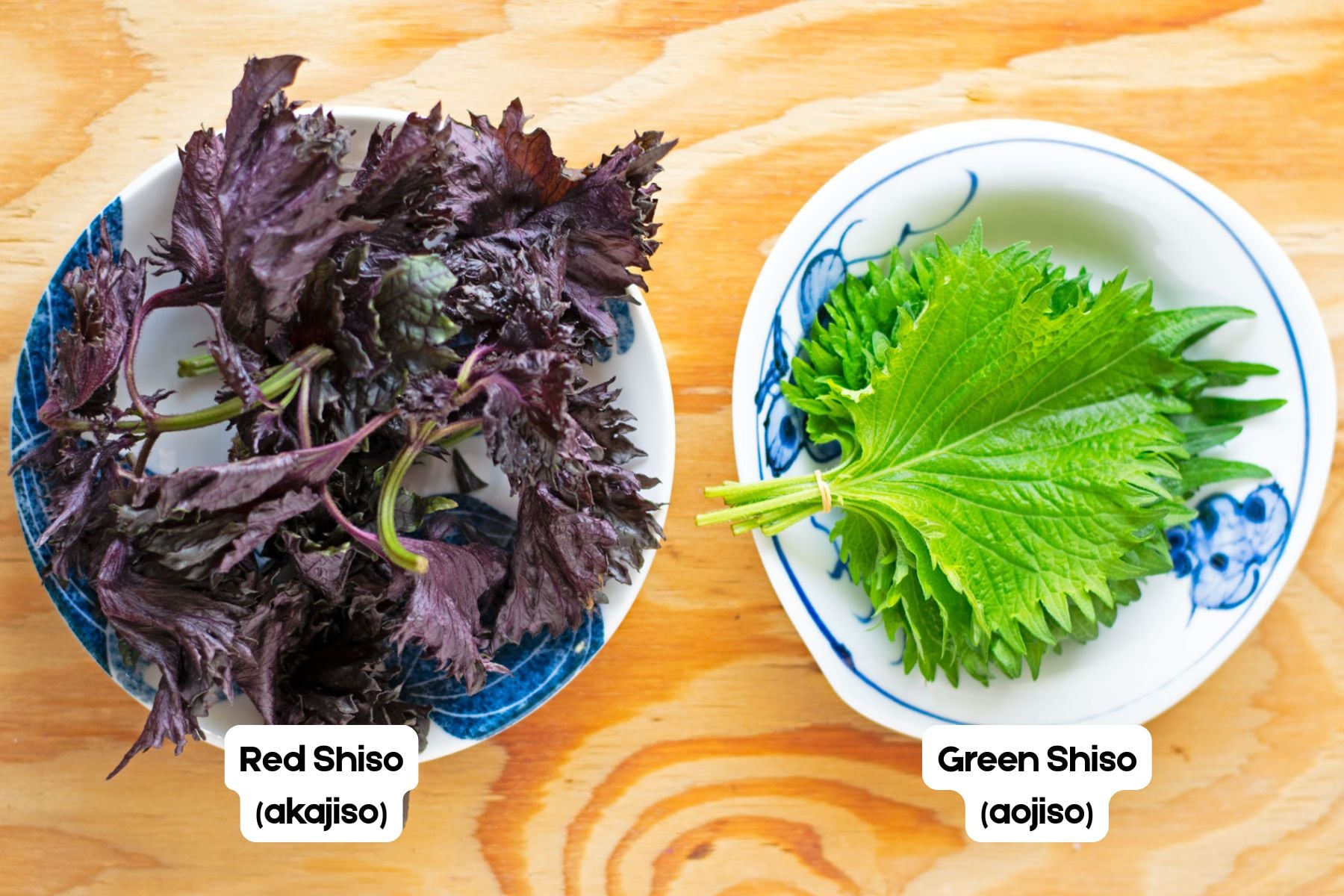
Green Shiso (青紫蘇, Aojiso)
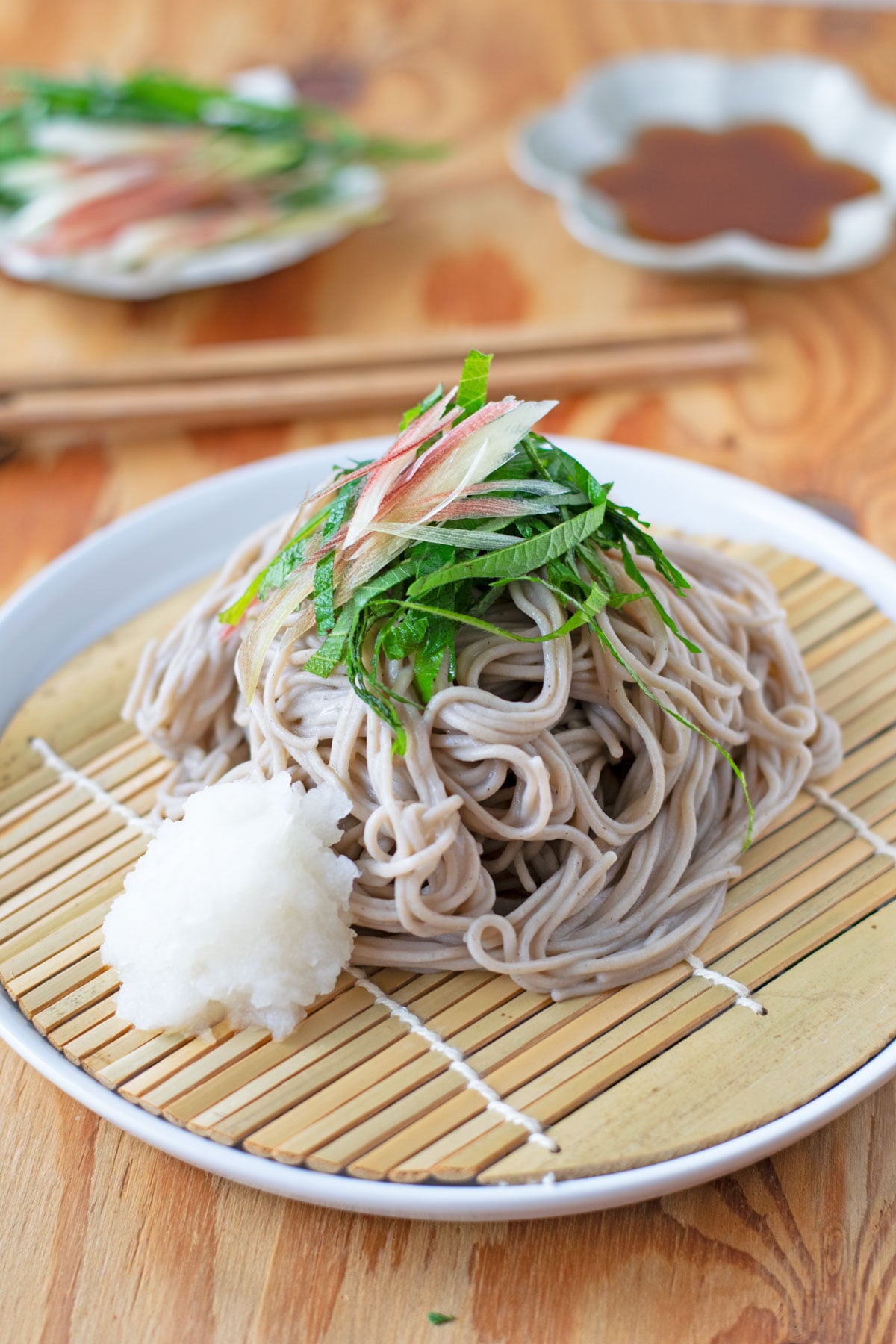
Green shiso is completely green – and it’s very likely to show up whole with sashimi or finely chopped on top of noodles.
It’s by far the most popular type of shiso, and it’s sold in Japanese supermarkets year-round. It has a minty, refreshing flavor that adds a dose of freshness to any rice-based food.
From Matt: After more than 20 years in Japan, shiso had become one of those ingredients I barely noticed anymore. But while creating this guide, I suddenly realized it was everywhere. I kept noticing the tucked-in green leaves sticking out from supermarket sashimi platters, packed into bentos, and quietly garnishing Japanese meals.
Purple/Red Shiso (赤紫蘇, Akajiso)
The purple leaves of red shiso are a bit harder to find fresh as they’re usually only available in the summer.
The leaves are red on both sides with only a hint of green peeking through.
This is a popular kind of shiso used in a variety of ways, from juice to furikake – but the bulk of the leaves country-wide is used when preparing a popular pickled treat called umeboshi. Despite being made of what is technically a fruit, umeboshi, or pickled Japanese plums (really, more closely related to apricots), are a very very salty food with a hint of plum-y tartness. Shiso is used in the pickling process to add color and flavor to the fruit.
In Japan, fresh red shiso often starts appearing in supermarkets during plum season, when the leaves are sold in large bundles for making homemade umeboshi (pickled plums). Around the same time, bags of salted red shiso (momi shiso, 揉み紫蘇) begin appearing alongside green ume and other pickling supplies. They're sold for making homemade umeboshi and are often easier to find than fresh red shiso leaves.
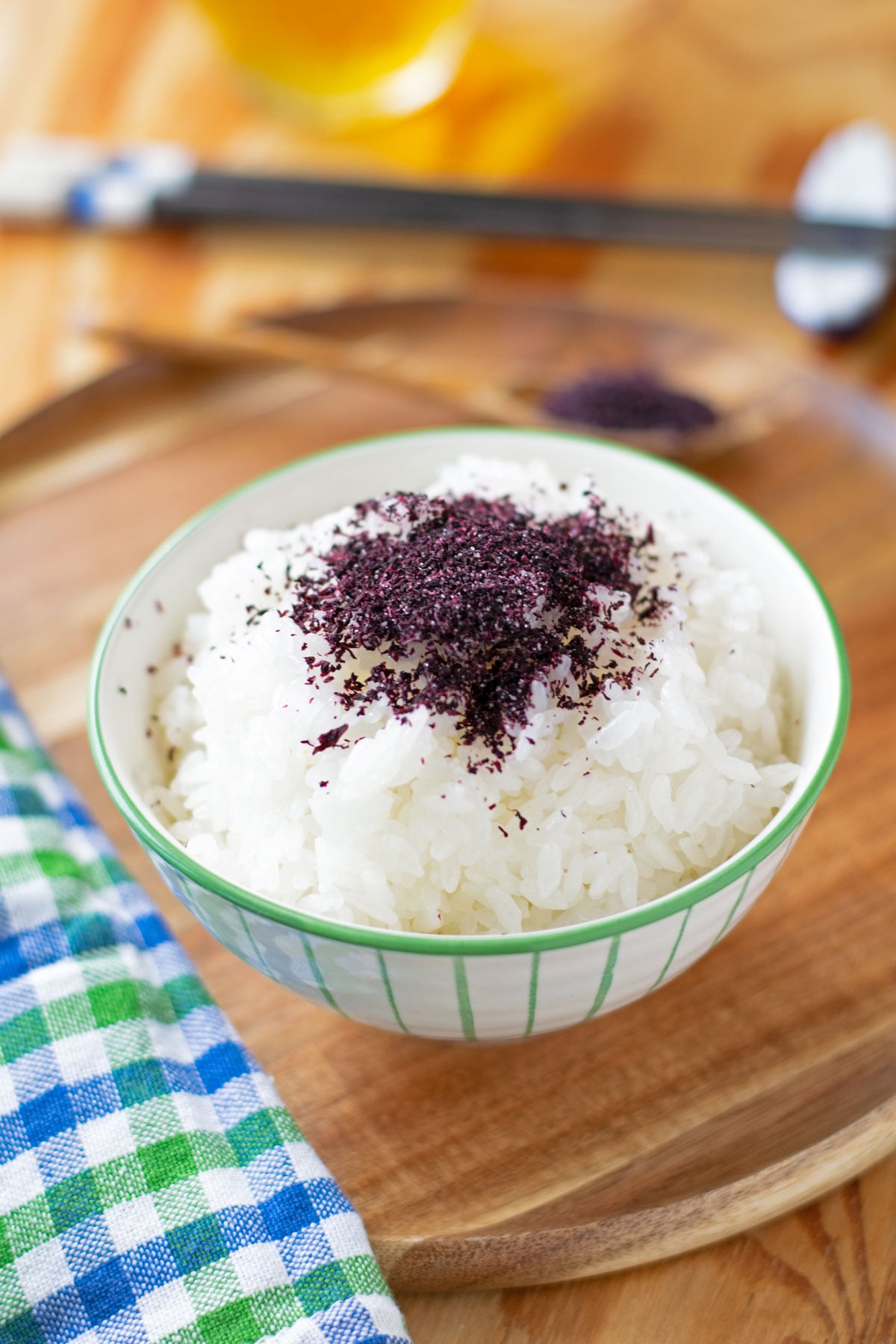
After the pickling, red shiso leaves are dried, ground, and salted to make a wonderfully tart and flavorful topping for rice (one of the famous brands is Mishima Yukari). It’s one of the most popular additions to onigiri rice and my personal favorite furikake!
Bicolor Shiso (片面紫蘇, Katamen-jiso)
Green at the top and purple at the bottom, bicolor shiso brings the best of both worlds. It has the slight spiciness of red shiso and the minty, basil-like freshness of green shiso, so it can be used as a substitute for both.
Other Types of Shiso
Along with these basic types, we also have special cultivars like variegated shiso or madara-jiso, and ruffled varieties of both red and green shiso (chirimen-jiso and chirimen-aojiso), all very similar to their basic kinds. In essence, you can use other kinds of shiso as a substitute for a slight change in the outcome, so feel free to experiment, or even mix and match.
Uses of Shiso in Japanese Cuisine
Whole as a garnish, added to salads, shredded as furikake, fried in tempura, added to sauces, and even cooked into juice and salad dressing, there’s a plethora of ways you could use both green and red shiso in Japanese-style cooking.
Sashimi
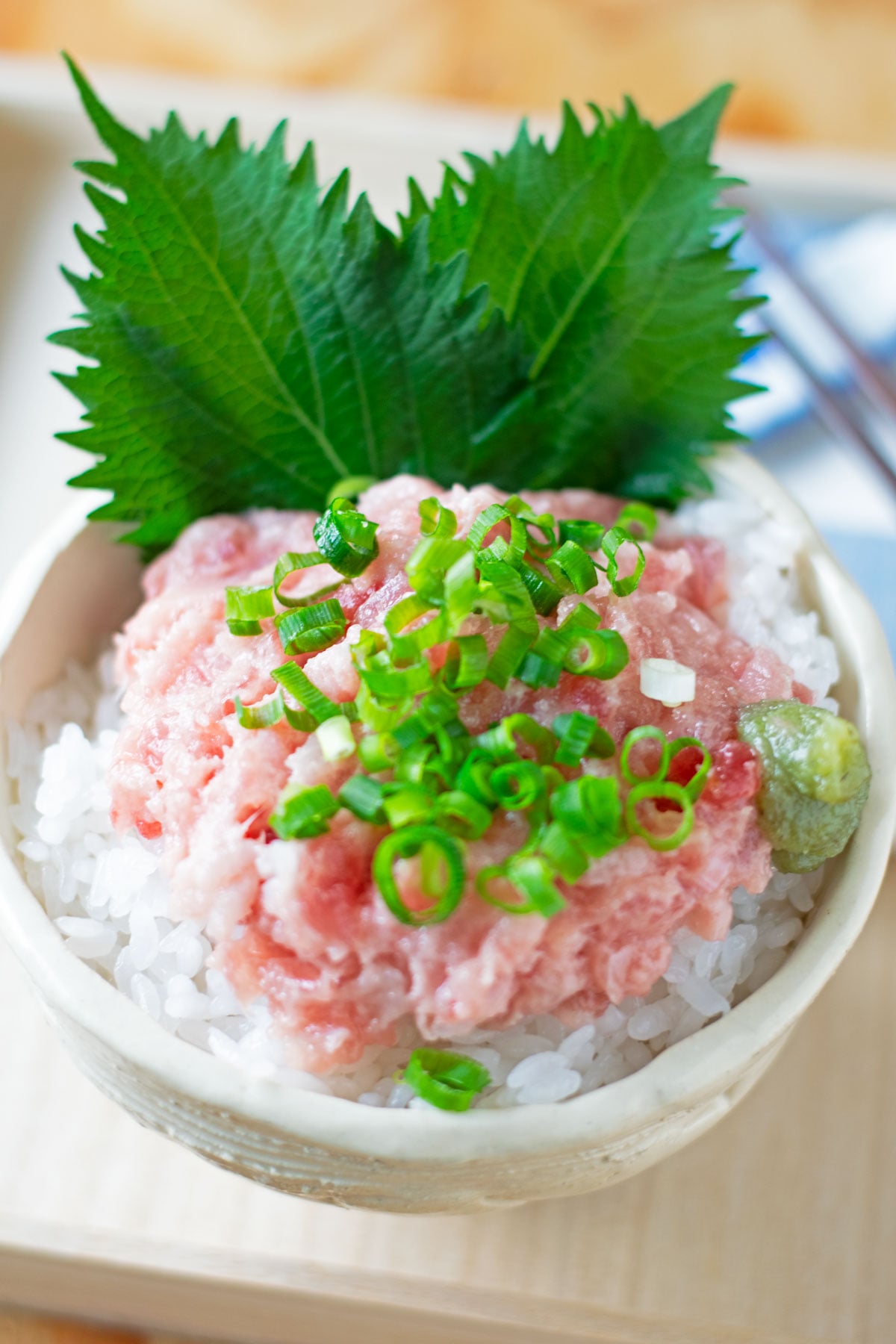
The frilly leaf that lines the bottom of a sashimi platter is green shiso. Traditionally, it was believed to help preserve freshness because of its antimicrobial properties, but with today’s advanced preservation techniques, it’s just a tasty garnish that complements your fish amazingly and adds a bit of tasty fiber. It’s also used in other fish dishes like tataki and namerou.
In Noodles and Tofu dishes
If you feel like adding a burst of flavor to your noodles or chilled tofu (hiyayakko), shiso is the way to go. You can chop green shiso into smaller pieces and sprinkle over your soumen or hiyamugi for a bit of tasty freshness.
Fried in Tempura
My friend likes to say that even cardboard tastes good in tempura. While I wouldn’t go that far, covering whole green shiso leaves in tempura batter and frying them is a tried and tested way to enjoy this aromatic plant.
Red Shiso Pickled with Umeboshi
Need to add both salt and flavor to your dishes? A bit of umeboshi goes a long way (seriously, these pickled plums are crazy salty).
You’ll often find pieces of red shiso in your umeboshi jar – the leaves are used during the pickling process to add color and flavor to the sour plums. Both work great as onigiri filling or an addition to your home-cooked meals.
Shisonomi
Leaves aren’t the only part of the shiso plant that we can eat – young buds are eaten too, just before they go to seed. Shisonomi, as the buds are called, are an amazing garnish and are often used in tempura on a stalk.
Shiso Juice
One of the most surprising uses of shiso is making juice out of it! This refreshing drink is typically made with red or bicolor shiso and is especially popular during the hot summer months. To make shiso juice, the leaves are simmered in water and then mixed with an acid such as lemon juice, vinegar, or citric acid, which gives the drink its bright red color and tangy flavor.
For many people in Japan, shiso juice is a nostalgic taste of summer. Some families still make a batch at home during red shiso season and keep it chilled in the refrigerator to enjoy throughout the warmer months.

How to Use Shiso at Home
You can use shiso in a variety of home-cooked meals – of course, you can follow the traditional Japanese recipes, or you can go creative and add the leaf or furikake to any food that you like cooking at home for a refreshing kick.
From Matt: Shopping at supermarkets in Japan, I’ve come to expect every store to carry shiso. It’s not a specialty herb you have to hunt for. It’s basically everywhere and usually very inexpensive. You’ll see it tucked into bentos, on top of noodles, and quietly added to everyday meals across Japan.
You can get shiso fresh when it’s in season and chop it up into smaller pieces to garnish anything. Alternatively, you can get dried shiso or even shiso furikake (caution: there are salted and unsalted kinds) for longer storage and out of season.
Substitutes for Shiso in Home Cooking
While nothing tastes exactly like shiso does, there are a few herbs that you can use instead of shiso in a pinch. First off, you may be able to get another kind of perilla in your shop – and Vietnamese perilla comes quite close.
Alternatively, you may want to mix a tiny bit of mint with basil (lemon basil works wonderfully) for that refreshing kick. Thai basil is probably the closest you’ll get with non-perilla herbs. Finally, lemon mint or cilantro may work for your recipe. However, shiso is unique, so these won’t be quite the same, just nice in their own way.
If you can’t reliably get a supply of shiso, you may want to consider growing your own – it’s not a difficult plant to take care of!
Grow Your Own Shiso: Seeds and Care
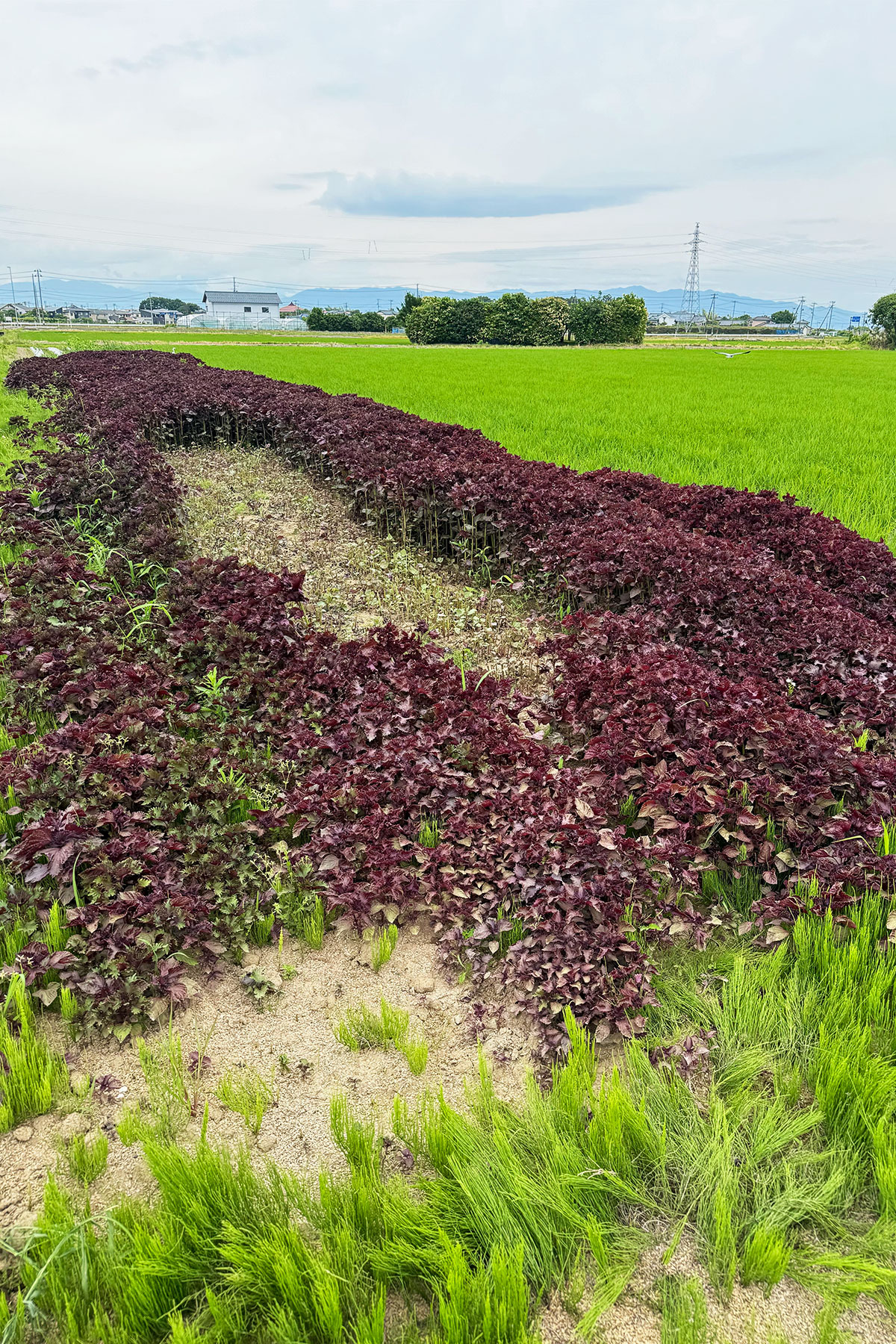
If you can’t get your hands on fresh shiso leaves and you don’t want to use the substitutes, you might want to grow your own flavorful leaf. It’s not hard! In fact, if you ever successfully grew mint, you can grow shiso too.
Just like mint, in moderate climates shiso spreads very aggressively. It’s a sturdy conqueror. Once the roots take, it may just take over all available land in your garden. So, I highly recommend picking a separate portion of your garden that’s away from other plants, or better yet, planting shiso in pots/planters where it can’t spread endlessly.
Shiso grows in thick bushes, and in good conditions, it can reach a height of up to 50 inches tall (around 125 cm). You can sow the seeds to help it spread or just let nature take its course, and it’ll naturally spread all around if its conditions are favorable.
Ideal Hardiness Zones for Shiso
Shiso is a pretty resilient plant, and depending on the harshness of winters in your area, it can grow year after year (as a perennial) or, if you get harsh winters, you might need to replant it every year as an annual plant.
In hardiness zones 2-9, it grows as an annual plant, and the lucky ones in hardiness zones 10 and 11 can expect their shiso plants to survive the winter. If you're not sure, check the hardiness zone of your area on this map.
Light, water, and pest control
Shiso loves light! If you have a sunny place with full sun, don’t hesitate to grow it there. If you only have access to spaces with partial shade, your shiso still has a pretty high chance of survival but may etiolate (have longer, thinner stems and fewer leaves) – you can consume the leaves nevertheless.
It prefers moderate watering. If your area doesn’t get a lot of rain, water your shiso once a week, and place mulch on the soil to help retain moisture. Avoid watering directly over the leaves – try to water under the foliage and near the soil, to reduce the chance of complications with fungi.
With a bit of luck and consistent watering, your shiso will thrive and you’ll have a fresh supply every summer to use in your recipes!
She so good!
Whether it’s wrapped around sashimi, mixed into rice seasoning, or turned into a refreshing summer drink, shiso never fails to leave a strong and refreshing impression. Fresh, herbal, and slightly spicy, the flavor is difficult to describe but instantly recognizable once you try it. Best of all, it’s really easy to grow! Perhaps that’s why shiso has remained a staple of Japanese cuisine for centuries while slowly winning over kitchens around the world. Hope that it wins over yours too!
Frequently Asked Questions
Shiso has a fresh, herbal flavor that's often described as a mix of mint, basil, anise, and citrus. Green shiso tends to be brighter and more refreshing, while red shiso has a tangier, earthier taste. Its unique flavor pairs especially well with seafood, rice, noodles, and tofu.
Shiso is commonly called Japanese perilla, shiso perilla, or beefsteak plant in English. It belongs to the Perilla family, with the scientific name Perilla frutescens. While several English names exist, "shiso" is the term most commonly used in Japanese cooking.
No, shiso and basil are different herbs, although both belong to the mint family and share some herbal notes. Shiso has a more complex flavor with hints of mint, anise, and citrus that set it apart from sweet basil. While basil can provide a fresh element in some recipes, it isn't a true substitute.
Yes! In fact, raw shiso is one of the most popular ways to enjoy it. Green shiso leaves are commonly served with sashimi, shredded over noodles, added to salads, or used to garnish chilled tofu and rice dishes. Both green and red shiso can also be cooked, pickled, or dried.
Green shiso has a bright, refreshing flavor and is often served fresh with sashimi, noodles, and other everyday dishes. Red shiso has a deeper color and tangier taste and is commonly used to make umeboshi, shiso juice, and shiso furikake. Both come from the same plant but have different culinary uses.
Fresh shiso can often be found at Japanese and Asian grocery stores, especially during the summer months. You may also find dried shiso, shiso furikake, and salted red shiso year-round. In Japan, shiso is widely available in supermarkets and is inexpensive enough to be an everyday ingredient.
ABOUT THE AUTHOR

Dunja Djuragic Dugandzic
Dunja believes simple, straightforward, a little cheeky, and very informative writing can change the world. From teenage years, her fascination with the Japanese way of life continues to grow - and so does her research. Since 2015, she writes content about Japan, travel, world cultures and heritage, crafts and art, printing technologies, and a variety of digital products.
Photos and edited by Matt Eisenhauer, living in Japan for 20+ years, sharing authentic Japanese food experiences.
Leave a Reply