
This sweet potato dessert finally tastes like real yaki-imo from a Japanese shop: skin so caramelized it's practically candy, flesh naturally sweeter than a ripe banana, no added sugar needed. The secret isn't a special oven or a complicated technique. It's temperature. Slow-roasting alone unlocks that intense sweetness. Best of all, it's the authentic taste of Japan with no hard-to-find ingredients.
Jump to Recipe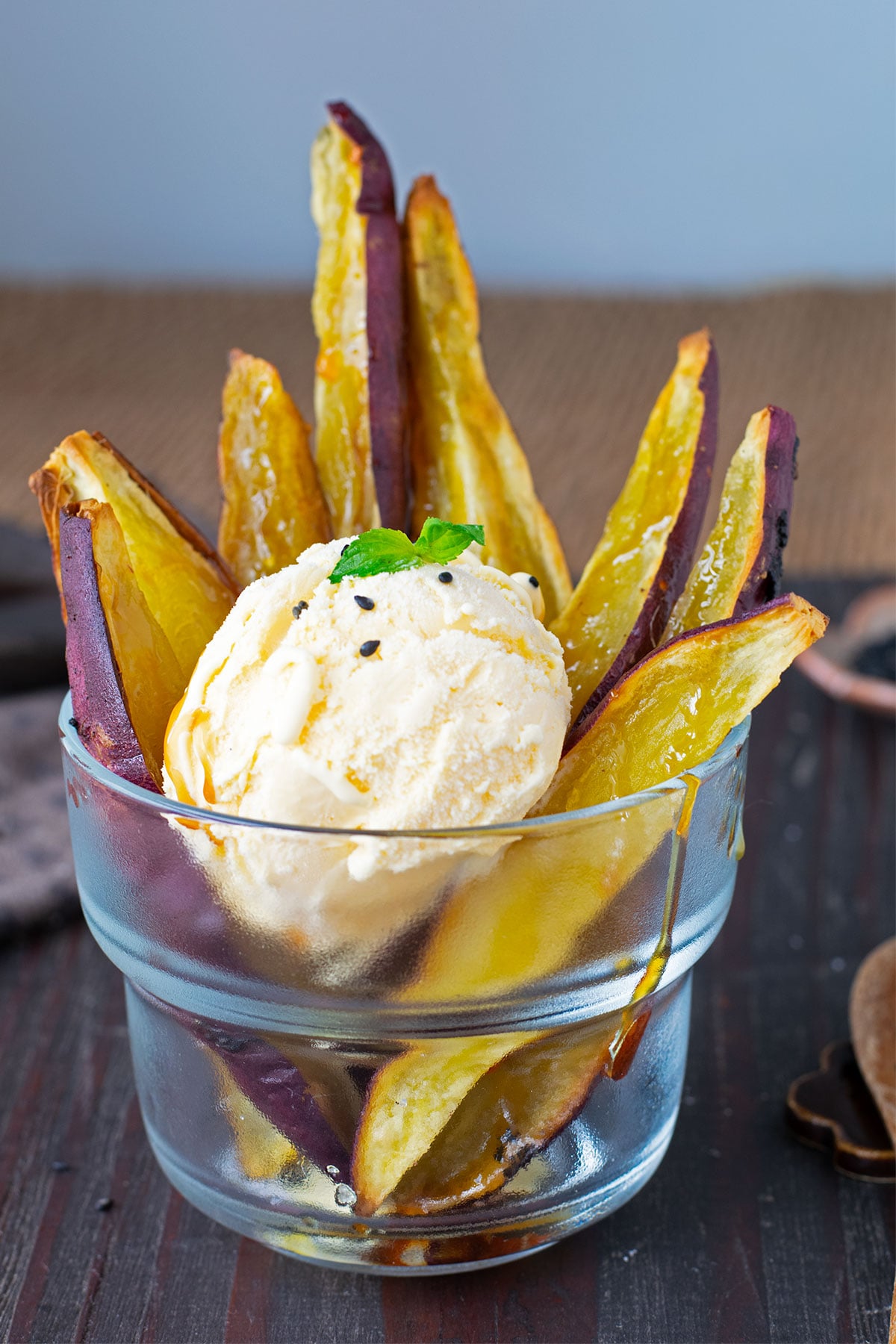
So sweet and delicious that it feels like magic but it's actually just science.
Roasted sweet potato with ice cream isn't everywhere in Japan, but when I find it, it always turns my head.
I've watched it being made behind the counter at my favorite izakaya in Sendai, drizzled with honey. Then a parfait shop in Niigata, with its glasses layered with fruit and soft serve, got me thinking: why not sweet potato?
Two moments, one idea: warm, roasted sweet potato and something cold and sweet on top just works.
But it was a hole-in-the-wall shop in Ginza that showed me just how sweet a sweet potato can actually get. It was sweeter than a ripe banana, but baked. I couldn't stop thinking about it, so I started roasting my own.
My attempts were total flops. I felt like giving up on this recipe, until I understood the science behind it.
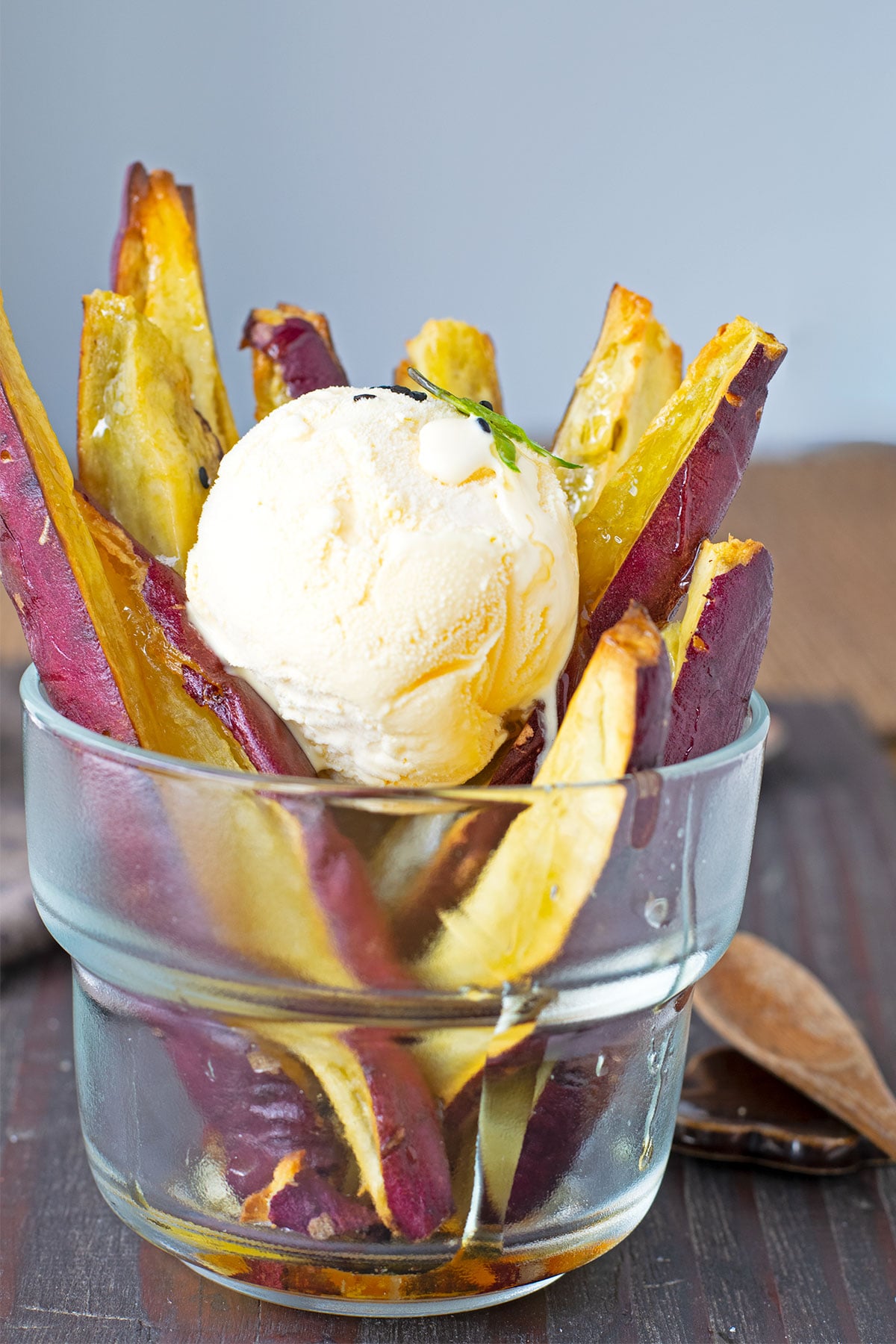
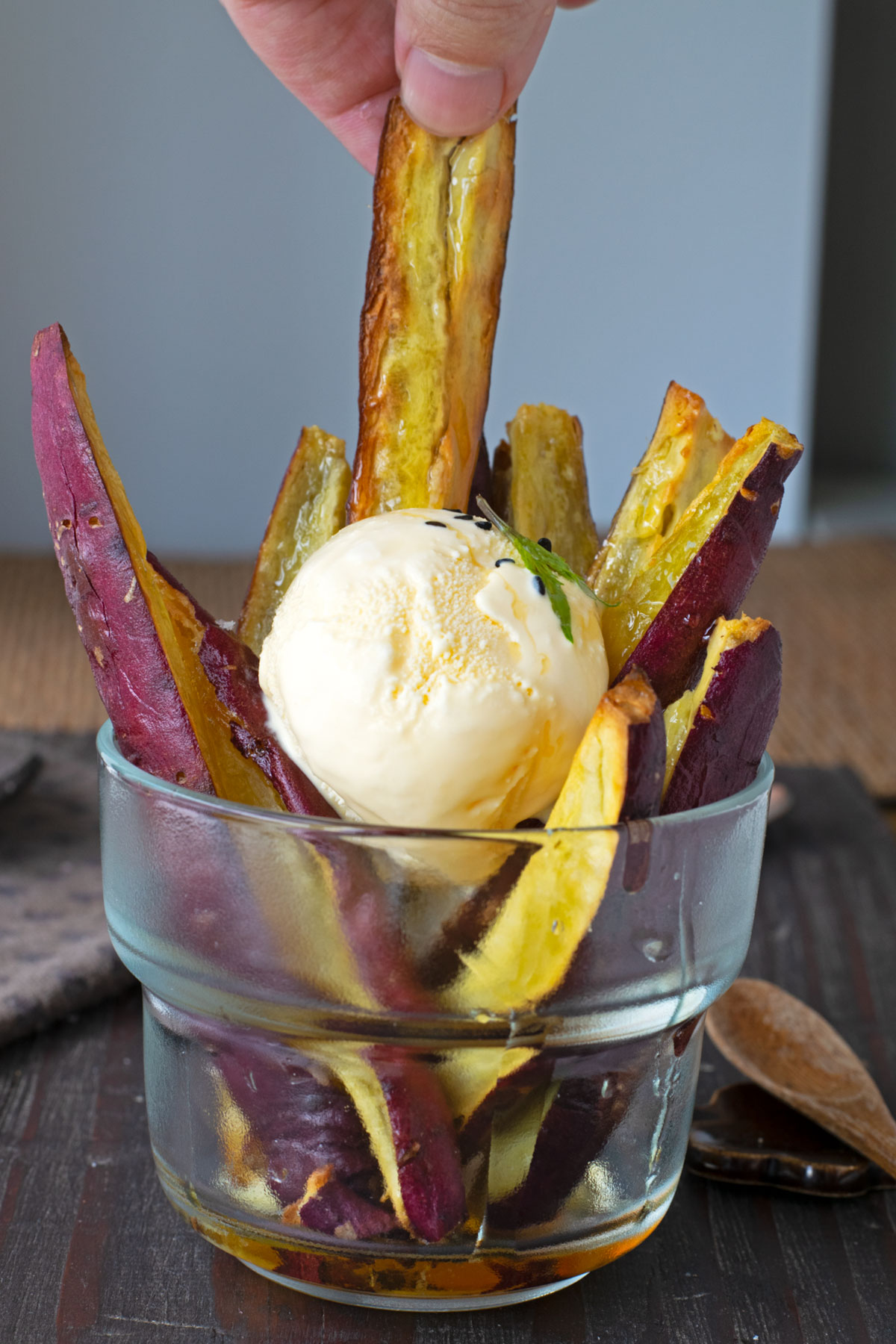
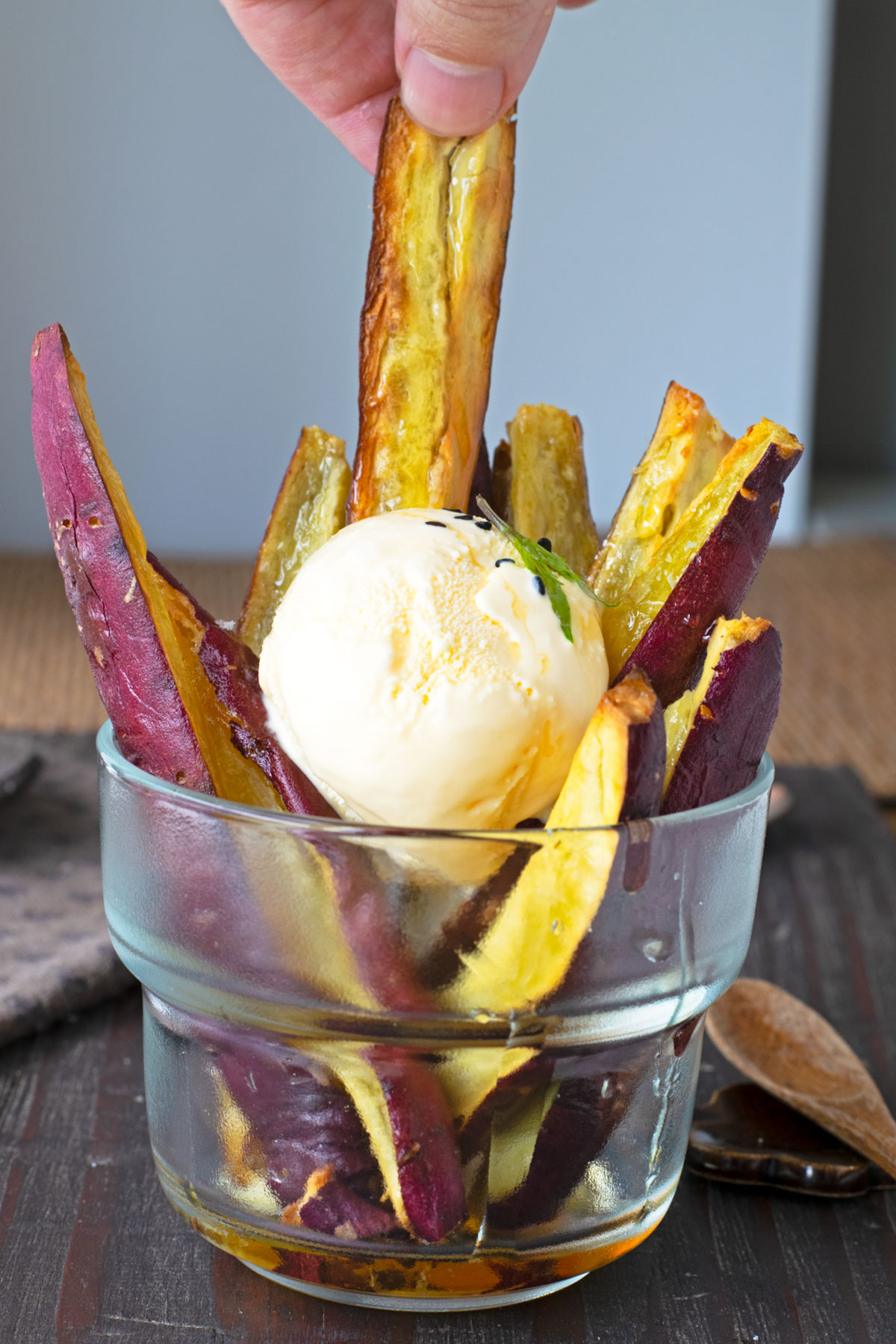
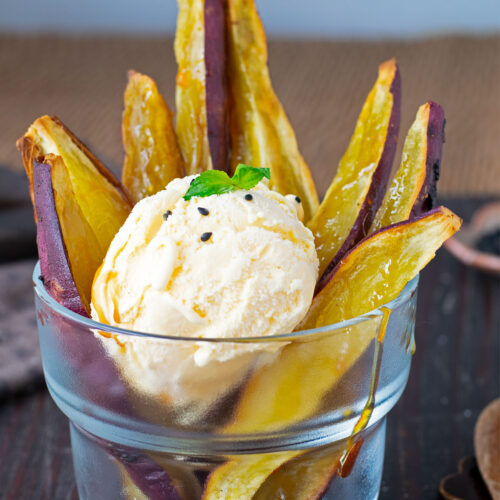
Turns out the secret isn't a special oven, it's slowing down: cook it low and slow, and let the sugars work their magic. When it came time to decide how to serve mine, this was how: long roasted wedges, stood up in a glass, topped with a scoop of vanilla ice cream and a drizzle of honey.
This recipe taught me to believe in magic again.
Love and 🍠 from Japan,
Matt
Jump to:
- What Are Japanese Sweet Potato Desserts?
- Why You'll Love This Recipe
- What Makes Japanese Sweet Potatoes Special
- What Variety of Japanese Sweet Potatoes
- Ingredients
- Ingredient Notes
- Variations
- Essential Equipment
- How to Make It
- Tips for the Best Results
- Variations
- Common Mistakes
- More Japanese Sweet Potato Recipes
- Frequently Asked Questions
- Yakiimo Aisu - Japanese Sweet Potato Dessert
- What TeA To Serve with Yakiimo Aisu
What Are Japanese Sweet Potato Desserts?
When people search for Japanese sweet potato dessert, they usually land on suiito poteto, mashed sweet potato baked with butter, sugar, and cream until the top turns golden. It's the classic. But roasted sweet potato is a dessert all on its own too. Just a long, slow roast until the sugars caramelize on their own. That's the version I'm building on here, with a single scoop of ice cream, a sprinkle of black sesame seeds, and a sprig of mint to look pretty.
This is the kind of Japanese sweet potato dessert that tourists write home about. It's surprising just how good it is, even though it's just a plain old sweet potato.
Why You'll Love This Recipe
Naturally Sweet, Straight from the Oven
Slow-roasting caramelizes the potato's own sugars. No added sugar needed.
Crispy, Candy-Like Skin
The skin caramelizes into something crisp and almost candy-like at the edges.
Easy to Customize
Swap in matcha ice cream, kuromitsu, kinako, or cinnamon to make it your own.
Just a Few Ingredients
Roasted sweet potato, ice cream, and a topping or two. Nothing exotic, nothing expensive.
Casual or Company-Worthy
Ready in minutes, but the tall glass and melting scoop look restaurant-worthy.
What Makes Japanese Sweet Potatoes Special
Satsumaimo, or Japanese sweet potato, isn't the same as the orange sweet potatoes or "yams" sold in most American grocery stores. The skin is a deep purple-red, and the flesh is pale and almost white when raw, turning a deep golden yellow once roasted. It's also drier and denser raw than what you're used to. And that density is why it holds its shape so well once roasted and cut into wedges.
Done right, it tastes rich and chestnut-like, more like a treat than a vegetable. Look for satsumaimo at a Japanese or Asian grocery store, though many regular supermarkets carry it too.
What Variety of Japanese Sweet Potatoes
I used Beni haruka for this recipe, one of Japan's sweetest and most widely grown varieties, prized for its rich, creamy texture.
Outside Japan, though, you'll likely just find it sold simply as "Japanese sweet potato," with no variety name given, and that's completely fine for this recipe too.
Ingredients
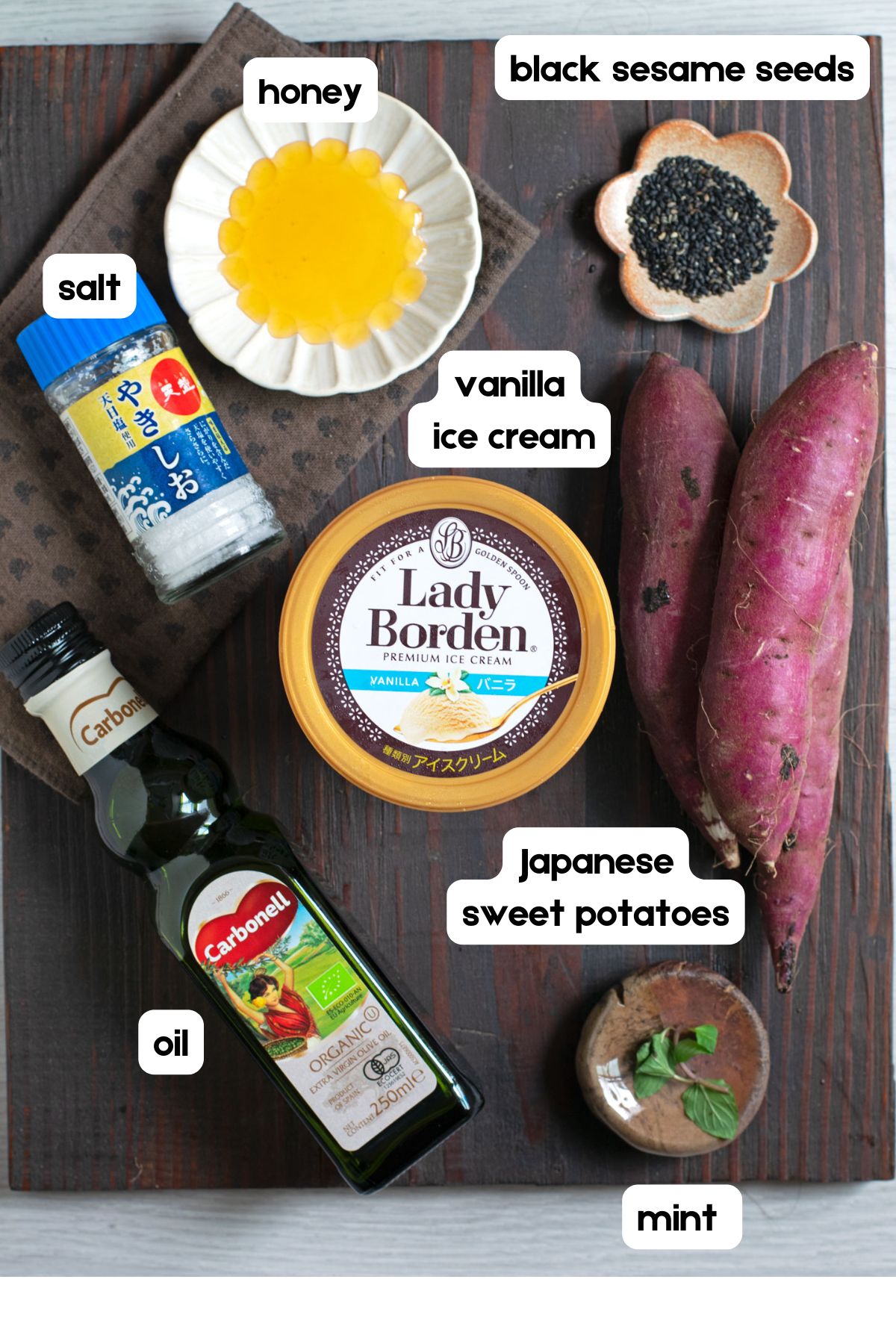
This roasted Japanese sweet potato dessert comes together with just a handful of simple ingredients. Here's what you'll need:
Japanese Sweet Potatoes (Satsumaimo)
The base of the dessert. Slow-roasting brings out its natural sweetness, so there's no need to add any sugar to the potato itself. Look for it at a Japanese or Asian grocery store, some regular supermarkets carry it too.
Oil
For brushing all sides of the sweet potato wedges before the second roast. I used olive oil, but a neutral oil like avocado oil or rice bran oil, a common one in Japan, works well too.
Vanilla Ice Cream
A simple, classic pairing that lets the roasted sweet potato's flavor come through. Swap in matcha, black sesame, or brown sugar ice cream if you want to switch things up.
Honey
A light drizzle adds just a touch more sweetness and ties the potato and ice cream together.
Black Sesame Seeds
A simple garnish for a bit of crunch and a nutty finish over the top.
Salt
A pinch, sprinkled on at the end once it's assembled in the cup, for a little salty contrast against the sweetness.
Mint
A small sprig for a fresh pop of color against the ice cream.
Ingredient Notes
Japanese Sweet Potatoes (Satsumaimo)
I recommend small, thinner sweet potatoes if you can find them, they give you the right balance of skin to flesh for perfect wedges. If you only have medium or large ones, you can still make it work. Store at room temperature, not the fridge.
Variations
- Kuromitsu instead of honey, for a deeper, more molasses-like flavor.
- Kinako dusted on top for a nutty, roasted soybean flavor.
- Cinnamon for warmth.
- Crushed nuts or granola for crunch.
- Whipped cream for extra richness.
- Maple syrup if you want something lighter than honey.
Essential Equipment
You only need a few basic tools to make this dessert:
- Oven, for slow-roasting. This recipe depends on a gradual, low-temperature roast, which most air fryers can't replicate the same way.
- Baking sheet, lined with foil for easy cleanup (the potato itself still roasts unwrapped, directly on the sheet)
- Pastry brush, for lightly coating sweet potato wedges with oil.
- A glass or cup for serving
- Ice cream scoop
How to Make It
1. Prep and start the roast
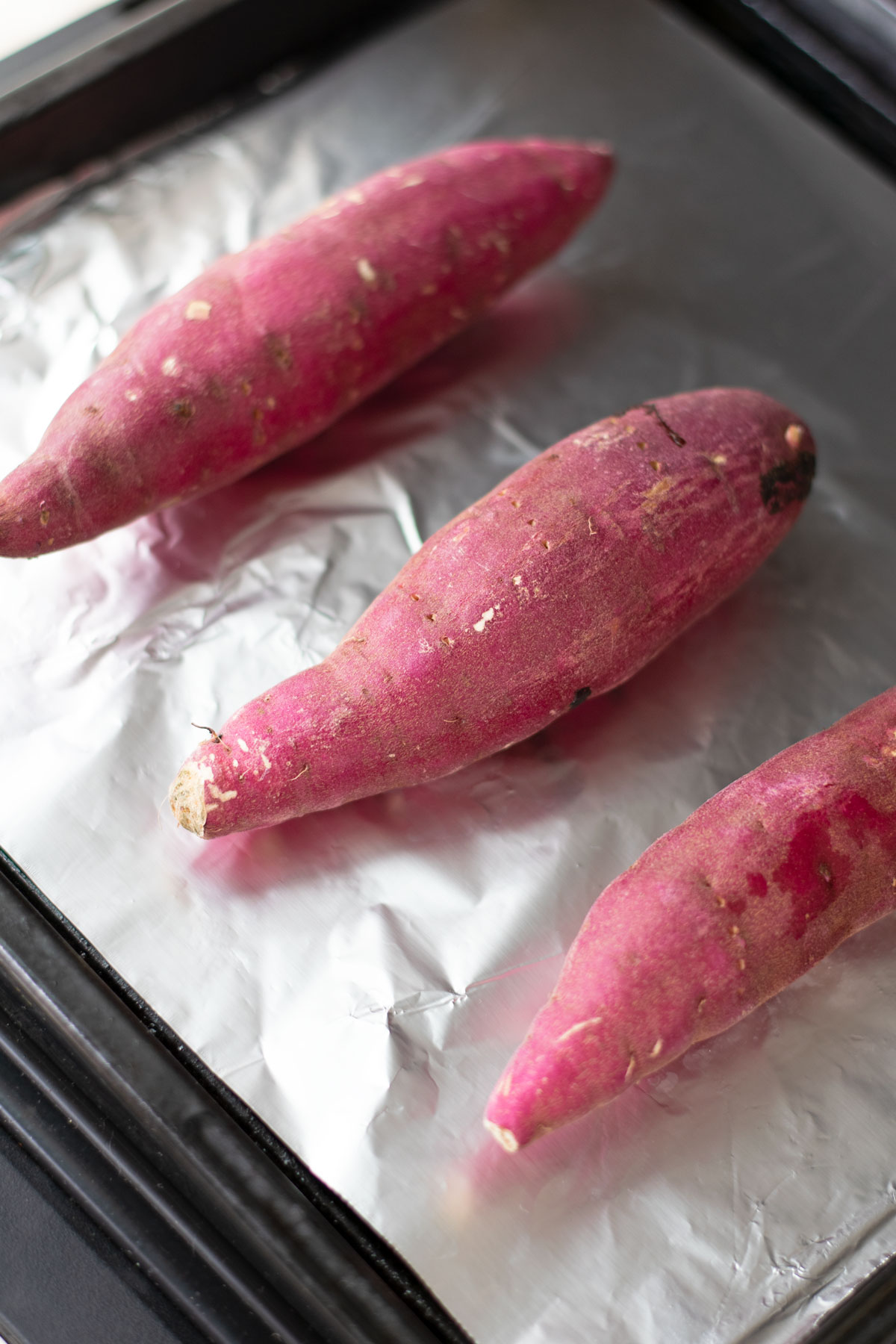
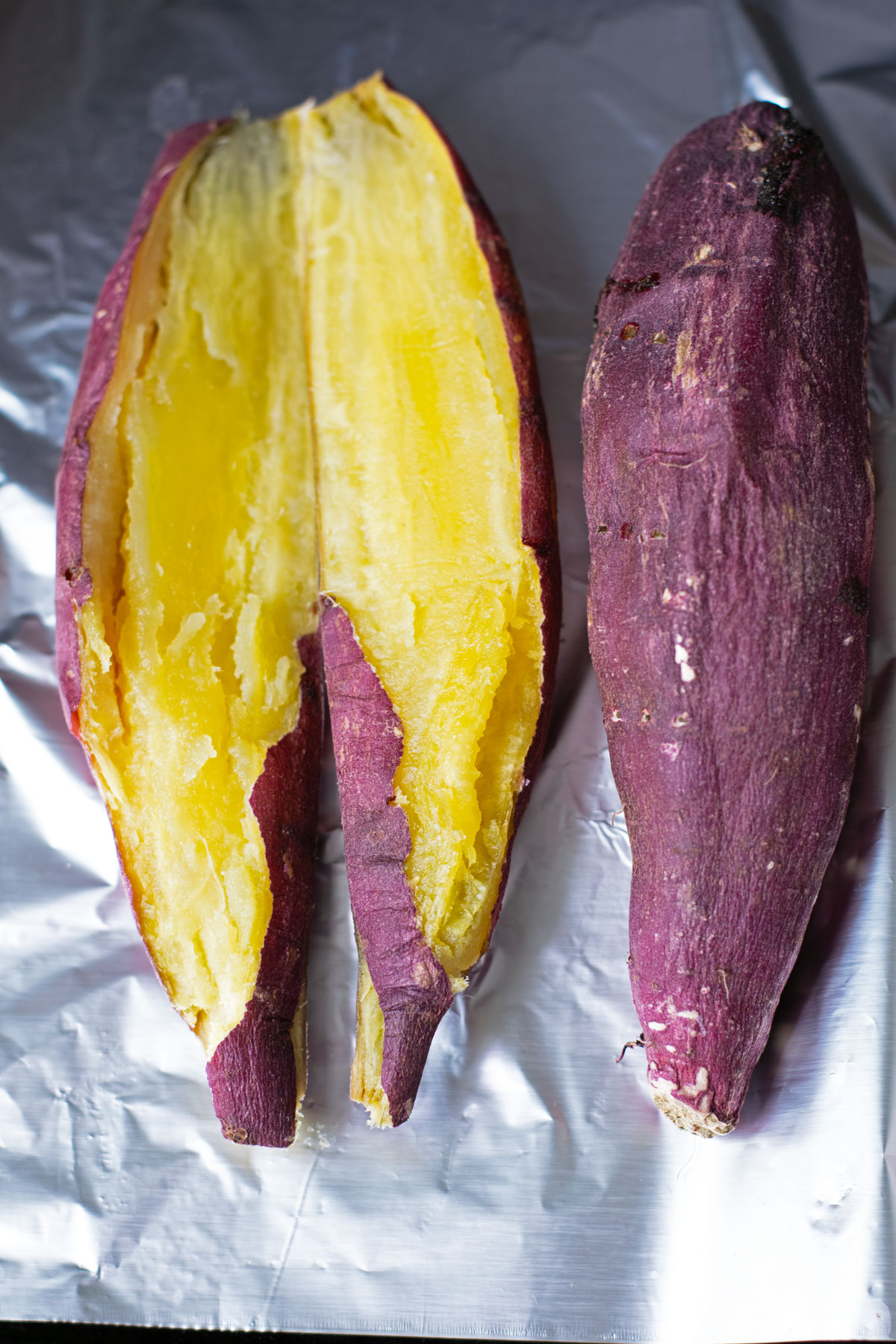
Wash and dry the sweet potatoes, then pierce each one a few times with a fork. Place them on a baking sheet and put them into a cold oven, don't preheat. Set the oven to 160°C (320°F) and let it come up to temperature together with the potatoes.
2. Roast low and slow
Roast for 60 minutes, until a skewer slides into the center easily. Let the potatoes cool for 10 to 15 minutes before handling.
3. Cut into wedges
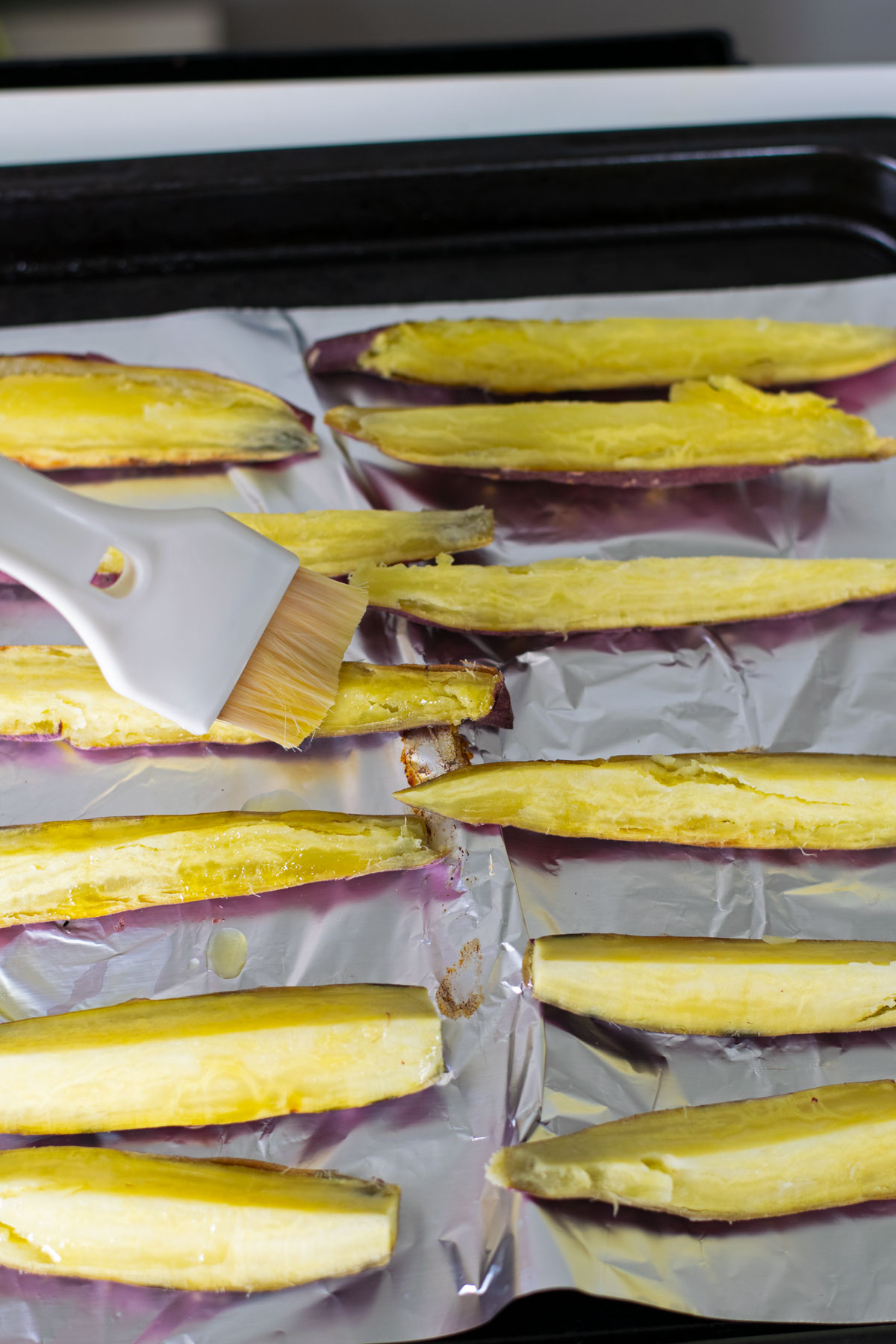
Cut each potato lengthwise into wedges, angling a few of the cuts to create tapered points for the tallest pieces. Lightly brush the cut sides with oil.
4. Caramelize the Outside on High Heat
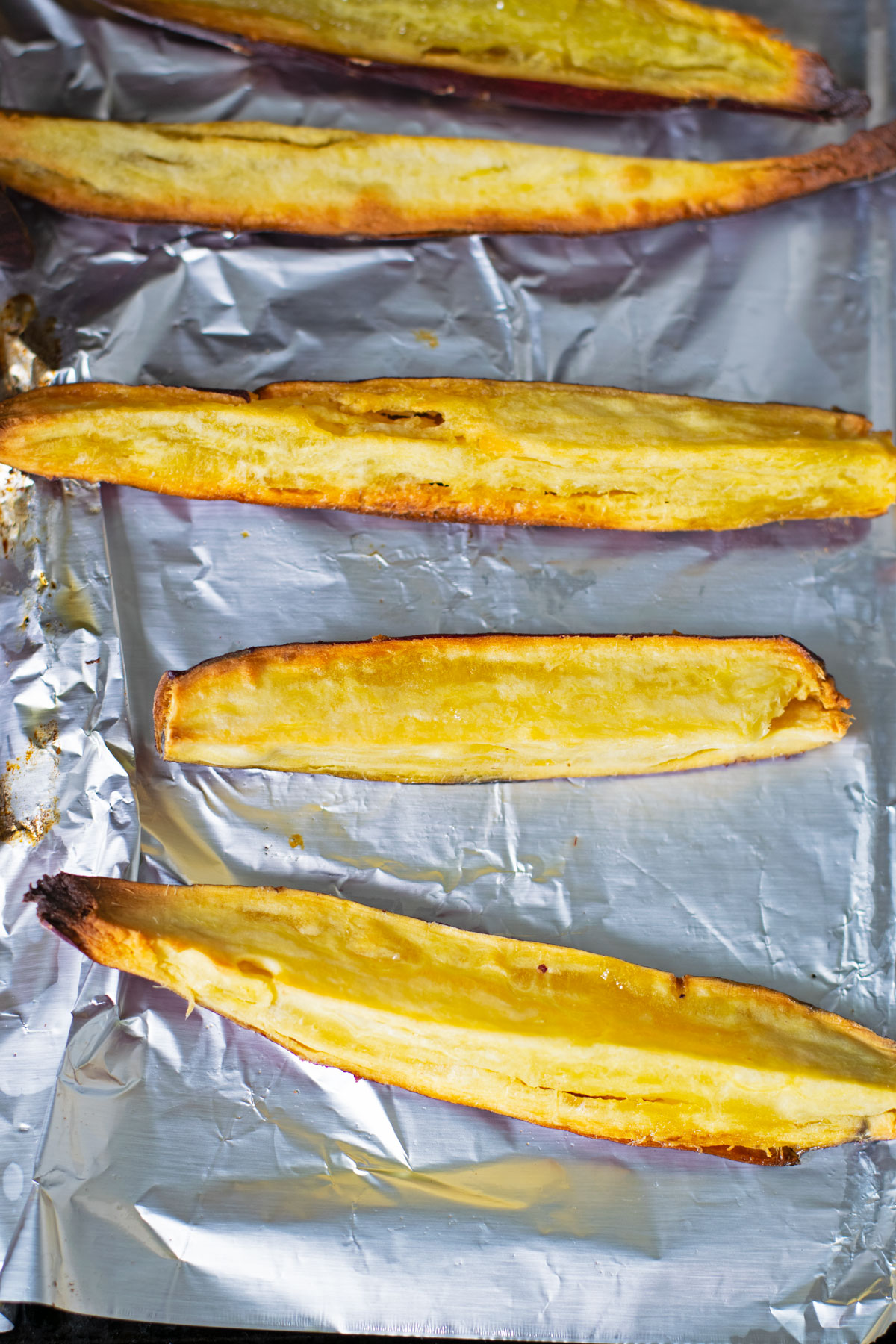
Turn the oven up to 410°F (210°C) and roast the wedges cut-side up for 17 to 19 minutes, until deeply golden and caramelized. Watch the tapered ends closely so they don't burn ahead of the rest.
Tips for the Best Results
- Roast in two stages: low and slow first to build real sweetness, then a short blast of high heat at the end to caramelize the surface. Skip either one and you'll miss half the payoff.
- Choose small, thinner sweet potatoes if you can find them, they give you better wedges and roast more evenly than large ones.
- Let the caramelized wedges cool for a few minutes before adding the ice cream, so it doesn't melt on contact.
Variations
Once you've made the base recipe, here are a few more ways to switch it up:
Swap the Ice Cream Flavor
Vanilla is classic, but matcha, black sesame, or brown sugar ice cream all pair well with roasted sweet potato if you want to change things up.
Try a Different Topping
Kuromitsu instead of honey for a deeper, more molasses-like flavor. Kinako dusted on top for a nutty, roasted soybean flavor. A dash of cinnamon for warmth. Crushed nuts or granola for crunch. Whipped cream for extra richness. Or maple syrup if you want something lighter than honey.
Make It Vegan
Use a coconut, almond, or oat milk-based ice cream instead of dairy. Everything else stays the same.
Add Mochi or Anko
A few pieces of mochi or a spoonful of sweet red bean paste (anko) add extra texture and sweetness.
Common Mistakes
- Skipping the slow, low-temperature stage. It's what converts the potato's starches to sugar, skip it and you'll get a browned potato that still tastes starchy.
- Not adjusting for potato size. This timing is for small, thin potatoes; bigger ones need more time, so check with a skewer instead of the clock.
- Cutting the wedges too thin. Thinner pieces dry out faster during the high-heat stage.
- Not watching the tapered ends during the high-heat stage. They brown much faster than the rest and can burn before the flatter parts finish.
- Serving the potato too hot. It'll melt the ice cream instantly.
More Japanese Sweet Potato Recipes

Frequently Asked Questions
Starting in a cold oven lets the potato heat up gradually alongside the oven itself, which gives the natural enzymes more time to convert the starches into sugar before the interior gets too hot for that conversion to happen. Preheating skips through that window too quickly and results in a less sweet potato.
Yes. Roasted sweet potato, or yaki-imo, is a beloved seasonal treat in Japan, especially in fall and winter, sold by street vendors, convenience stores, and specialty shops. Sweet potato also shows up in dedicated desserts like suiito poteto, a baked, mashed version, and daigaku imo, candied sweet potato, and purple sweet potato tarts are a famous souvenir sweet from Okinawa.
Vanilla is the classic choice and lets the roasted sweet potato's flavor lead. But Japanese flavors like black sesame and hojicha ice cream would all pair beautifully too if you want to switch things up.
Yes, just swap in a coconut, almond, or oat milk-based ice cream. Everything else in the recipe stays exactly the same. Instead of honey, try maple syrup instead.
Did you try this Japanese sweet potato dessert? I'd love to know how yours turned out! Were you surprised?
Tag @eyesandhour on Instagram. Drop a ⭐️⭐️⭐️⭐️⭐️ rating & comment below.
Yakiimo Aisu - Japanese Sweet Potato Dessert

Ingredients
- 2-3 Japanese sweet potatoes (satsumaimo) small sized (approximately .8 lb = 360 grams)
- 1 teaspoon oil (olive, avocado, or rice bran oil)
- 1 pinch salt
- 1 scoop vanilla ice cream
- 1-2 tablespoon honey
- 1 pinch black sesame seeds
- 1 sprig mint
Instructions
Roast the Sweet Potatoes
- Wash and dry the sweet potatoes; leave them whole and unpeeled. Pierce each a few times with a fork.
- Place on a baking sheet (no foil) and put into a cold oven. Do not preheat.
- Set the oven to 320°F (160°C) and let the oven and potatoes come up to temperature together.
- Roast for about 60 minutes for small potatoes, checking with a skewer for doneness.
- They're ready when a skewer or thin knife slides very easily into the center.
- Remove from the oven and let cool for 10–15 minutes.
Cut and Caramelize
- Cut each sweet potato in half lengthwise, then cut each half into wedges (quarters), about ¾ to 1 inch (2 to 2.5 cm) thick at the base.
- Lightly brush the cut surfaces with oil.
- Increase the oven to 410°F (210°C).
- Arrange cut-side up on a baking sheet, leaving space between pieces, and roast at 410°F for 17-19 minutes, until the cut surfaces are deeply golden and caramelized.
- Watch the tapered ends carefully. Tent with foil or pull early if they brown ahead of the rest. Let cool for 5–10 minutes.
Assemble
- Arrange the sweet potato pieces into a glass, tallest tapered pieces toward the back, shorter pieces toward the front.
- Add a scoop of vanilla ice cream toward the front.
- Drizzle with honey, then sprinkle with black sesame seeds and a pinch of salt.
- Garnish with a mint sprig and serve immediately.
Notes
- The cold-start (no preheat) method for the low roast isn't just a shortcut. It matters. Beta-amylase, the enzyme that converts the potato's starch into sweet maltose, works best in the 40–75°C range and stops once the interior gets much hotter. Starting in a cold oven lets the potato spend more time in that range instead of racing through it. That's what gives yaki-imo its signature sweetness.
- This batch is roasted unwrapped (no foil) on purpose, to get a dry, low-and-slow result. If you'd prefer a moister interior, wrapping in foil is the next thing to test.
- Don't cut the wedges too thin. Thinner pieces dry out faster during the high-heat stage, so stick close to the ¾ to 1 inch (2 to 2.5 cm) thickness in the instructions.
- Watch the tapered ends closely during the high-heat stage. They're thinner and will brown faster than the rest of the wedge. Tent them with a scrap of foil, or pull those pieces a couple of minutes early. Or even easier, just chop off any burnt ends.
- Pull the potato once it's caramelized amber-brown, not charred. Beyond that point it turns bitter. Err on the side of caution.
- Keep the ice cream firm, not soft. Store it toward the bottom of the freezer rather than the door or top shelf, where temperature fluctuates most. Firmer ice cream holds its shape much better when scooped, giving a cleaner, rounder ball instead of one that slumps or melts before it even reaches the glass.
- Best served immediately, while the potato is still warm and the ice cream is cold and firm. That contrast between warm and cold is the point, and it holds much longer than a softer scoop would.


Leave a Reply