
If you’ve seen black sesame paste in lattes, mochi, or Japanese desserts and wondered what it is, this guide will help.
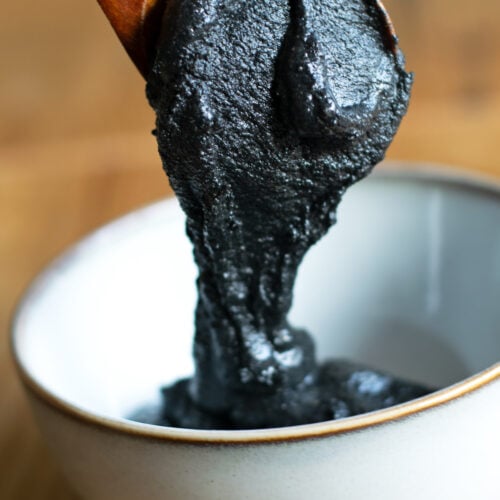
Black sesame paste, also called kurogoma (黒ごま) or neri goma (練りごま), is made by grinding roasted black sesame seeds into a thick, spreadable paste.
As it warms, the aroma turns rich and roasted with a gentle sweetness, almost like a marshmallow browning over a campfire. The flavor is earthy and satisfying, similar to peanut butter but less sweet and more toasted.
In this guide, you’ll learn what it is, how it tastes, where to buy it, and how to use it, plus how to make it at home.
Jump to Recipe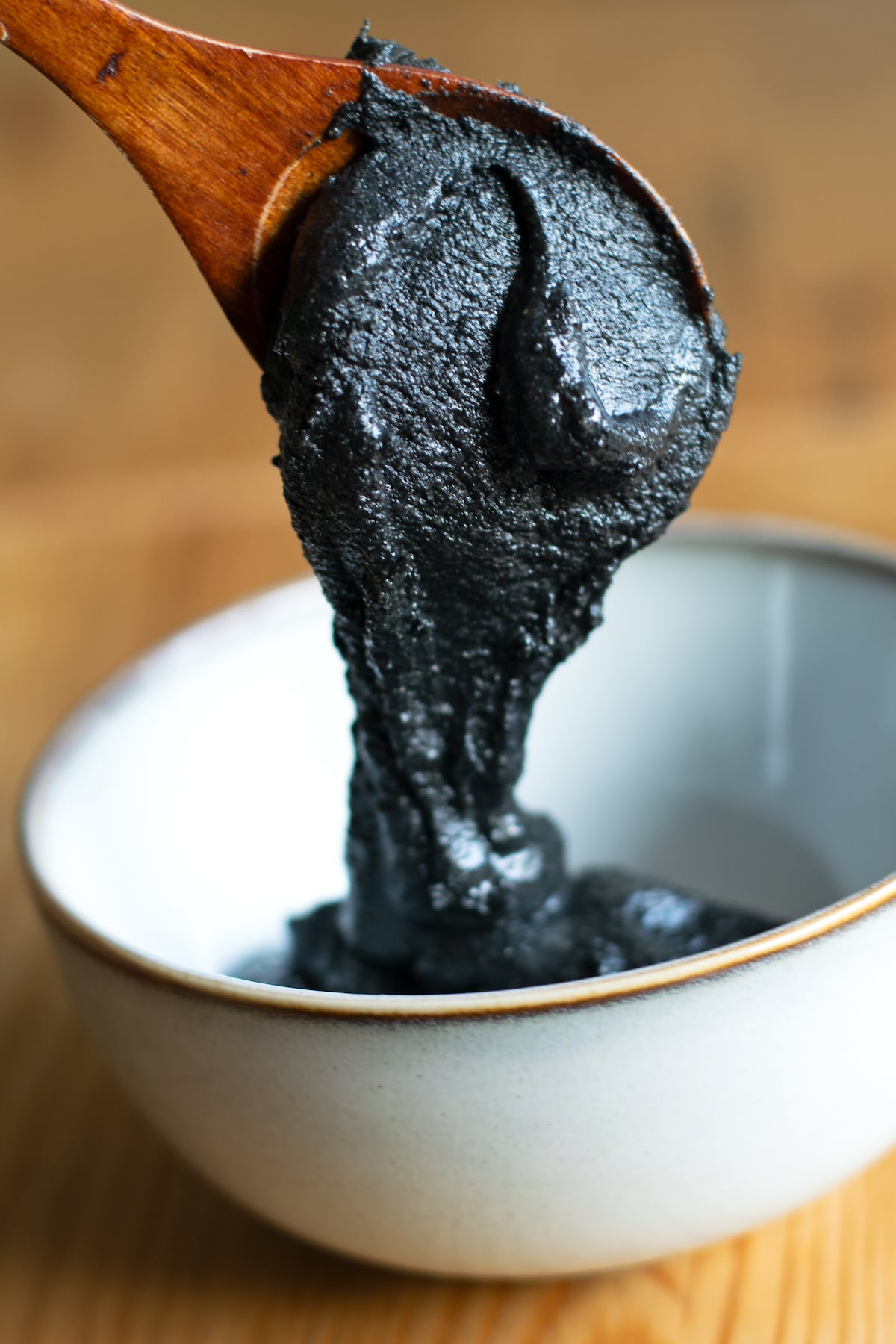
Jump to:
- What Is Black Sesame Paste?
- Black Sesame Paste vs Tahini (Are They the Same?)
- Black Sesame Paste vs White Sesame Paste (Shiro Neri Goma)
- Black Sesame Paste vs Black Sesame Seeds
- What Does Black Sesame Paste Taste Like?
- How to Use Black Sesame Paste
- Some Black Sesame Recipes to Try First
- Where to Buy Black Sesame Paste
- How to Store Black Sesame Paste (and What's Normal)
- How to Make Black Sesame Paste at Home
- What You'll Need
- Step-by-Step Instructions
- Common Mistakes When Making Black Sesame Paste
- Troubleshooting
- Variations
- Black Sesame Nutrition (No Hype)
- More Japanese Ingredients Explained
- Some Sesame Recipes You Might Love
- Frequently Asked Questions
- Homemade Black Sesame Paste (Kurogoma) Recipe
What Is Black Sesame Paste?
Black sesame paste is made from finely ground, roasted black sesame seeds. It’s smooth and nutty, with a deep black color and a mellow, roasted flavor.
In Japan, it’s commonly sold as kuro neri goma (黒練りごま) or simply neri goma (練りごま). You’ll usually find it in Japanese grocery stores near other sesame products, often alongside white sesame paste.
The paste is spoonable, similar to natural peanut butter. Some brands are more fluid, and you may notice a thin layer of oil on top. That’s completely normal. Just stir it before using.
Sweetened vs Unsweetened
Black sesame paste comes in both sweetened and unsweetened versions.
Unsweetened paste is the most versatile and is commonly used for cooking, baking, and drinks, with sweetness added separately. Sweetened versions are usually intended for desserts and fillings.
If you’re making black sesame lattes or baking with it, unsweetened black sesame paste is usually the better choice. It keeps the flavor balanced and lets you control how sweet the final dish becomes.
(If you prefer, you can also make black sesame paste at home. I explain how in the recipe section below.)

Black Sesame Paste vs Tahini (Are They the Same?)
Not exactly.
Both are made from ground sesame seeds, but they are prepared differently and used in different cuisines.
Black sesame paste (often sold as kuro neri goma in Japan) is made from roasted black sesame seeds. The flavor is deep, nutty, and toasted, and the texture is thick and spoonable.
Tahini is typically made from hulled white sesame seeds that are lightly roasted or sometimes unroasted. Because of this, its flavor is sharper and slightly more bitter, and the texture is usually thinner and more pourable.
Can you substitute one for the other?
You can use tahini in savory sauces or dressings when you mainly want sesame richness.
It’s not the best choice for desserts or lattes. If the goal is a distinctly roasted black sesame flavor, tahini won’t taste the same. In those cases, black sesame paste gives a much closer result.
If black sesame is the main flavor, use the paste.
And if you can’t find black sesame paste, you don’t need to substitute tahini. It’s easy to make at home with black sesame seeds, and many regular supermarkets and co-ops carry them (often in the spice aisle). I’ll show you exactly how in the recipe section below.
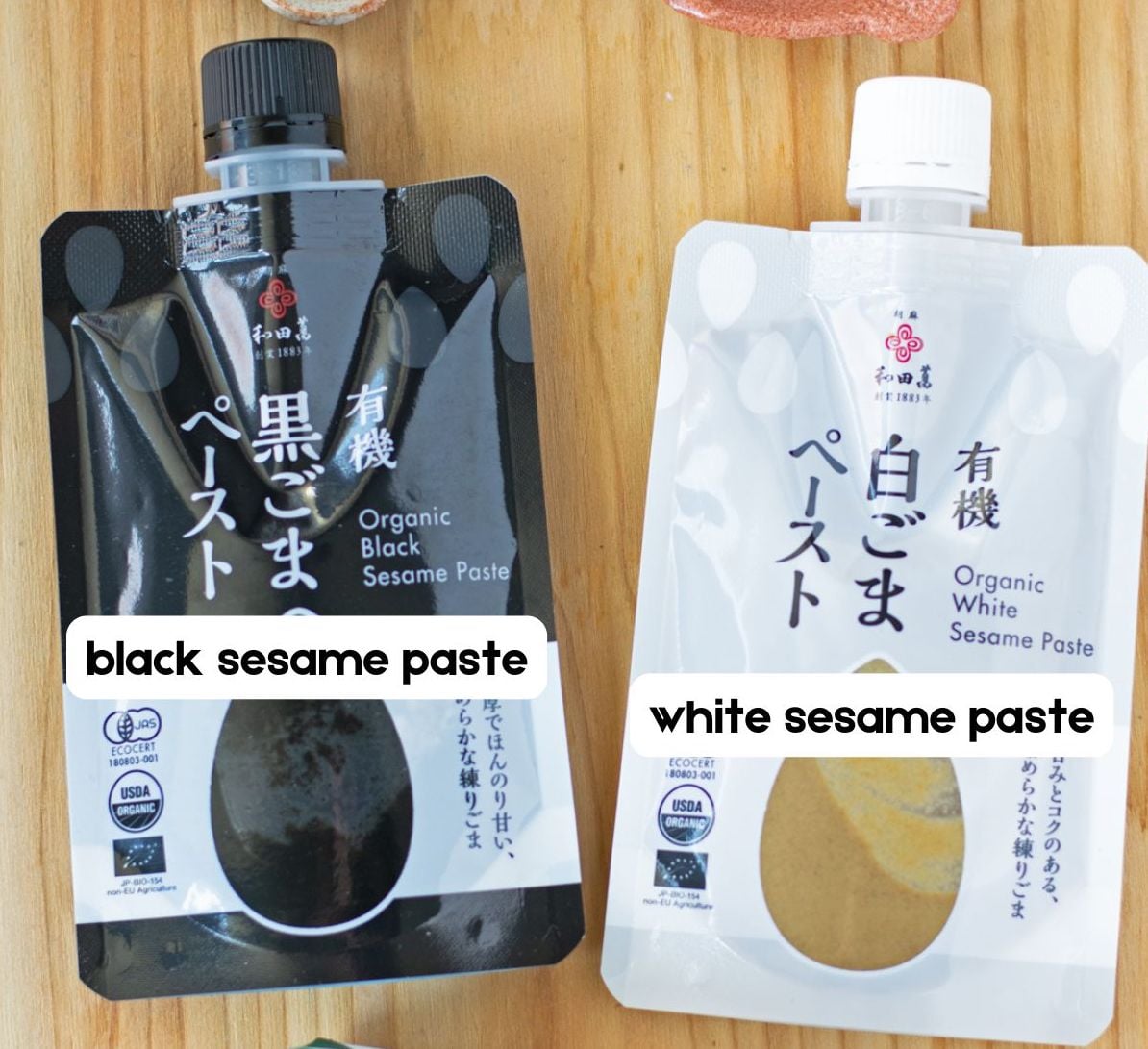
Black Sesame Paste vs White Sesame Paste (Shiro Neri Goma)
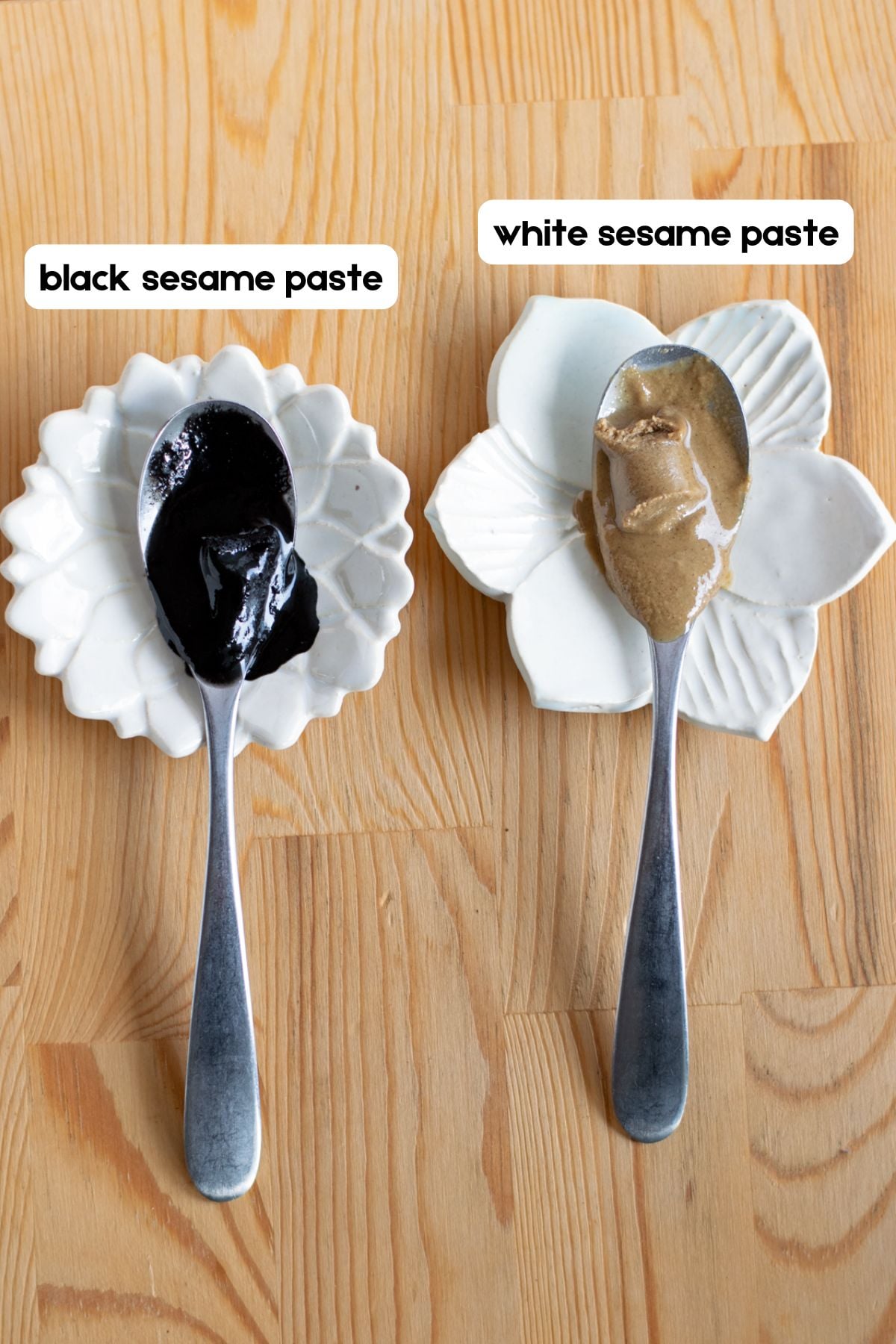
Black and white sesame paste are made the same way, by grinding roasted sesame seeds into a smooth paste. The main differences are flavor strength and how they’re typically used.
Flavor differences
Black sesame paste has a deeper, earthier flavor. It is more roasted and slightly bitter in a pleasant way, with a bold sesame taste.
White sesame paste, often called shiro neri goma, is milder and creamier. The flavor is softer and rounder, with less bitterness.
In Japanese cooking, white sesame paste is the everyday staple, while black sesame paste is used more selectively for sweets and drinks.
Best uses for each
Black sesame paste works best in:
- Desserts and sweets
- Lattes and drinks
- Fillings where you want the sesame flavor to stand out
It's usually the main flavor of the dish.
White sesame paste is better for:
- Goma-ae (sesame-dressed vegetables)
- Sauces and dressings
- Savory dishes where you want richness without overpowering other ingredients
It blends into savory cooking more easily.
What I keep at home
I don’t keep every sesame paste stocked all the time. I usually buy the one I need for a specific recipe.
For my black sesame latte, I use a mix of black sesame paste and white sesame paste. The white sesame softens the bitterness and makes the flavor rounder.
If you cook savory dishes often, white sesame paste is the more versatile one to keep. For sweets or drinks where the sesame flavor should stand out, black sesame paste is the better choice.
If you’re only making one recipe, consider buying the smaller jar. You can also use leftovers by stirring a spoonful into yogurt or oatmeal.
Black Sesame Paste vs Black Sesame Seeds
Black sesame paste and black sesame seeds are not interchangeable ingredients. Black sesame paste is made by grinding roasted sesame seeds until their natural oils release and form a smooth, spreadable paste.
Whole black sesame seeds are dry and crunchy. They are usually used as a garnish or mixed into doughs and batters for texture, not for creaminess or flavoring liquids.
If a recipe calls for black sesame paste, you cannot substitute whole seeds directly. The seeds must first be toasted and blended into a paste so the oils are released. About 1 cup (140 g) of black sesame seeds makes roughly ½ cup (about 120 g) of paste.
In other words, the paste adds richness and body, while the seeds mainly add texture.
Quick Reference
- 1 cup black sesame seeds ≈ ½ cup (about 120 g) black sesame paste
- Seeds must be toasted and blended to substitute for paste
- Whole seeds cannot replace paste directly in sauces or drinks
What Does Black Sesame Paste Taste Like?
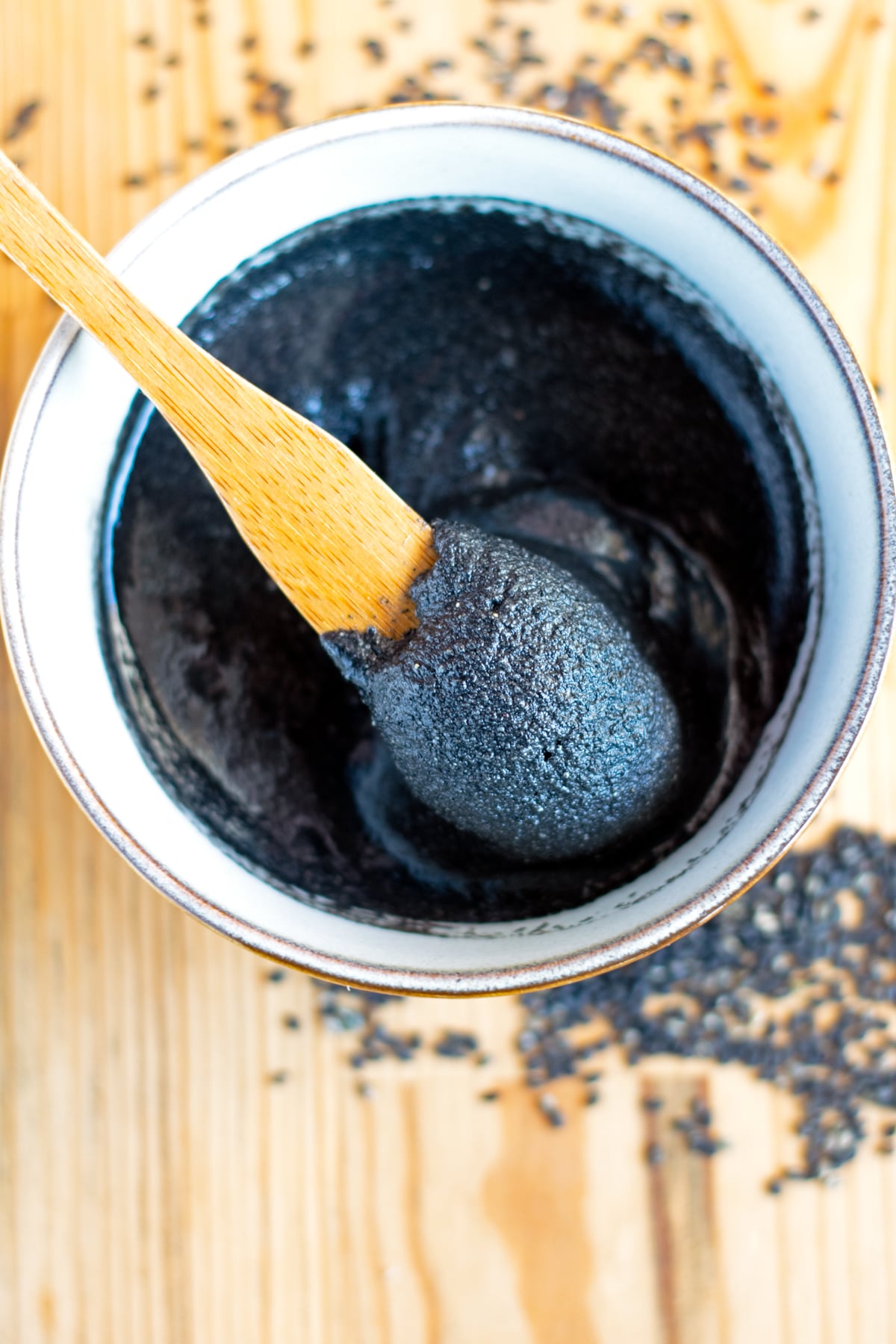
Black sesame paste tastes nutty, roasted, and earthy, with a mild pleasant bitterness and a rich, creamy texture. It is not sweet on its own. The closest comparisons are peanut butter and tahini, but black sesame is deeper and toastier than peanut butter and rounder and less sharp than tahini.
Because it is made from roasted sesame seeds, the flavor feels warm and aromatic rather than sugary. Some people notice a faint cocoa-like or coffee-like depth, especially in drinks and desserts.
It pairs especially well with creamy textures like milk, yogurt, or custard-style desserts, where the roasted flavor becomes mellow and comforting. In sweets and lattes it feels smooth and gentle. In savory dishes it adds background richness without overpowering other ingredients.
Flavor notes at a glance
- Nutty and deeply roasted
- Earthy and mellow
- Slightly bitter (pleasant, not harsh)
- Rich and creamy but not heavy
- Not naturally sweet
What pairs well with black sesame paste
Sweet
• Honey
• Maple syrup
• Vanilla
• Chocolate
• Kinako (roasted soybean flour)
• Banana
Japanese flavors
• Matcha
• Hojicha
• Kuromitsu
Savory
• Soy sauce
• Miso
• Rice vinegar
• Chili oil
If you enjoy roasted flavors like hojicha, tahini, or peanut butter, black sesame paste will likely feel familiar, just deeper and more aromatic.
How to Use Black Sesame Paste
If you’ve bought or made black sesame paste and aren’t sure where to start, here are simple ways to use it, from everyday ideas to more occasional treats.
Easy Starter Ideas (Everyday, Beginner-Friendly)
- Stir into yogurt with a drizzle of honey
- Swirl into oatmeal or overnight oats
- Make a quick black sesame latte
- Add to cookie dough or baked goods
- Whisk into a simple sesame dressing
- Blend into a black sesame banana smoothie
Sweet Ideas (Occasional Treats)
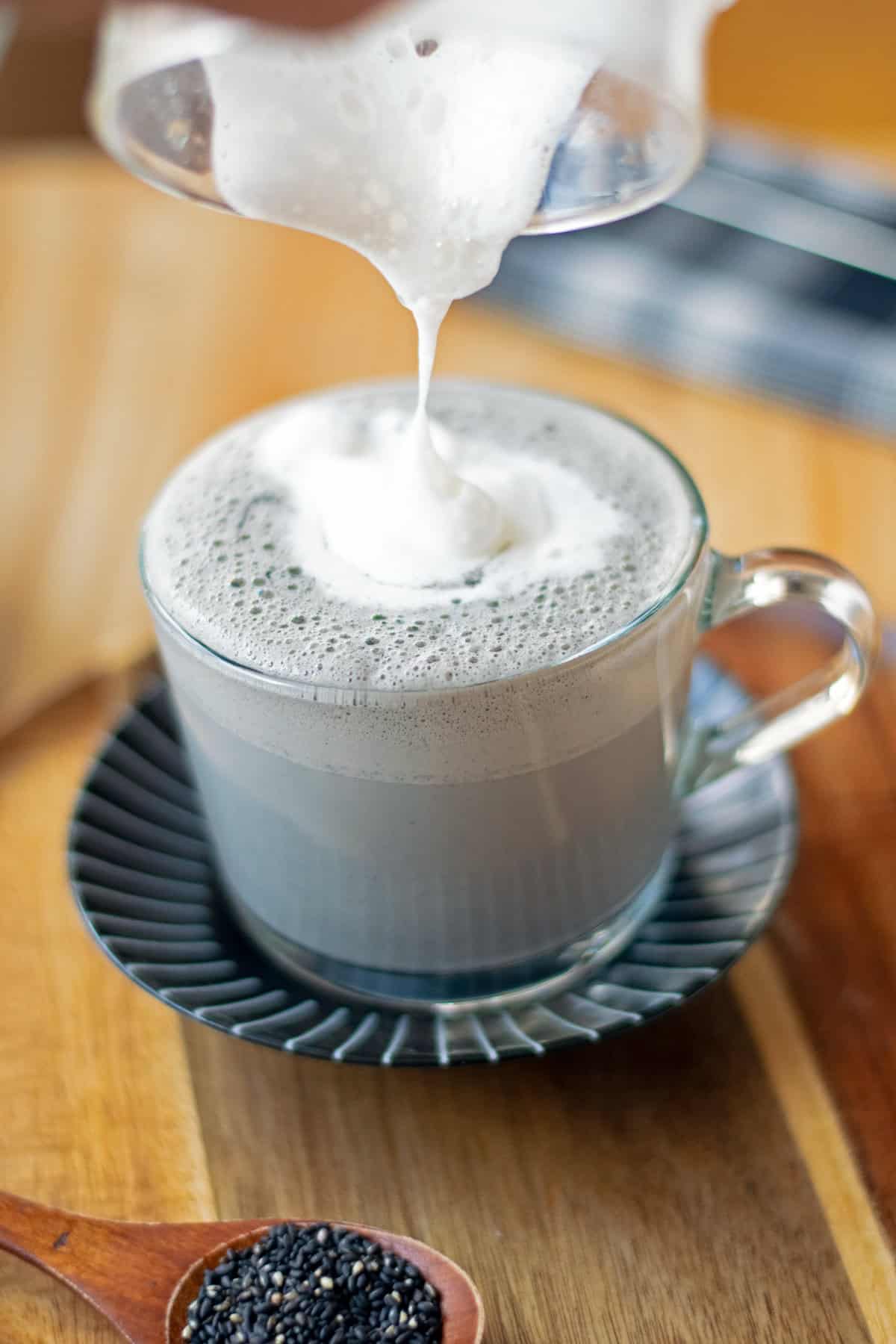
- Black sesame latte, creamy, caffeine-free, and cozy
- Black sesame cookies, lightly sweet and perfect with tea
- Ice cream, gelato, or soft serve
- Mochi or manju filling
- Muffins or quick breads
- Cakes, cheesecakes, panna cotta, or pudding
Savory Uses
- Simple dressing made with black sesame paste, soy sauce, and rice vinegar
- Dipping sauce for vegetables or dumplings
- Sesame miso sauce made with black sesame paste, white miso, and a little honey or maple syrup.
Final Note
Black sesame paste isn’t flashy. It’s subtle, grounding, and deeply satisfying. It’s the kind of ingredient that quietly becomes part of your regular cooking.
If you try one, let me know which ends up being your favorite.
Some Black Sesame Recipes to Try First
If this is your first time working with black sesame paste, I recommend starting simple. These are the easiest ways to understand the flavor before trying more involved desserts.
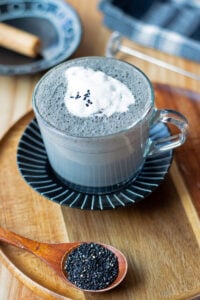
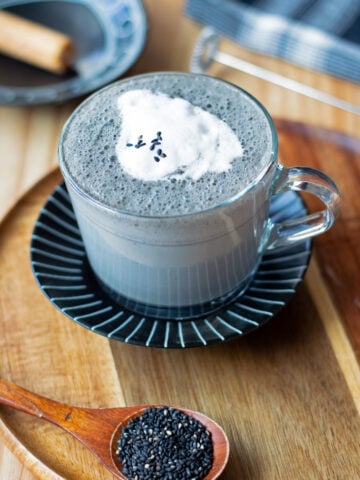
Start here (easiest): Try my Hot Black Sesame Latte, a warm, creamy, naturally caffeine-free drink that lets the roasted flavor shine.
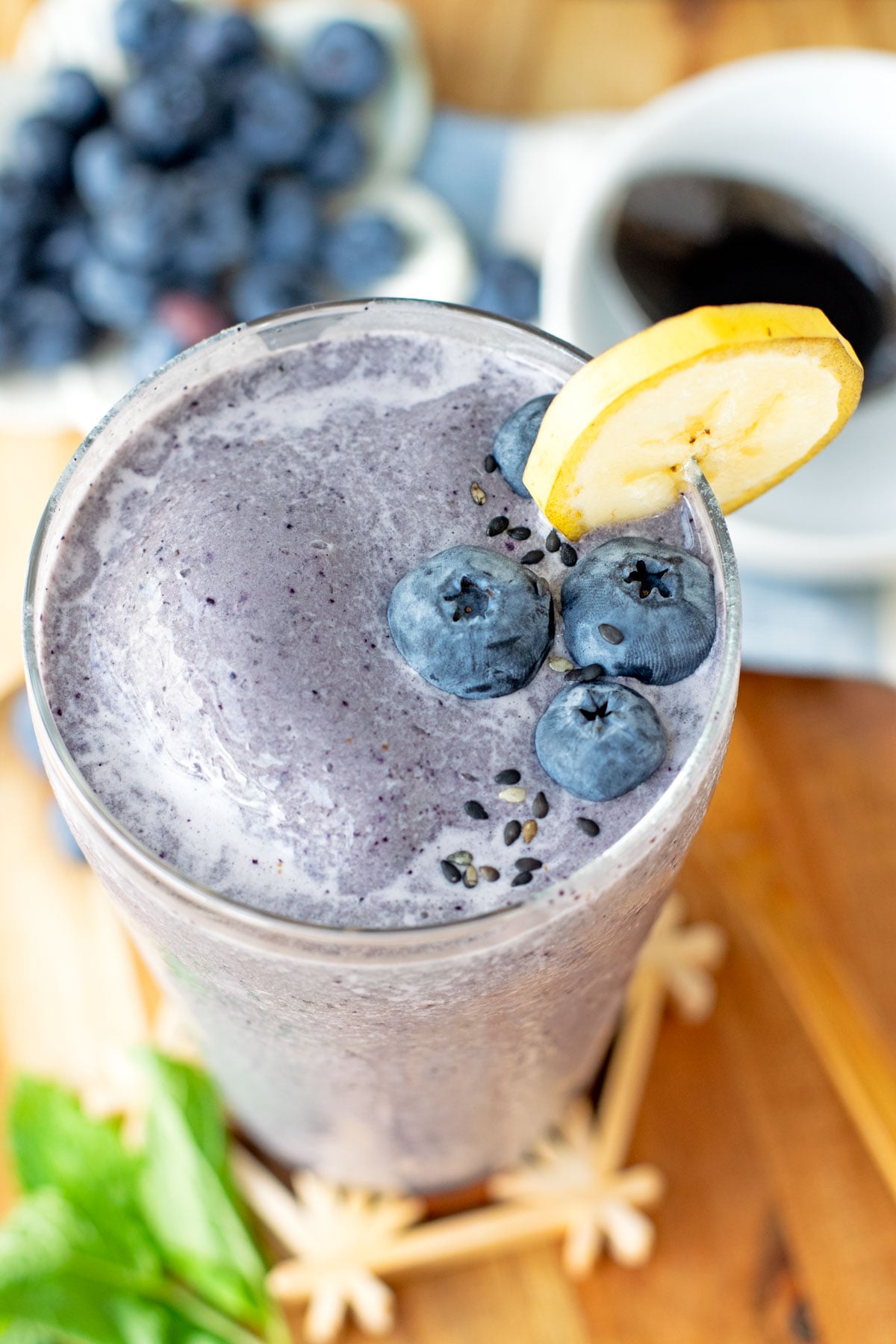
For breakfast or a quick pick-me-up: Try this Black Sesame Smoothie, creamy and naturally sweetened, ready in about five minutes.
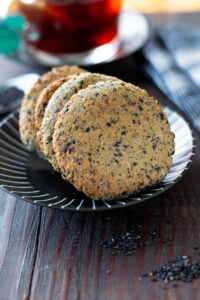
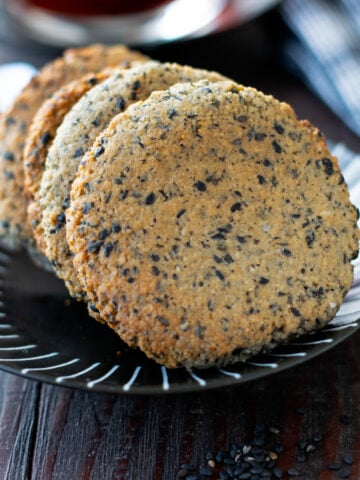
Next: These Healthier Black Sesame Cookies are lightly sweet and deeply nutty, perfect once you know you enjoy the taste.
For warm weather: An Iced Black Sesame Latte gives you the same roasted flavor, but cold, refreshing, and smooth.

Once you get comfortable with black sesame paste, you can start experimenting with it in dressings, sauces, and fillings.
Where to Buy Black Sesame Paste
In most Asian grocery stores, black sesame paste is usually located in the condiment or sesame products section, often near tahini or white sesame paste rather than in the baking aisle.
If you’re looking for black sesame paste near you, Japanese or Asian grocery stores like Mitsuwa, Nijiya, or Tokyo Central are a good place to start. If it’s a bit of a trek, I’d call ahead rather than make a special trip.
Korean markets are another great option. Look for products labeled heukimja jeonggwa (흑임자정과).
If you don’t have a local Asian market, black sesame paste is easy to find online through retailers like Amazon, Japanese Taste, or Yamibuy.
What to Look For
When buying black sesame paste, check the label for:
- Roasted black sesame
- A short ingredient list, ideally just sesame, sometimes oil
- Unsweetened, so you can control the sweetness yourself
Unsweetened paste works well for lattes, baking, and desserts. Sweetened versions are convenient, but I prefer unsweetened so I can keep things lightly sweet or skip added sugar altogether.
If you’re not sure which one to choose, feel free to leave a comment or send me a DM. I’m happy to help.
How to Store Black Sesame Paste (and What's Normal)
Unopened black sesame paste can usually be stored in a cool pantry. Once opened, many people keep it in the fridge, especially if it’s unsweetened, to help slow oxidation and preserve flavor over time. That said, if you use it regularly, storing it in a cool, dark cupboard can also work.
Oil Separation Is Normal
You may notice the oil separating from the paste as it sits. That’s completely normal and simply a result of the natural sesame oils. Stir it back in before using.
Storage Tips
- Store black sesame paste in a tightly sealed jar
- Always use a clean, dry spoon
When handled this way, it generally keeps well for quite a while. Trust your senses. If it smells off or develops an unpleasant bitterness, it’s time to replace it.
How to Make Black Sesame Paste at Home
Making black sesame paste at home is surprisingly simple. If you have sesame seeds and a blender or food processor, you can make it in about 15 minutes.
You only need one ingredient and a little patience while the seeds release their natural oils.
Homemade black sesame paste tastes noticeably fresher and more aromatic than store-bought versions, especially when the seeds are freshly opened.
This recipe makes about ½ cup of thick black sesame paste. The texture will be similar to natural peanut butter and will thicken slightly as it cools.
What You'll Need
Ingredients
- 1 cup black sesame seeds
- Optional: 1–2 teaspoons neutral oil (only if needed)
Equipment
You likely already have everything you need. No special tools or ingredients required.
Required
- Blender or food processor
Helpful
- Spatula (for scraping the sides)
- Clean glass jar (for storage)
Step-by-Step Instructions
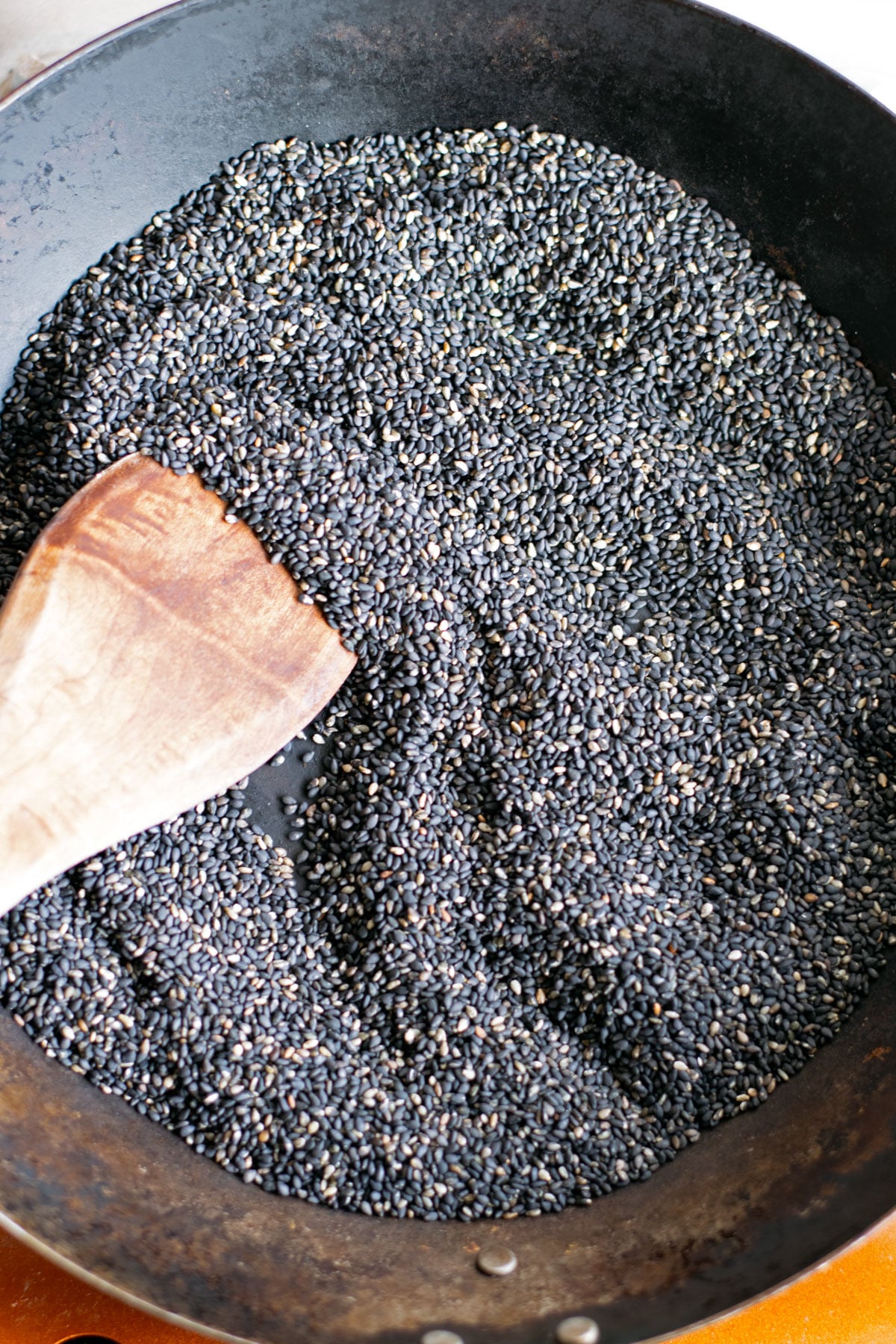
1. Toast the sesame seeds
Place the sesame seeds in a dry skillet over medium-low heat. Stir frequently for 2–3 minutes.
The seeds will smell nutty and you may hear faint popping sounds. They should not smoke or darken.
Remove immediately and let them cool completely before blending.
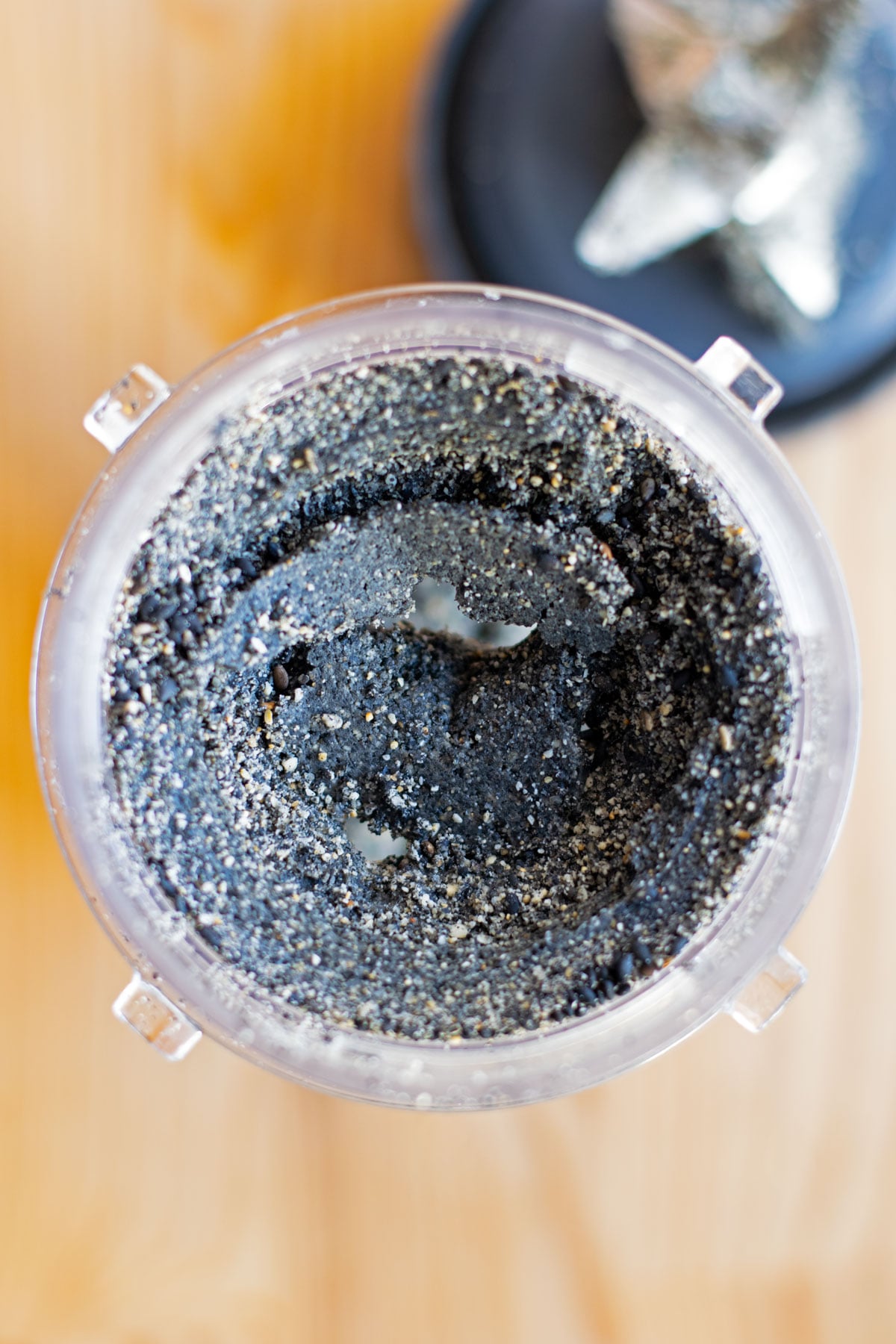
2. Begin blending
Add the cooled sesame seeds to a blender or food processor and start blending.
I usually make this in a Ninja smoothie cup attachment rather than a full-size blender. The smaller container helps the sesame seeds stay in contact with the blades, so they turn into paste more easily.
A regular blender or food processor also works, but you may need to stop and scrape the sides more often.
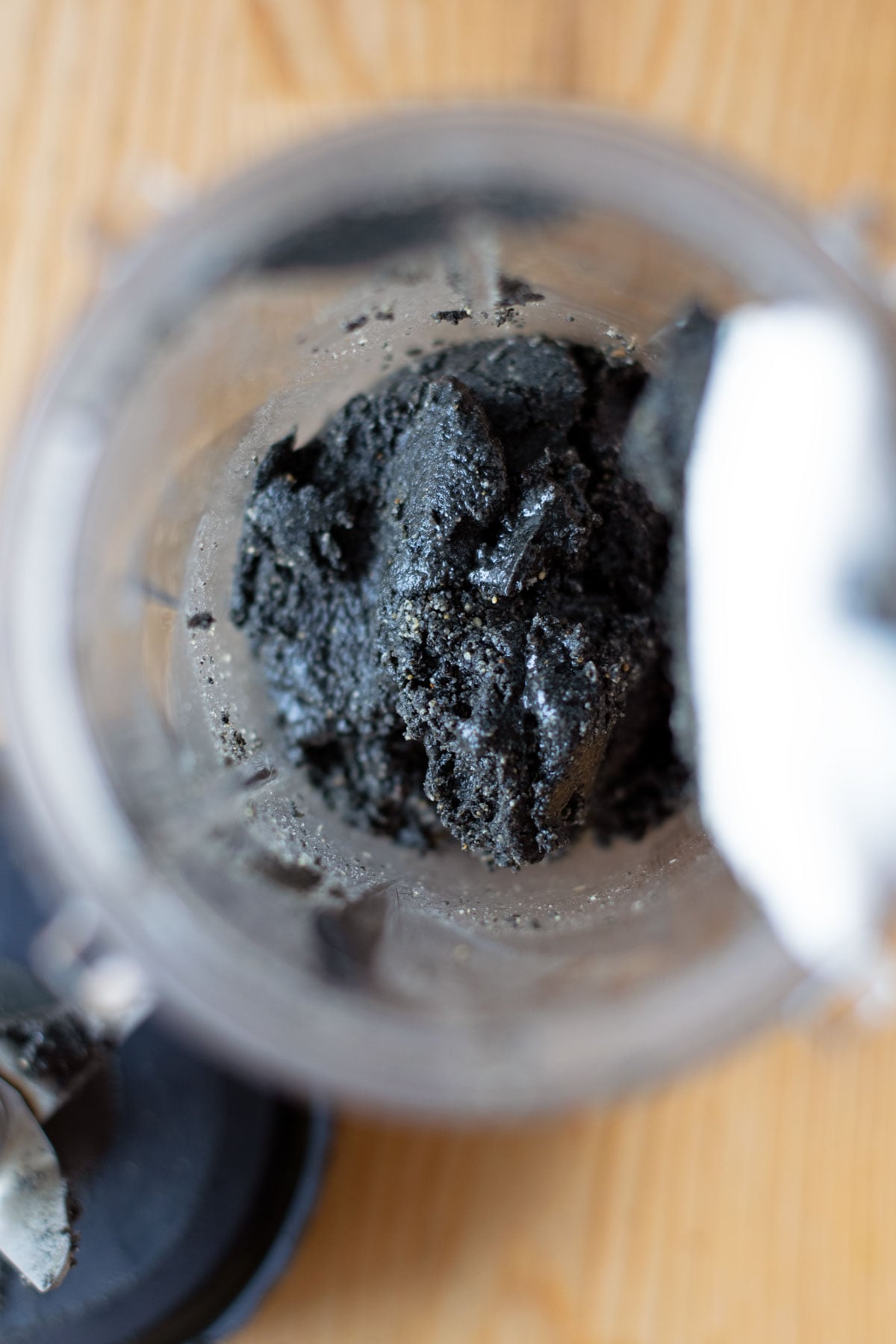
3. Keep going (this is the important part)
At first the mixture will look dry and sandy, almost like black sand. This is normal.
Stop occasionally to scrape the sides, then continue blending.
After several minutes the sesame oils will release and the mixture will suddenly turn into a smooth paste. Most machines take 3–8 minutes total.
If your blender gets warm, pause for 1–2 minutes and continue. This is normal when grinding sesame seeds.
This stage takes some patience.
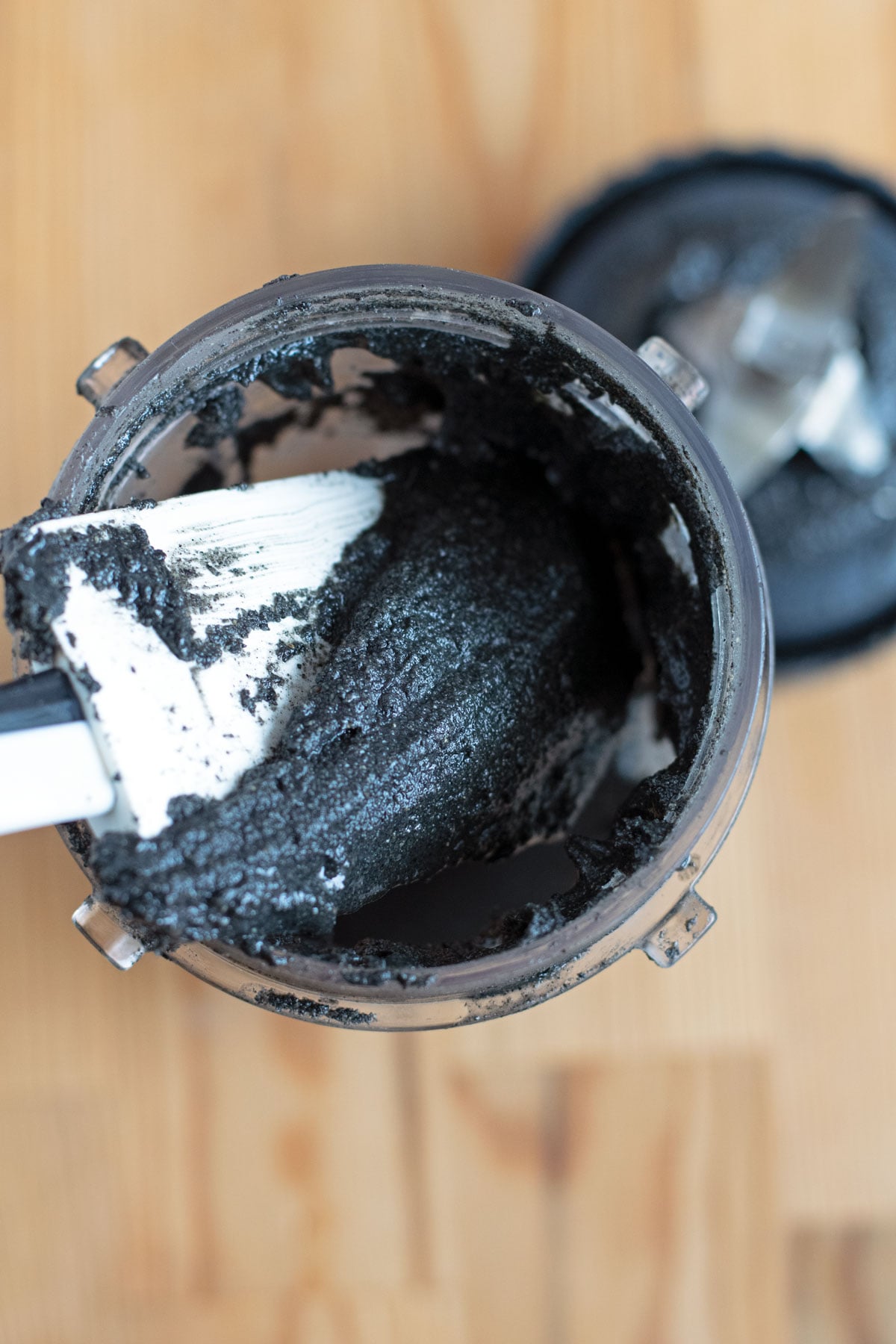
4. Adjust if needed
If your machine struggles to move the mixture after several minutes of blending and scraping, add 1 teaspoon neutral oil to help it along.
Personally, I never need to add oil when using a strong blender, but lower-powered machines sometimes benefit from a small amount. Add only if necessary, and start with the smallest amount possible.
5. Store
Transfer the paste to a clean jar and let it cool before sealing.
Store in the refrigerator and stir before each use. A tightly sealed (airtight) container helps preserve the flavor because sesame oils oxidize when exposed to air.
You may notice a thin layer of oil on top over time. That’s completely normal. Just stir it back in before using.
Common Mistakes When Making Black Sesame Paste
Do not over-toast the sesame seeds. Burned seeds cause permanent bitterness that blending cannot fix.
Do not blend continuously for long periods. Sesame seeds heat quickly and can overheat a blender. Use short blending bursts with pauses.
Do not add oil too early. The paste often looks dry for several minutes before the natural oils release. Adding oil early can make the texture greasy instead of creamy.
Do not expect it to become smooth immediately. Sesame paste takes longer than peanut butter because the seeds are smaller and harder.
Troubleshooting
My paste won’t turn smooth
You didn’t do anything wrong. Sesame seeds are smaller and harder than peanuts, so they take longer to release their oils. Keep blending with short pauses to scrape down the sides. It often looks dry and crumbly right before it suddenly becomes smooth.
My blender is overheating
Pause and let the machine rest for 1–2 minutes, then continue blending. Short bursts with breaks work better than running the blender continuously.
It tastes bitter
The sesame seeds were likely toasted a bit too long. The paste is still safe to use and works especially well in savory sauces or dressings, where the bitterness is less noticeable.
Variations
Sweet black sesame paste (dessert-ready)
After the paste has fully formed, blend in 1–2 tablespoons honey, maple syrup, or sugar to taste. This version works well for buns, toast, mochi fillings, or desserts where you want the paste to be lightly sweet on its own.
Unsweetened (savory-ready)
Leave the paste plain. This is the most versatile option and works best for lattes, dressings, sauces, and general cooking, where you can control sweetness separately.
Using black sesame powder (shortcut option)
If you only have ground black sesame powder, you can still make a quick paste by stirring in a small amount of neutral oil, a little at a time, until smooth and spreadable.
Because the seeds are already ground, the flavor will be lighter and less aromatic than paste made from whole seeds. This shortcut works best in drinks, yogurt, or simple desserts rather than as a standalone spread.
Black Sesame Nutrition (No Hype)
Black sesame paste is made entirely from ground sesame seeds, so its nutrition comes from the seed itself rather than anything fortified or added.
Black sesame seeds naturally provide:
- Unsaturated fats
- Plant-based protein
- Dietary fiber
- Minerals including calcium, iron, magnesium, and zinc
Because the paste is concentrated, a small amount goes a long way. It is rich and flavorful, which is why it is typically used in modest portions in sweets, drinks, and sauces.
Black sesame paste is not a supplement or a functional food. It is best thought of as a traditional ingredient that also contains naturally occurring nutrients, not something eaten for specific health outcomes.
If you have allergies, dietary restrictions, or medical concerns, consult a qualified professional before making significant changes to your diet.
More Japanese Ingredients Explained

Frequently Asked Questions
Black sesame paste is used to flavor desserts, drinks, and sweet fillings in East Asian cooking. It commonly appears in mochi, buns, pastries, and café-style lattes. It can also be mixed into dressings, sauces, yogurt, oatmeal, smoothies, or baked goods for a nutty, roasted flavor.
Black sesame paste is used across East Asia, including Japan, China, and Korea. In Japan it is called kuro neri goma (黒練りごま) and is most often used in sweets and drinks. In Chinese cuisine it commonly appears in sweet soups and dessert fillings. The ingredient is shared regionally even though the dishes differ.
No. Black sesame paste and tahini are different. Black sesame paste is made from roasted black sesame seeds and has a deeper, rounder flavor. Tahini is usually made from hulled white sesame seeds and tastes sharper and slightly more bitter. Tahini works well in savory sauces, while black sesame paste is preferred for desserts and drinks.
Pure black sesame paste is not sweet and contains no added sugar. It is made only from ground sesame seeds. Some store-bought versions are sweetened, so check the ingredient label if you want an unsweetened paste.
Yes. Black sesame paste is roasted black sesame seeds blended until their natural oils form a smooth paste. Lightly toast the seeds, then blend for several minutes, scraping the sides as needed. One cup of seeds makes about ½ cup (about 120 g) of paste.
Homemade black sesame paste lasts about 1–2 months in the refrigerator when stored in an airtight container. Oil separation is normal and should be stirred back in. Discard the paste if it smells rancid or develops a sharp, bitter taste.
Did you try making your own black sesame paste? 😉
Tag @eyesandhour on Instagram. And if you loved it like I do, a ⭐️⭐️⭐️⭐️⭐️ rating below would mean a lot.
Below is the simple base recipe for homemade black sesame paste. The sections above explain what it is, how it tastes, and how to use it.
Homemade Black Sesame Paste (Kurogoma) Recipe

Equipment
- Blender or food processor
- spatula
- Small skillet (for toasting)
- Clean glass jar with lid
Ingredients
- 1 cup black sesame seeds (140 g)
- 1-2 teaspoon neutral oil (only if needed; see notes)
Instructions
Toast the sesame seeds
Place the sesame seeds in a dry skillet over medium-low heat.Stir constantly for 2–3 minutes until fragrant. You may hear faint popping sounds. The seeds should smell nutty but not smoky.Immediately transfer to a plate and cool completely (about 5 minutes)Begin blending
Add the cooled sesame seeds to a blender or food processor.Blend continuously.At first the seeds will become a coarse black sand. This is normal.Keep blending
Stop every 30–60 seconds to scrape down the sides.After several minutes the mixture will:Look dry and crumblyClump togetherSuddenly loosen into a pasteThis is when the sesame oils release.Most machines take 3–8 minutes total blending time.Adjust if needed
If the mixture will not move after repeated scraping, add 1 teaspoon neutral oil and continue blending.Only add more if absolutely necessary.Finish and store
Once smooth, transfer to a clean jar.The paste will thicken slightly as it cools. Stir before using.
Notes
- rice bran oil
- grapeseed oil
- light sesame oil (not toasted)
- My paste is gritty: Keep blending. Sesame paste takes longer than peanut butter because the seeds are smaller and harder.
- My blender is getting hot: Pause for 1–2 minutes and continue. Short blending bursts work better than continuous blending.
- It suddenly turned creamy: You did it right. That’s the natural oils releasing.
- It tastes bitter: The seeds were toasted a bit too long. It’s still perfectly usable in dressings or savory sauces.
- Sweet black sesame paste: After the paste forms, blend in 1–2 tablespoons honey, maple syrup, or sugar. Great for toast, buns, and fillings.
- Extra smooth paste: Grind the seeds briefly in a spice grinder first, then finish in the blender.
Leave a Reply