
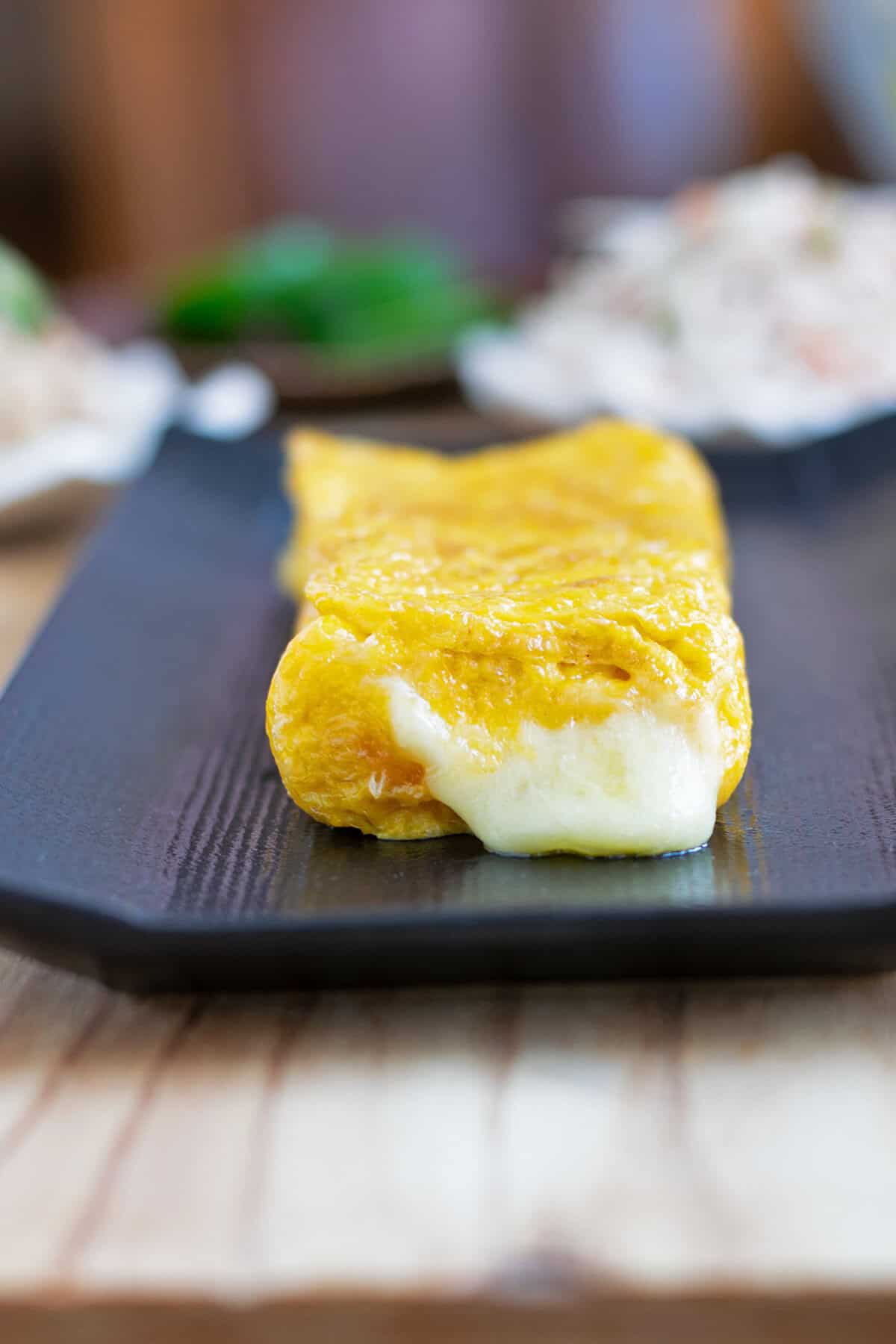
Cheese Tamagoyaki is layers of soft, fluffy egg hiding molten, stretchy mozzarella. Every bite pulls gooey strings of cheese. Savory, slightly sweet, and comforting, it’s ready in minutes.
Jump to Recipe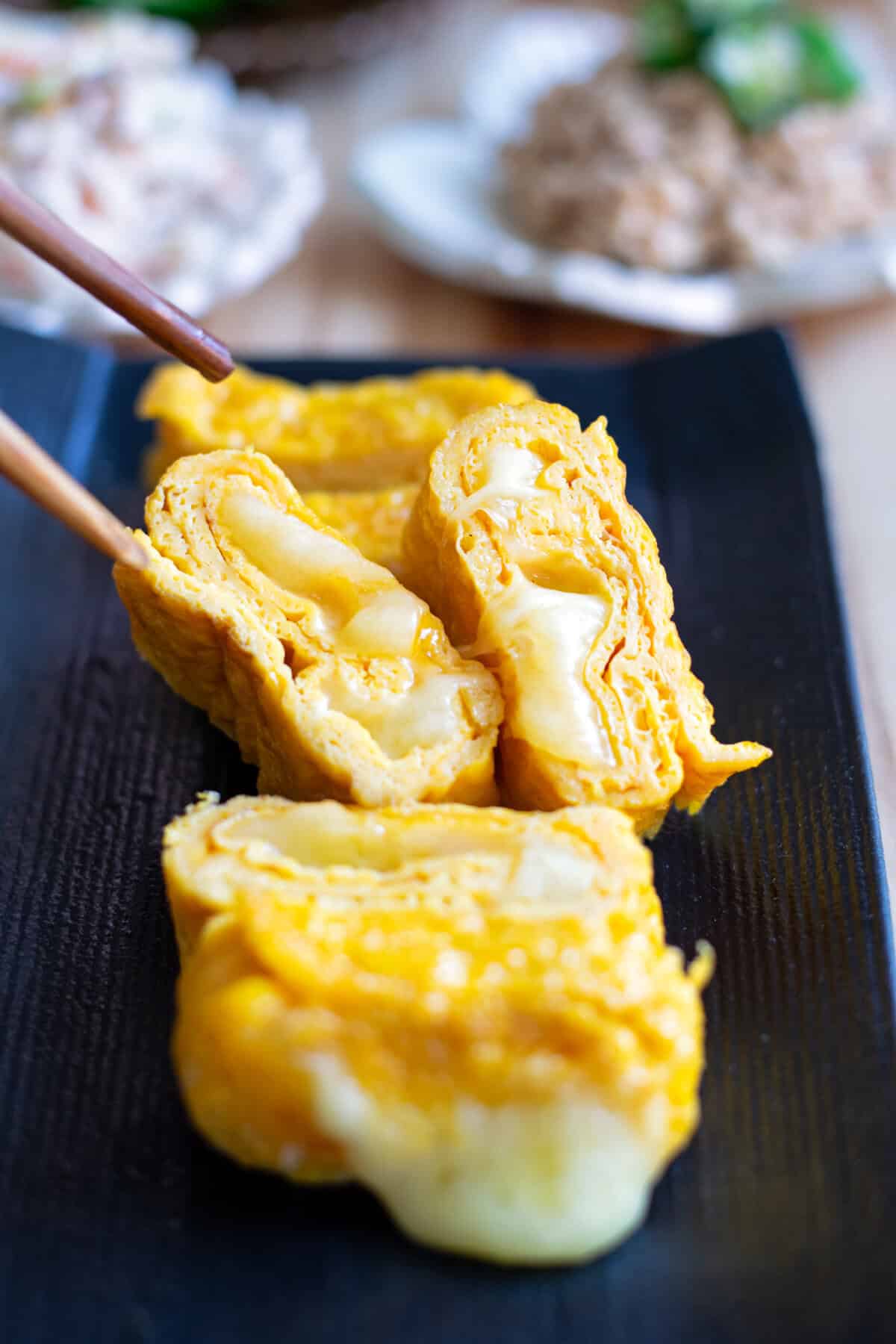
When I stay with my host family in Gunma Prefecture, I can count on my Japanese mom making cheese-filled rolled omelettes. She knows they're my favorite. Especially at New Year's (Oshogatsu), I always looked forward to eating full, home-cooked Japanese breakfasts with tamagoyaki. The only downside is I have to share.
It wasn't until years later that I learned how to cook them for myself. I didn't realize how easy they were to make. I had always assumed it would be complicated.
The easiest rolled omelette is one without any fillings. This version with one filling is level two. It took me a few practices before I got the hang of the rolling technique.
Nowadays, making these is like driving a car. Turn the stove on and I'm ready to roll!
Can’t wait to hear how your first cheesy tamagoyaki turn out! Let me know how it goes. They're so good you won't want to share either.
Got questions? Leave them in the comments below. I respond to every one.
❤️ & ? + ? from Japan,
Matt
Jump to:
What is Cheese Tamagoyaki?
Tamagoyaki (卵焼き) is a Japanese rolled omelet made by layering thin sheets of egg in a rectangular or square tamagoyaki pan. The version often served at sushi restaurants is slightly sweet. Tamagoyaki can also be savory and sometimes includes fillings that add extra flavor and texture.
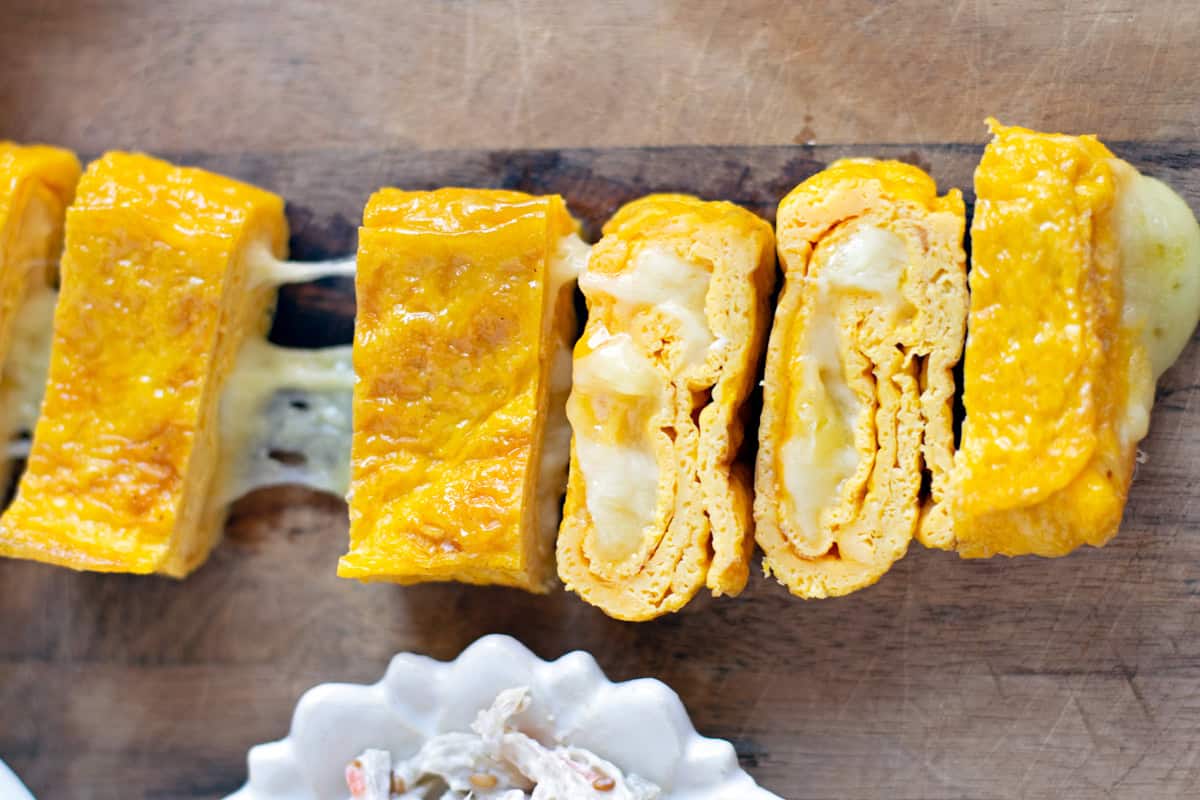
In this recipe, we’re keeping it simple and irresistible: cheese. The result is a fluffy, golden omelet with a melty, gooey center that elevates a classic Japanese breakfast.
What Does Cheese Tamagoyaki Taste Like?
Cheese tamagoyaki is light, airy, and slightly sweet, with pockets of warm, stretchy cheese in every bite. It’s soft and comforting, with a richness that plain tamagoyaki doesn’t have.
- Plain tamagoyaki: soft, sweet-savory
- Cheese tamagoyaki: soft, sweet-savory, with a gooey, melty center (Mmm.)
Are you craving a bite yet?
Why You’ll Love This Cheese Tamagoyaki
- Simple ingredients: Only eggs, pre-shredded cheese, and a few seasonings
- Fast and convenient: Ready in just minutes, perfect for breakfast or a quick snack
- Customizable: Swap in your favorite cheese or add mix-ins like mentaiko (spicy cod roe)
- Versatile: Delicious on its own, or as part of a bento or snack
Ingredients You’ll Need

- Eggs
- Cheese (mozzarella, cheddar, or your favorite melting cheese)
- Cane sugar
- Sea salt
- Usukuchi "light" soy sauce
- Neutral cooking oil (for the pan)
Ingredient Notes & Substitutions
- Cheese: Finely shredded mozzarella for stretch, cheddar for sharp flavor, or a blend. Avoid hard cheeses that don’t melt well.
- Usukuchi soy sauce: Substitute with regular soy sauce if needed. Your tamagoyaki may be slightly darker, but the flavor is fine.
- Sugar: For the best flavor, use lightly processed Japanese brown sugar like Okinawa kurozato. Its rich, subtle sweetness elevates tamagoyaki beyond plain white sugar.
Tools You’ll Need
- Tamagoyaki pan (rectangular) or small non-stick skillet
- Chopsticks or spatula for rolling
- Bowl
- Measuring spoons
- Fine sieve
How to Cook Cheese Tamagoyaki (Step-by-Step)
Step 1: Heat the pan
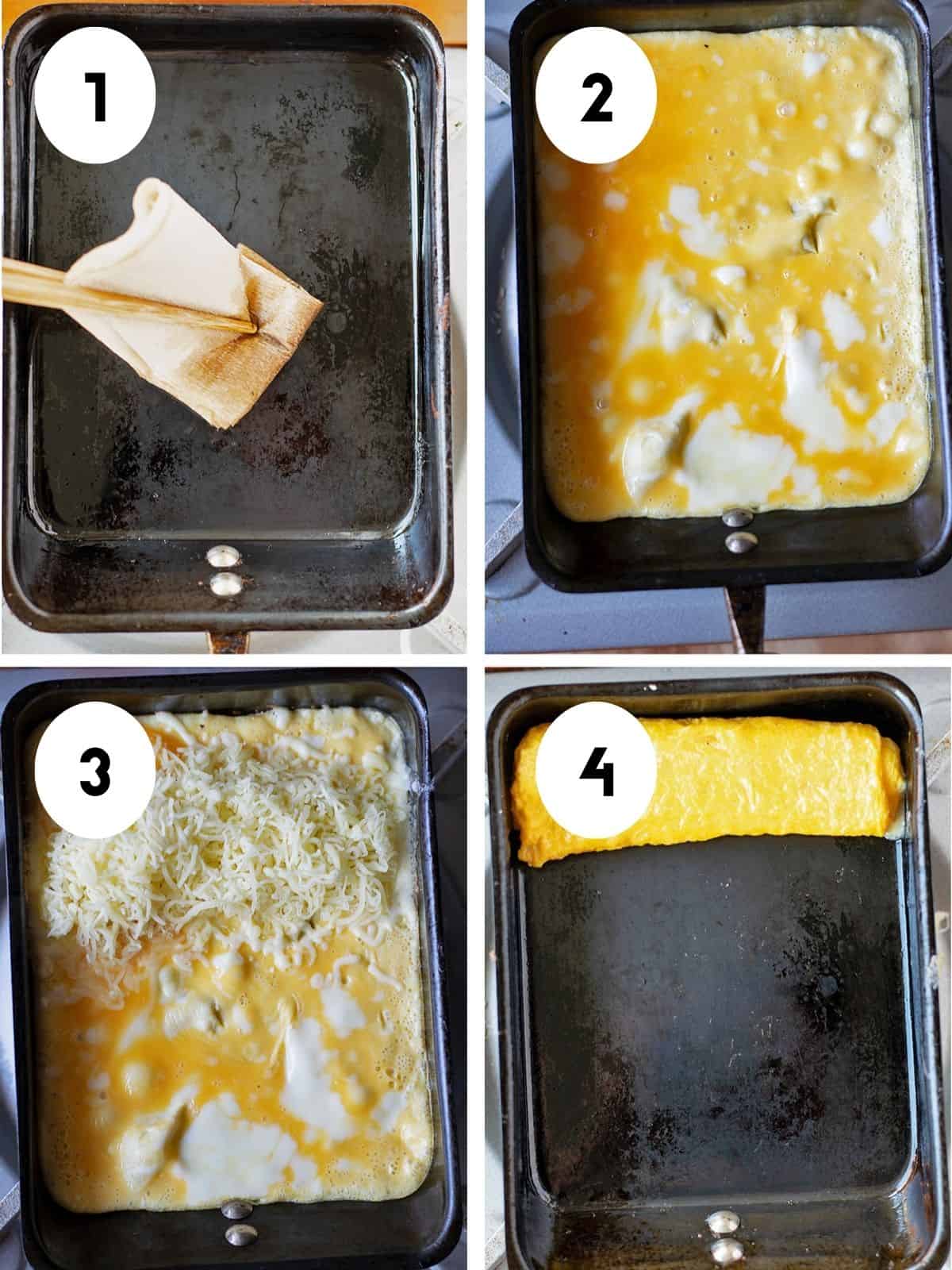
Set a tamagoyaki pan or small skillet over low to medium heat. Lightly coat the bottom and sides with oil so the egg won’t stick.
Step 2: Test the pan
Drop a small bit of egg mixture into the pan. If it sizzles gently, the pan is ready. Pour in just enough egg to cover the bottom with a thin, even layer.
Step 3: Add the cheese
While the egg is still slightly runny on top, sprinkle or lay the cheese in a horizontal line about 2–3 cm from the far edge of the pan (the side away from you).
Step 4: Roll the omelette
Using chopsticks or a spatula, lift the far edge of the egg layer (farthest from you) and roll it toward yourself over the cheese. Once fully rolled, gently push it back to the far side of the pan to make room for the next layer.
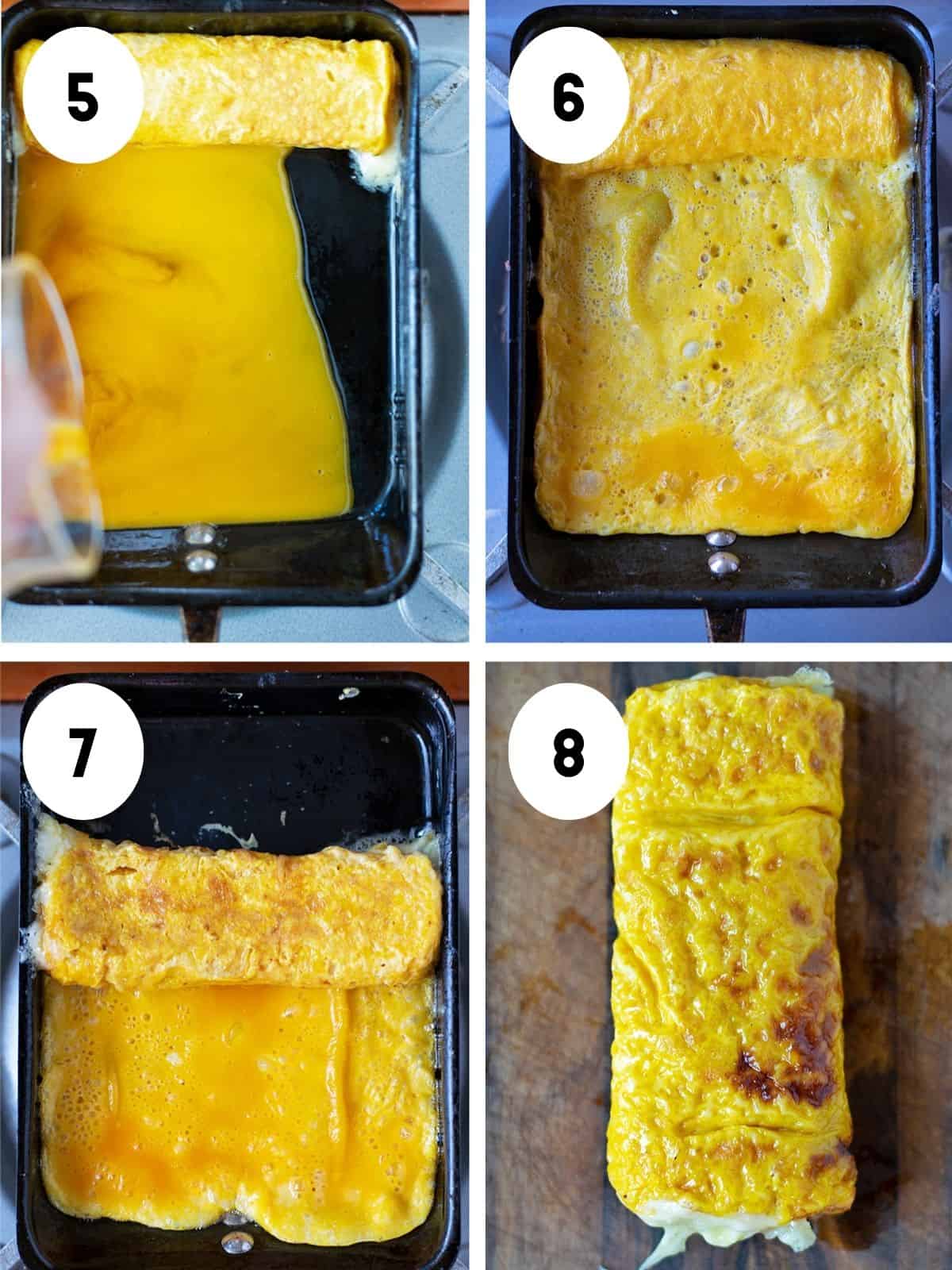
Step 5: Add more egg
Lightly oil the exposed pan again. Pour in another thin layer of egg, lifting the rolled omelette slightly so the raw egg flows underneath.
Step 6: Repeat the process
When the new layer is half set, roll the omelette toward yourself again. Keep layering, rolling, and pushing to the far side until all the egg mixture is used.
Step 7: Shape and rest
Press the final roll gently with a spatula or chopsticks to form a neat log. Let it rest in the pan for about one minute to set.
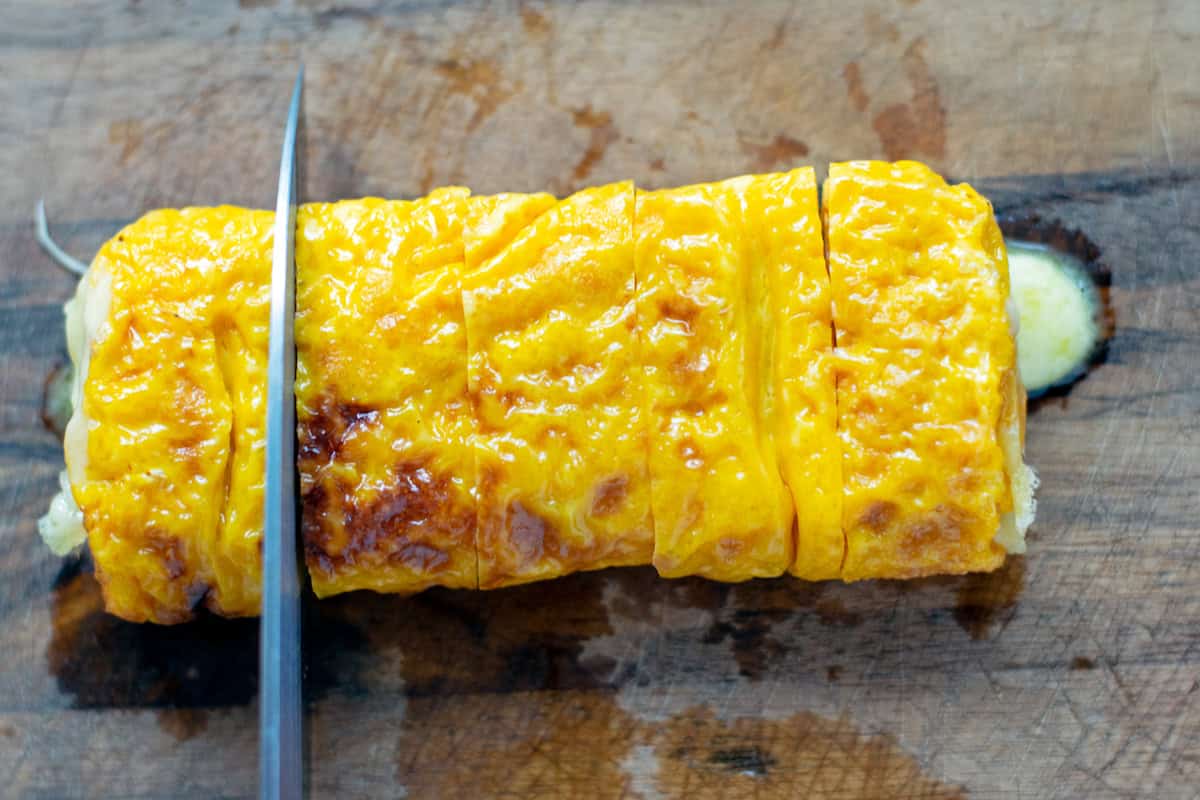
Step 8: Slice and serve
Transfer to a cutting board and let cool briefly. Slice into 5–6 even pieces. Serve warm or at room temperature.
Expert Tips & Variations
Pan heat: Keep it low to medium to maintain a soft, fluffy texture. High heat can brown or overcook the layers.
Add cheese at the right time: Sprinkle cheese on the slightly runny egg just before rolling to prevent it from melting too early. This ensures a perfectly gooey, melty center.
Add-ins: Mild ingredients like spinach, smoked salmon, or scallions work well. Avoid overly wet or strong-flavored fillings.
Rolling technique: Beginners may prefer a spatula; chopsticks provide more control once you’re comfortable.
Slicing: Use a sharp knife and a gentle sawing motion for clean slices without squishing the omelet.
Serving & storage: Enjoy warm or at room temperature. Store leftovers in an airtight container in the fridge for 1–2 days.
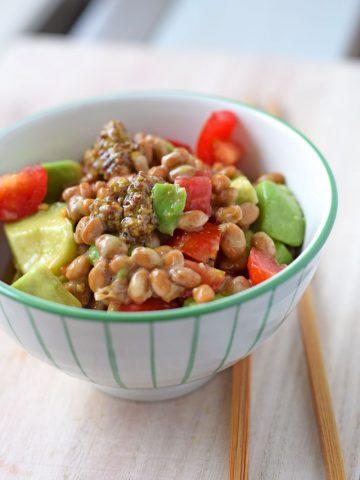
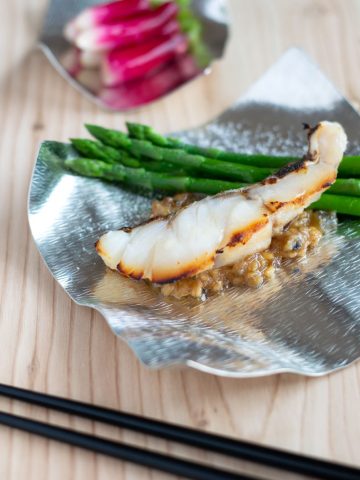
What to Serve with Cheese Tamagoyaki

Frequently Asked Questions
Mozzarella gives stretchy, melty goodness, while cheddar adds flavor. A mix works too. Avoid hard cheeses that won’t melt.
Traditional tamagoyaki is made with eggs, soy sauce, sugar, and sometimes dashi for extra umami. Some recipes also include mirin, which adds a subtle sweetness and depth of flavor. You can also add fillings such as green onions, cheese, spinach, nori, or seafood for more variety.
Popular fillings include green onion, cheese, mentaiko (spicy cod roe), tuna, and shirasu (baby sardines). A survey of homemade recipes shows green onion is most common (31%), with cheese following at 14%.
Tamagoyaki is soft, slightly sweet, and savory with a light, fluffy texture. Cheese tamagoyaki adds pockets of gooey, melty richness, making each bite comforting and flavorful.
More Delicious Egg Recipes You'll Love


Did you try this recipe? Tag @eyesandhour on Instagram and leave a ⭐️⭐️⭐️⭐️⭐️ rating & comment! I'd love to see your cheesy tamagoyaki rolls.

Cheese Tamagoyaki
Ingredients
- 3 eggs
- 1 teaspoon cane sugar
- ¼ teaspoon salt
- ¼ teaspoon usukuchi 'light' soy sauce
Instructions
Prep the Egg Mixture
- Crack the eggs into a bowl and whisk with chopsticks or a fork until the yolks and whites are fully combined.
- Pour the beaten eggs through a fine sieve to remove the chalazae. This gives you a smooth, bright yellow mixture.
- Stir in the cane sugar, salt, and usukuchi (light) soy sauce until evenly mixed.
Cooking the Tamagoyaki
- Heat a tamagoyaki pan (or small skillet) over low–medium heat. Lightly coat the bottom and sides with oil.
- Test the pan with a drop of egg mixture. If it sizzles, pour in a thin layer to cover the bottom evenly.
- While the egg is still slightly runny, place cheese in a horizontal line a few centimeters from the far edge (the side away from you).
- Roll the egg toward yourself (handle side of the pan) over the cheese using chopsticks or a spatula. Once completely rolled, push the roll to the far side of the pan.
- Lightly oil the exposed part of the pan again. Pour in another thin layer of egg, lifting the roll slightly so the raw egg flows underneath.
- When the new layer is half set, roll the omelette toward you and push it back to the far side of the pan.
- Repeat the process — oil, pour, roll, and push — until all the egg mixture is used.
- Shape the omelette gently with a spatula into a neat log. Let it rest in the pan for about a minute to set.
Serving
- Transfer to a cutting board and let cool for 1 minute. Slice into 5–6 pieces and serve warm or at room temperature.
Notes
Pro Tips
- Smooth, bright eggs: For an extra-smooth, fluffy tamagoyaki with a bright yellow color, strain the beaten eggs through a fine sieve to remove the chalazae. (Chalazae are the clear, slightly gooey strands that hold the yolk in place).
- Control the heat: Cook over low–medium heat to keep the omelette soft. Beginners may prefer lower heat to avoid browning or burning. At times, you can lift the pan off the stove to help control the heat.
- Roll while slightly runny: Roll the egg while it’s still slightly runny on top to help layers stick and prevent overcooking.
- Layer carefully: Lift the roll gently when adding a new layer so raw egg flows underneath. Tilting the pan can help the egg settle evenly.
- Slice cleanly: Use a sharp knife with a gentle sawing motion to prevent squishing.
- Serving & storage: Serve warm or at room temperature. Store leftovers in the fridge for 1–2 days and reheat gently.
Melina says
Amazing!! Loved it ?
Matt says
I'm so happy you loved the recipe, Melina. Thank you for the 5 star review!